



Quick Overview
“Unlimited coverage” in health insurance sounds like a dream: no more worrying about whether ₹10L or ₹25L will be enough. However, “unlimited” doesn’t always mean “no limits”. In a few cases, it may cover just one big claim, and after that, the benefit stops.
In this article, we’ll break down what “unlimited” means in simple terms, the types of unlimited coverage, and the key terms you must check before buying.
What Does “Unlimited Coverage” Actually Mean?
- Unlimited For One/Two Claims
The insurer will cover one or two very large hospitalization bills, even if your base sum insured is much lower. In most cases, this is a paid add-on and can be used only once or twice in the policy lifetime.
Example: You have a ₹10L policy with one unlimited claim add-on, and a ₹70L hospitalization bill. The base ₹10L gets used first, and the “unlimited” benefit can cover the remaining ₹60L.
- Unlimited Sum Insured
There is no fixed annual cap like ₹10L or ₹25L on the plan if you have opted for an unlimited sum insured. But the final payout can be reduced due to room rent restrictions, co-payments, deductibles, or disease-wise sub-limits, depending on the policy terms.
Example: You have an unlimited sum insured plan and a ₹1 Cr hospital bill. The claim would be payable up to ₹1 Cr, given the expenses are admissible.
Did You Know?
Which Plans Offer Unlimited Claims Once in a Policy Lifetime?
Note: Premiums are for a ₹15L sum insured, for a family floater (ages 32 and 31), residing in Delhi - 110001, with unlimited claim add-on and other necessary and mandatory add-ons.
Which Plans Offer Unlimited Sum Insured?
Note: Premiums are for an unlimited sum insured, for a family floater (ages 32 and 31), residing in Delhi - 110001, with necessary and mandatory add-ons.
Pros of Unlimited Coverage
- Covers That “One Scary Bill”
If a single hospitalization shoots past your maximum cover amount, “unlimited” features can reduce the chance of you paying a huge chunk from your pocket.
- Less Mental Math
You’re not constantly wondering, “Will my cover last if things get worse?”
- Useful For High-risk Profiles
For families with known risks like complicated medical history, living in a metro city, or aged parents, it can be a peaceful choice.

Things to Keep in Mind Before Opting for Unlimited Coverage
It’s Not A Blank Check
Room rules, co-pays, waiting periods, and exclusions can still impact how much a bill is payable.
Premium Unpredictability Is Real
Unlimited SI options are newer, and premiums in health insurance rise with age anyway.
You Still Need A Strong Base Plan
If your base plan has weak room rules/sub-limits, an “unlimited” tag will not save you from surprise deductions.
Continuity Rules Can Lock You
Many unlimited add-ons have strict opt-in rules and require continuous renewal to stay active. If you drop it, you may not be allowed to opt back in later.
Why Insurers Offer Unlimited Coverage
Most health claims are small, and truly catastrophic bills are rare. IRDAI’s Annual Report 2023–24 shows an average payout of ₹31,086 per settled health claim.
Why Choose Ditto For Health Insurance?
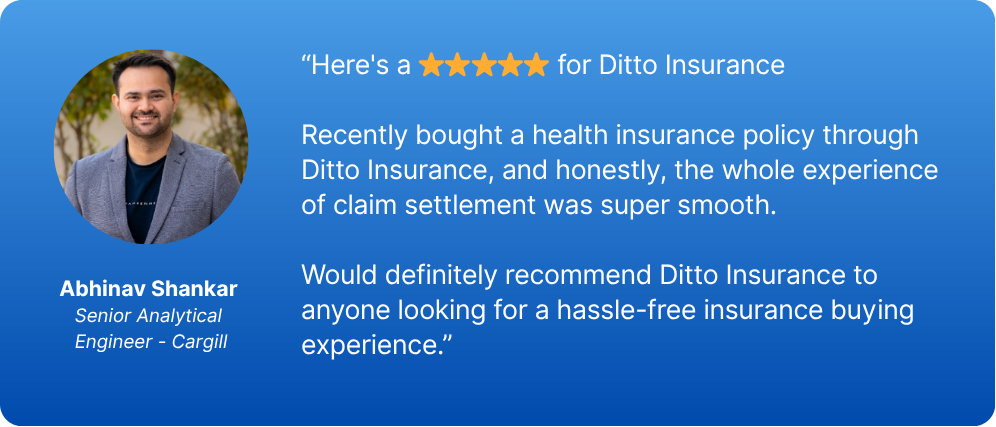
At Ditto, we’ve assisted over 8,00,000 customers with choosing the right insurance policy. Here’s why customers like Abhinav love us:
- No-Spam & No Salesmen
- Rated 4.9/5 on Google Reviews by 15,000+ happy customers
- Backed by Zerodha
- 100% Free Consultation
You can book a FREE consultation with us. Slots are filling up quickly, so be sure to book a call now!
Ditto’s Take on Unlimited Coverage
If you specifically want “unlimited coverage”, the add-on route is usually the more sensible way to get it.
Unlimited sum insured plans can look attractive, but this is still a relatively new feature in India. We do not yet know how insurers will price it long-term, how sharply premiums may rise with age, or whether the same unlimited option will remain as easily available in future renewals.
For most people, a more future-proof setup is picking a solid plan with a practical sum insured like ₹15-25L, strong cumulative bonus, restoration, and minimal hidden limits.
This combination tends to handle real-life claims more predictably than an “unlimited” label that can come with expensive and uncertain premium growth.
Quick Note
Frequently Asked Questions
Last updated on: