



Overview
When buying health insurance, you can choose a ₹25 lakh or ₹50 lakh base policy from the start or combine a smaller base cover with a top-up or super top-up. These options can provide a similar total cover on paper but work very differently during a claim.
Understanding top-up vs. super top-up vs. high sum insured in health insurance helps you compare the real value of each structure.
This guide explains how each one works, compares their costs, and highlights when one may be a better choice than the others.
Top-Up, Super Top-Up, and High Sum Insured in Health Insurance: The Difference
When your existing health insurance cover no longer feels adequate, there are three common ways to increase it:
Top-Up Plan
A top-up plan is a supplementary health insurance policy that increases your coverage once a pre-defined deductible is met in each and every hospitalization. A deductible is the amount your base health insurance policy or you must pay before the top-up starts covering eligible expenses. Since it is a separate policy, it comes with its own terms, conditions, waiting periods, and exclusions.
Top-up plans are primarily intended for large medical expenses that exhaust the available base cover. Although top-up plans were once common, many insurers have now shifted their focus to super top-up plans. SBI Arogya Top-Up is one of the few top-up plans currently available.
Super Top-Up Plan
Like a top-up, super top-up health insurance plans are supplementary policies that enhance your existing health insurance coverage after a deductible. The key distinction lies in how claims are assessed, making it more practical for people who may have multiple hospitalizations during a policy year.
Today, super top-up health insurance plans have largely replaced regular top-up plans because they provide more comprehensive protection. Popular options include Care Supreme Enhance and ICICI Activate Booster.
Higher Sum Insured
A higher sum insured means increasing the coverage under your existing base health insurance policy instead of purchasing another policy. Since there is only one policy to manage, claims are generally simpler, and there is no separate deductible to satisfy.
How the Deductible Works in a Top-Up vs. a Super Top-Up?
The main difference between top-up and super top-up health insurance plans is how the deductible is applied.
Let's assume the following:
- Base Health Insurance Policy: ₹5 lakh
- Top-Up or Super Top-Up Cover: ₹10 lakh
- Deductible: ₹3 lakh
How Does a Top-Up Deductible Work?
A top-up plan applies the deductible to each hospitalization separately.
Case 1: Hospitalization Bill of ₹2.5 lakh
Since the bill is below the ₹3 lakh deductible, it is settled through the base policy or out of pocket. The top-up plan does not apply.
Case 2: Hospitalization Bill of ₹5 lakh
The hospitalization exceeds the ₹3 lakh deductible. The first ₹3 lakh is covered by the base policy or paid out of pocket, while the remaining ₹2 lakh can be paid by the top-up plan, subject to the policy terms.
Every new hospitalization is assessed independently, and the deductible is applied again.
How a Super Top-Up Deductible Works
A super top-up applies the deductible to the total eligible hospitalization expenses during a policy year rather than to each hospitalization separately.
Using the same example:
First Hospitalization: ₹2.5 lakh
The cumulative eligible expenses are ₹2.5 lakh, which is below the ₹3 lakh deductible. The expenses are settled through the base policy or out of pocket.
Second Hospitalization: ₹5 lakh
The cumulative eligible expenses now become ₹7.5 lakh. Since the deductible has been crossed, the amount above ₹3 lakh, which is ₹4.5 lakh, can be covered by the super top-up plan, subject to the policy terms.
Third Hospitalization: ₹4 lakh
The cumulative eligible expenses increase to ₹11.5 lakh. As the deductible has already been met earlier in the policy year, the super top-up can cover the eligible expenses according to the policy terms and available sum insured.
Cost Comparison: Base Cover Plus Super Top-Up vs. a High Sum Insured
Note: A stands for adult, and C denotes child. The premiums shown are sample premiums for a Delhi resident (PIN code: 110001) choosing the Care Supreme Enhance plan or the Aditya Birla Super Health Plus plan with a ₹90 lakh sum insured and a ₹10 lakh deductible. The base sum insured is ₹10 lakh and includes recommended add-ons. Actual premiums may vary based on age, city of residence, medical history, and applicable discounts.
Talk to an expert
today and
find
the right
insurance for you.


Waiting Periods and Exclusions in Top-Up and Super Top-Up Plans
Like a base health insurance policy, top-up and super top-up plans have their own waiting periods. This includes a 30-day initial waiting period (except for accidents, which are covered from day one), a 2-year waiting period for specified diseases, and up to a 3-year waiting period for pre-existing diseases, subject to the policy terms.
They also come with permanent exclusions, just like any other health insurance policy. Common exclusions include cosmetic procedures, self-inflicted injuries, and unproven treatments. Always review the policy wording carefully to understand what is and isn't covered before purchasing a top-up or super top-up plan.
When a Super Top-Up Is the Smarter Buy
A super top-up health insurance plan is a good option when you want to increase your overall health insurance coverage without significantly increasing your premium. It works well as a second layer of protection above your base health insurance policy.
A super top-up may be the right choice if you:
- Already have a retail health insurance policy with a reasonable sum insured.
- Depend on an employer-provided health insurance policy and want additional protection.
- Expect high or recurring medical expenses.
- Want a cost-effective way to increase your total health insurance cover.
When Is a Higher Base Sum Insured a Better Choice Than a Top-Up?
A higher base sum insured is generally the preferred way to increase health insurance coverage. Since all your coverage sits under a single policy, the claim process is simpler, there is no separate deductible to satisfy, and there is less coordination between multiple policies during a claim. Base health insurance plans are also often more feature-rich, offering benefits such as unlimited restoration of the sum insured, cumulative bonus, annual health checkups, optional outpatient department and maternity add-ons, and add-ons that can reduce waiting periods for pre-existing diseases.
There are two ways to get a higher base sum insured:
- Choose a higher sum insured when buying a new health insurance policy.
- Increase the sum insured at the time of policy renewal.
If you increase your sum insured at renewal, the additional coverage may be subject to fresh underwriting, waiting periods, and a new moratorium period. These requirements apply only to the increased portion of the sum insured, while the existing coverage continues under the original policy terms.
Ditto’s Take: Aim for at least ₹15 lakh of base cover, while ₹25 lakh to ₹50 lakh can offer greater comfort for many families, depending on age, city, and healthcare costs. Premiums often rise much less than the coverage amount, making a higher sum insured cost-efficient. Prioritize adequate base coverage because restoration and cumulative bonus benefits are additions, not substitutes for a sufficient sum insured.

Mistakes to Avoid When Buying a Super Top-Up
Buying a Super Top-Up Without Adequate Base Cover
A super top-up starts paying only after the deductible is met. Without a base policy, you must fund the entire deductible yourself.
Choosing an Excessively High Deductible
For example, with a ₹5 lakh base cover and a ₹10 lakh deductible, you must arrange the remaining ₹5 lakh before the super top-up starts paying eligible expenses.
Buying the Base Policy and Super Top-Up From Different Insurers
Choosing the base policy and super top-up from the same insurer can simplify cashless claims. If they are from different insurers, separate approvals and documentation may be required, adding more steps during hospitalization.
Not Disclosing Your Medical History
Mention all illnesses, surgeries, ongoing treatments, medications, and lifestyle habits requested in the proposal form. Non-disclosure can lead to additional claim scrutiny or disputes.
Assuming Your Base Policy’s Waiting Periods Carry Over
A super top-up has separate waiting periods that start from its policy date, even if those under your base plan are complete.
Why Choose Ditto for Health Insurance?
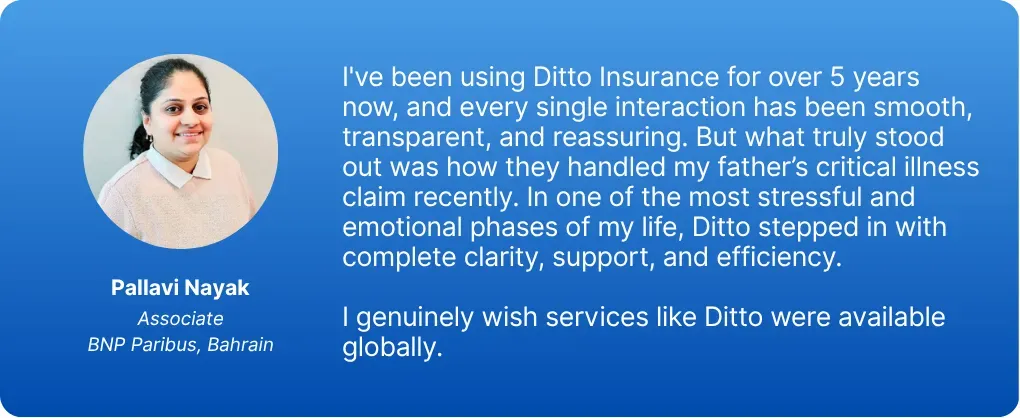
At Ditto, we’ve assisted over 12,00,000 customers choose the right insurance policy. Why customers like Pallavi love us:
- 100% Free Consultation
- No Spam. No Sales Pressure.
- Rated 4.9/5 on Google Reviews by 30,000+ Happy Customers
- Backed by Zerodha
- Dedicated Claim Support Team
- Compare Plans and Premiums with a Trusted Insurance Advisor
Confused about the right insurance? Speak to Ditto’s certified advisors for free, unbiased guidance. Book your call now or chat with us on WhatsApp. Slots fill up fast!
Conclusion
Choosing between a top-up, super top-up, and a higher base sum insured isn't just about cost. It's about how easily your health insurance will protect you when you need it most.
In most situations, a higher base sum insured remains the preferred choice because it provides broader protection through a single policy, making the claim process simpler and easier to manage. At Ditto, we generally do not recommend buying a top-up plan, as a higher base sum insured or a super top-up is usually a better option. When increasing your base cover isn't practical, a super top-up is usually the next best alternative because it offers a cost-effective way to increase your overall coverage.
Before making a decision, assess how much coverage you and your family need today and in the coming years. Then choose the option that provides adequate financial protection while keeping the claim process as simple and hassle-free as possible.
Frequently Asked Questions
Last updated on: