




Overview
Star Health and Allied Insurance began operations in 2006 as India's first standalone health insurer. Today, it serves crores of policyholders and runs one of the largest hospital networks in the country.
But 2025 brought some concerns worth knowing about up front. According to a report by The Hindu, IRDAI fined Star Health ₹3.39 crore following cybersecurity lapses tied to a data breach that exposed records of around 31 million customers.
This makes it worth asking whether Star Health's products still hold up on their own merit, despite the controversy. The Young Star plan is one of their most popular offerings, with comprehensive coverage. But a good plan from an insurer with service concerns is a combination worth examining closely.
In this Star Health Young Star plan review, we cover its features, variant differences, waiting periods, premiums, exclusions, and whether it is worth buying in 2026.
Coverage and Benefits of Star Health Young Star
Before looking at the coverage, let’s review the eligibility criteria for the plan.
Key Coverage Benefits
- Restoration Benefit: If you exhaust your base sum insured mid-year fully or partially, the plan refills it by 100% for a subsequent claim, for both the same and different illnesses. This can happen only once within the same year.
- Pre-and Post-Hospitalization Expenses: The plan covers medical expenses for 60 days before admission and 90 days after discharge. This means eligible expenses linked to the hospitalization, such as diagnostic tests, medicines, and consultations, are covered.
- No Claim Bonus (NCB): Every claim-free year adds 20% to your base SI, up to a maximum of 100%. So a ₹15 lakh cover can grow to ₹30 lakh over 5 claim-free years. The bonus increase is lower than that of other comprehensive plans, such as Care Supreme and Optima Secure+, which offer unlimited loyalty bonuses over the years.
- Ambulance and Health Checkups: The plan covers emergency road ambulance up to the SI. An annual preventive health check-up is covered up to specified limits based on the SI from the network facilities of Star Health.
- Wellness Benefits: Earn wellness points through the Star Health App to get up to a 10% premium discount on renewals.
- Road Traffic Accident (RTA) Booster: This benefit provides an additional 25% SI (up to ₹10 lakh) if you were wearing a helmet at the time of the accident and have valid police and hospital records.
Add-Ons Available
Key Differences Between Young Star Gold vs Silver Variants
This is where most buyers get confused. Both variants share the core benefits, but the Gold plan goes a step further.
Bottom Line: The Gold variant makes sense only if you're planning a family. Maternity coverage comes with a 3-year waiting period, and both spouses must be enrolled either under a floater policy or two individual policies to claim it. If you have no maternity plans in the next 3 years, the Silver plan gives you the same core protection at a lower premium.
Talk to an expert
today and
find
the right
insurance for you.


Star Health: Performance Metrics
Source: IRDAI annual reports and Star Health public disclosures.
Key Insights
- CSR: Star Health's CSR falls below the industry benchmark of around 90%, meaning that if you file a claim, there's a real chance it could be delayed or outright rejected.
- ICR: Star Health's ICR sits comfortably within the 50-80% healthy range. That generally reduces the risk of steep premium hikes at renewal, which is good for long-term policyholders.
- Complaint Volume: Star Health reports a notably higher number of complaints than its peers, such as HDFC ERGO. This could be due to documentation delays, claim rejections, or sheer customer volume, but either way, it's a number worth paying attention to.
- Annual Business: Steady growth signals a financially stable insurer. The current business scale means they have enough reserves to handle high-claim periods without facing financial stress.
- Network Hospitals: Star Health has over 14,000 network hospitals across India, making it one of the widest cashless networks available. Finding a covered hospital near you should not be a challenge.
Exclusions and Waiting Periods in Young Star Insurance
Before you buy any health plan, you need to know what it won't cover.
Waiting Periods
Waiting periods are the timeframes you must wait before you can make claims for certain conditions:
Permanent Exclusions
Have a look at the infographic below to know claims for which conditions or treatments will not be entertained at any point during the policy:
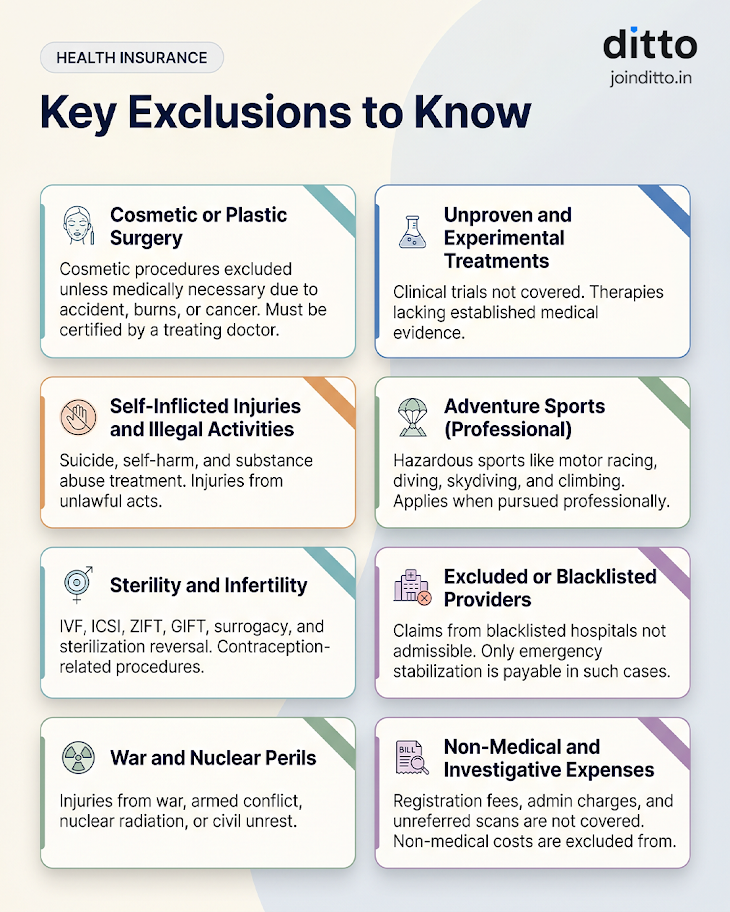
Note: For a complete list of exclusions, you can refer to the Star Health Young Star Gold Plan Brochure PDF.
Premiums: How Affordable Is the Young Star Plan?
Note: A stands for adult and C stands for child. The premiums are calculated for a ₹15 lakh sum insured for healthy individuals residing in Delhi (110010). The numbers are indicative and can vary based on age, location, medical history, and family structures.
Discounts Available:
- Special Condition Discount: 10% discount every year if you buy before age 36 and renew after 40.
- Wellness Discount: Wellness points earned through healthy activities can get you 2%-10% off at renewal.
- Favorable Claim Experience Discount: A 5% discount applies if your total claims in the past three years stayed under ₹25,000.
- Long-term Discounts: 10% off the 2nd-year premium and 12.5% off the 3rd-year premium if you buy a multi-year policy.
Who Should Buy the Star Health Young Star Plan?
The Plan Works Well if You:
- Are between the ages of 18 and 35 and want to lock in health insurance before premiums climb.
- Have a pre-existing condition like diabetes or hypertension, and need coverage soon. The 1-year PED waiting period is among the best available.
- Want maternity coverage within a few years and are okay with a 3-year wait (Gold plan).
- Prefer cashless convenience and live in a city with a large Star Health hospital network.
- Are okay with a single private room during hospitalization, which is the room rent limit.
Who Should Avoid the Star Health Young Star Plan?
The Plan Might Not Be the Right Fit if You:
- Prioritize claim reliability above all else. A CSR of 84.97% and 52 complaints per 10,000 claims are red flags if you want a smoother claims experience.
- Don’t want room-rent restrictions that can severely limit claim payouts.
- Have any conditions that may require multiple hospitalizations in the same year.
- Want your bonus to grow irrespective of claims, and that too for a higher upper cap.
Why Choose Ditto for Health Insurance?
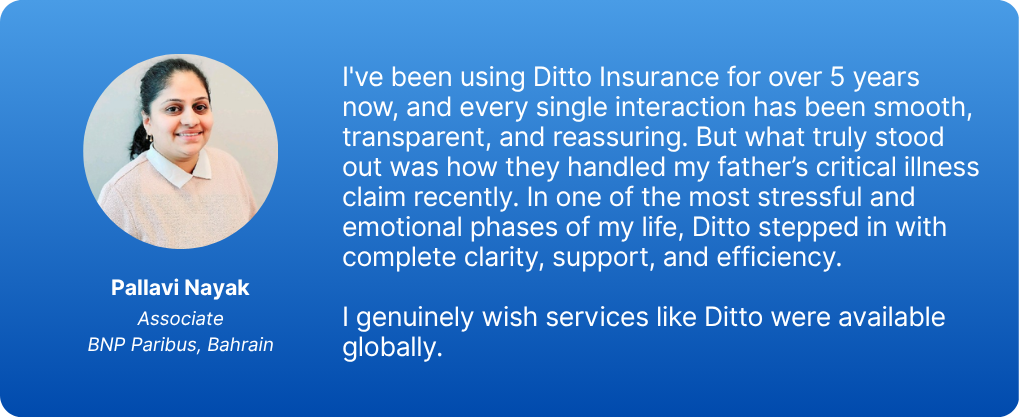
At Ditto, we’ve assisted over 8,00,000 customers with choosing the right insurance policy. Why customers like Pallavi below love us:
- No-Spam & No Salesmen
- Rated 4.9/5 on Google Reviews by 24,000+ happy customers
- Backed by Zerodha
- Dedicated Claim Support Team
- 100% Free Consultation
Confused about the right insurance? Speak to Ditto’s certified advisors for free, unbiased guidance. Book your call now or chat with our advisors on WhatsApp.
Conclusion
The Star Health Young Star plan is a decent option for young adults who need quick coverage. The 1-year waiting period for both pre-existing diseases and specific illnesses is genuinely one of the best in the market. The Gold variant adds maternity cover and hospital cash, which works for young families planning ahead.
But the plan has real gaps. Room rent is capped to a single private AC room, modern treatments have sub-limits, domiciliary treatment is not covered, and consumables need a separate add-on. The CSR is below the 90% benchmark, and complaint levels are higher than those of most peers.
Before you buy, disclose your full medical history, keep your documents in order, and understand exactly what the policy covers and what it doesn't. Buying through an experienced advisor familiar with Star Health's claims process helps avoid surprises. If claims reliability matters most to you, our best health insurance plans guide is a good place to start for exploring other options.
Frequently Asked Questions
Last updated on: