



Quick Overview
Wondering how a renewal bonus works in a health insurance plan? It may sound like just another feature offered by your insurer, but it can quietly make a big difference over time. Some insurers reward you just for staying insured, while others tie it to claim-free years. In this guide, we break down how renewal bonuses really work and why they matter.
How Does Renewal Bonus Work in Health Insurance Policies?
A renewal bonus is applied at the time you renew your health insurance policy, not during the policy year. Each time you renew without a break, the insurer adds a predefined bonus as per the policy terms.
Example: You buy a policy with a ₹10 lakh sum insured and a 10% renewal bonus. At the first renewal, the insurer adds ₹1 lakh as a bonus, increasing your total cover to ₹11 lakh for the next policy year.
Note: Bonus is typically calculated on the base sum insured, not the inflated total. Insurers may display both together, but bonus usability varies by benefit and terms.
Types of Renewal Bonuses
No Claim Bonus (NCB)
Discount on Renewal
Renewal-linked/ Loyalty Step-ups
Booster or Carry-Forward Designs
Popular Health Plans with Renewal Bonus Features
IRDAI Rules That Affect Health Insurance Renewal Bonus
1) How NCB Can be Given: IRDAI allows insurers to reward claim-free policyholders through No Claim Bonus (NCB), either as extra Sum Insured (cumulative bonus) or as a discount on the renewal premium, based on policyholder consent.
2) Grace Period Protects your Bonus: IRDAI standardises the grace period (15 days for monthly payments and 30 days for other payment modes). If renewed within this period, benefits like NCB, Sum Insured, and waiting periods remain intact.
3) NCB during Portability or Migration: IRDAI treats NCB as a transferable credit. When you port or migrate your health policy, earned NCB must be carried forward, subject to proper documentation and insurer processing.
When Can You Lose the Renewal Bonus in Health Insurance?
- If you reduce your sum insured, the renewal bonus may be proportionately reduced or reset, as it is usually linked to the base sum insured.
- If you don’t renew on time, missing premium payments can cause the policy to lapse. This leads to loss of accumulated renewal bonus and waiting period continuity.
- When you port or migrate your health policy, any documentation gaps or errors by the new insurer can lead to partial or complete loss of the renewal bonus.
Factors Which Decide If Your Renewal Bonus Is Useful
- Accrual Rate & Maximum Cap: Check how fast the bonus builds and where it stops. Most plans cap bonuses at 100–500%, unless an add-on removes or extends the limit.
- Claim Impact on Bonus: Some policies reduce the bonus after a claim, some keep it unchanged, and some step-ups ignore claims entirely. Never assume such details and verify the policy wording.
- Bonus Accrual in Claim Years: “No reduction after claim” doesn’t always mean the bonus still grows that year. Many policies preserve the existing bonus but pause further accumulation.
- Effect on Sub-limits: Bonus Sum Insured often doesn’t increase room rent limits or treatment caps. Extra cover may not improve the policy’s weakest restrictions.
- Bonus vs Restoration Confusion: Renewal bonus accumulates over the years; restoration refills are covered within the same year. They serve different purposes and aren’t interchangeable.
- Usability Conditions: Some bonuses apply only after the base sum insured is exhausted or for specific claim types. Usage rules matter more than bonus size.
- Impact of Sum Insured Changes: Reducing or altering the base Sum Insured at renewal can proportionately reduce or reset the accumulated bonus. This can vary from policy to policy.
- Misleading Marketing Labels: Terms like “Super NCB” or “Booster” are not standard. Compare only trigger type, accrual rate, cap, claim impact, and usability.
Renewal Bonus vs No Claim Bonus (NCB): What’s the Difference?
The No Claim Bonus (NCB) is a more traditional or primitive form of reward. It is given only if you do not make any claims during the policy year and is usually reduced or lost once a claim is made.
A Renewal Bonus, on the other hand, is a more modern approach. It rewards policyholders simply for renewing the policy on time. In many plans, this bonus continues regardless of claims, making it more predictable and policyholder-friendly.
Why Talk to Ditto for Your Health Insurance?
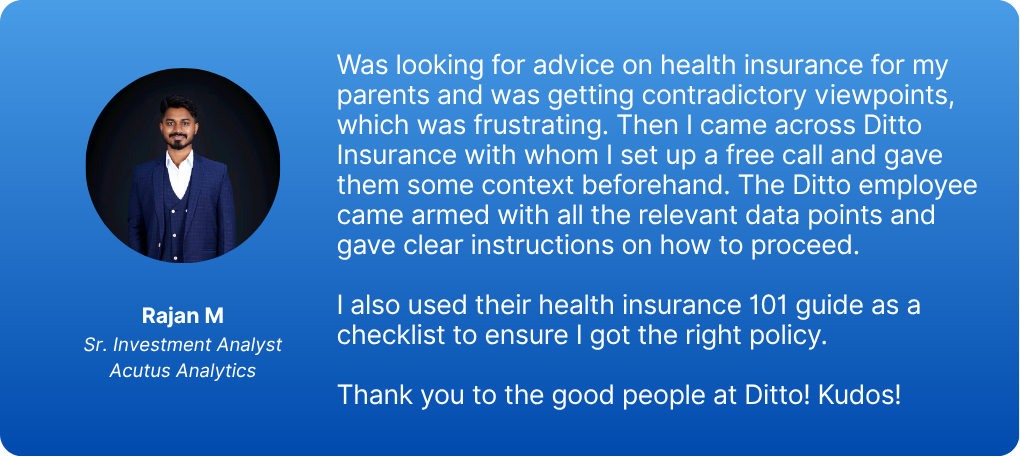
At Ditto, we’ve assisted over 8,00,000 customers with choosing the right insurance policy. Why customers like Rajan below love us:
- No-Spam & No Salesmen
- Rated 4.9/5 on Google Reviews by 15,000+ happy customers
- Backed by Zerodha
- 100% Free Consultation
You can book a FREE consultation. Slots are running out, so make sure you book a call now!
Ditto’s Take on Renewal Bonus
Renewal bonuses are useful, but they should not be the main reason you choose your health cover. Many people buy a low base sum insured, expecting bonuses to increase it over time. If a large claim happens early, the bonus may not have built up, leaving you underinsured.
The better approach is to buy an adequate base cover based on your age, city, and family needs, and treat renewal bonuses as an extra buffer. At Ditto, we recommend considering at least ₹15L to ₹25L SI to cover current costs and as well as plan for future needs.
If you are looking for health plans with established insurers, explore our comprehensive health insurance plans for 2026 to compare options and choose what suits you best. Explore more about how our experts evaluate health plans through Ditto’s cut.
Frequently Asked Questions
Last updated on: