



Quick Overview
Reliance General Insurance is a long-standing general insurer in India that offers health, motor, travel, and commercial insurance products. With over two decades in the market, it remains a familiar name for many policyholders.
When evaluating a health insurer, one key question often arises: Is Reliance General reliable when it comes to settling claims?
This is where the Claim Settlement Ratio (CSR) becomes important. It reflects the proportion of claims an insurer has settled in a given year, offering a useful indicator of its reliability during a medical emergency.
In this article, we take a closer look at Reliance General Health Insurance CSR trends and assess what they reveal about its claims reliability.
Reliance General Health Insurance Claim Settlement Ratio
Note: The above figures are based on the insurer’s public disclosures (Form NL 37).
Insights: Reliance General Health Insurance CSR shows a downward trend over these three years, consistently staying below the industry average. With a 3-year average of 87.45%, the insurer’s claim performance indicates room for improvement in efficiency and consistency.
To examine an insurer’s performance more accurately, we focus on a three-year average CSR instead of a year. This helps balance out temporary fluctuations and gives a clear picture of the insurer’s long-term claim reliability.
How to Calculate Reliance General Health Insurance Claim Settlement Ratio?
The claim settlement ratios published by insurers may differ from the figures we report. This happens because insurers often use their own internal formulas or classification methods.
At Ditto, we follow a transparent and uniform calculation:
CSR = (Claims Settled ÷ Total Claims Requiring a Decision) × 100
The total number of claims requiring a decision is calculated by adding the unsettled claims from the previous year to the new claims filed, and then subtracting the claims that were closed without payment and those still pending.
There are several other indicators that help you understand how Reliance General Insurance actually performs. Here’s an overview:
Reliance General Health Insurance: Key Performance Metrics
Key Insights
Average Complaints
Incurred Claim Ratio (ICR)
Annual Business / Gross Written Premium (GWP)
Network Hospitals
Let’s compare Reliance General Health Insurance with other insurers based on their average CSR over the past three financial years.
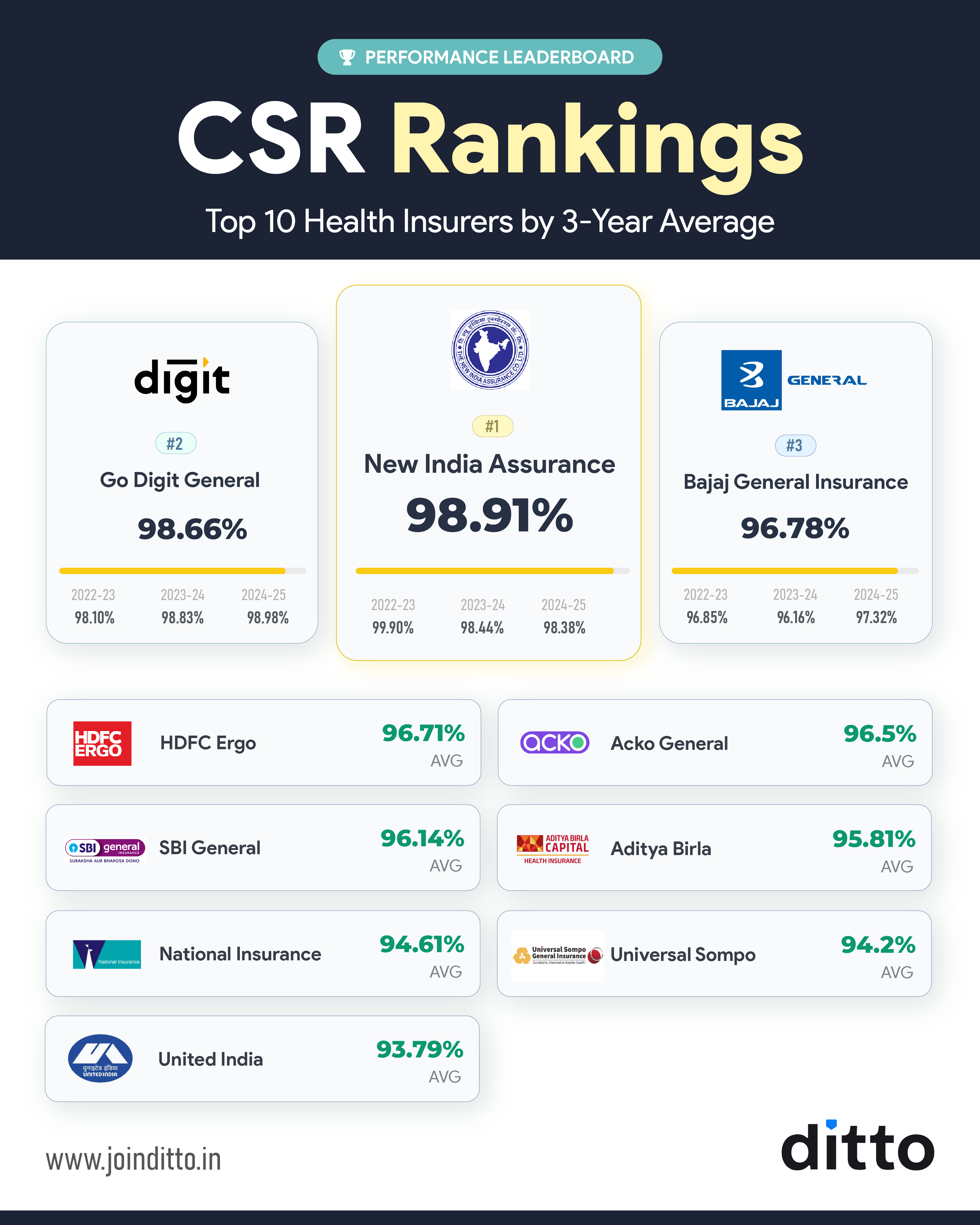
As seen in the infographic, Reliance General does not feature among the top 10 health insurance companies by CSR in India. This suggests there is room for improvement in its claims-handling efficiency.
Why Choose Ditto for Health Insurance?
At Ditto, we have assisted over 700,000 customers with choosing the right health insurance policy according to their needs and goals. Why customers like Aaron love us:
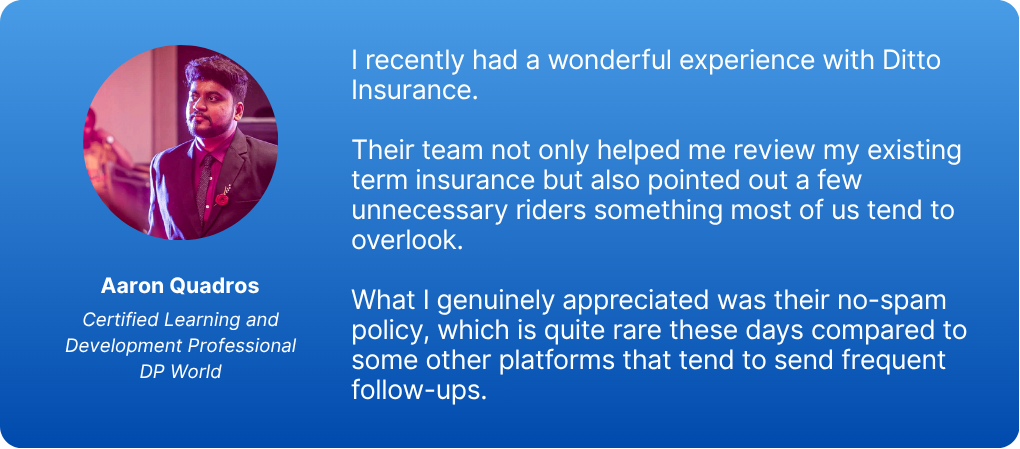
- No-Spam & No Salesmen
- Rated 4.9/5 on Google Reviews by 15,000+ happy customers
- Backed by Zerodha
- Dedicated Claim Support Team
- 100% Free Consultation
You can book a FREE consultation. Slots are running out, so make sure you book a call now!
Ditto’s Take
The Reliance Health CSR falls within a moderate range but is relatively lower than many other insurers in the market. On the positive side, it offers a reasonably wide hospital network, comparatively lower complaint volumes, and competitively priced plans similar to peers like Care and Niva Bupa.
For a better understanding of how to choose the right plan, reach out to our expert advisors for unbiased guidance tailored to your needs.
Note: Reliance General is not a Ditto partner, and all information in this article is drawn from publicly available sources, including the company’s website, disclosures, and annual reports. To learn more about how we evaluate insurers, check out Ditto’s Cut.
Frequently Asked Questions
Last updated on: