




Quick Overview
Health insurance premiums can vary widely depending on age, coverage amount, and family size. That is why many people check the premium chart before choosing a policy.
If you are considering an Oriental health insurance policy, reviewing its premium chart is one of the easiest ways to understand how premiums are structured.
In this article, we break down how to read the Oriental Health insurance premium chart, what it shows, and which factors influence premiums.
Oriental Health Insurance Premium Chart 2025 (Age-Wise Rates)
If you prefer to view the premium charts directly, you can download the official PDFs for some popular Oriental health insurance plans below.
Note: Always download the premium chart from the insurer’s official website, as third-party information can be outdated or inaccurate.
Oriental Health Insurance Premium Chart PDF Download
- Go to the official Oriental Insurance website.
- Choose the policy-related document option under the download section in the services tab.
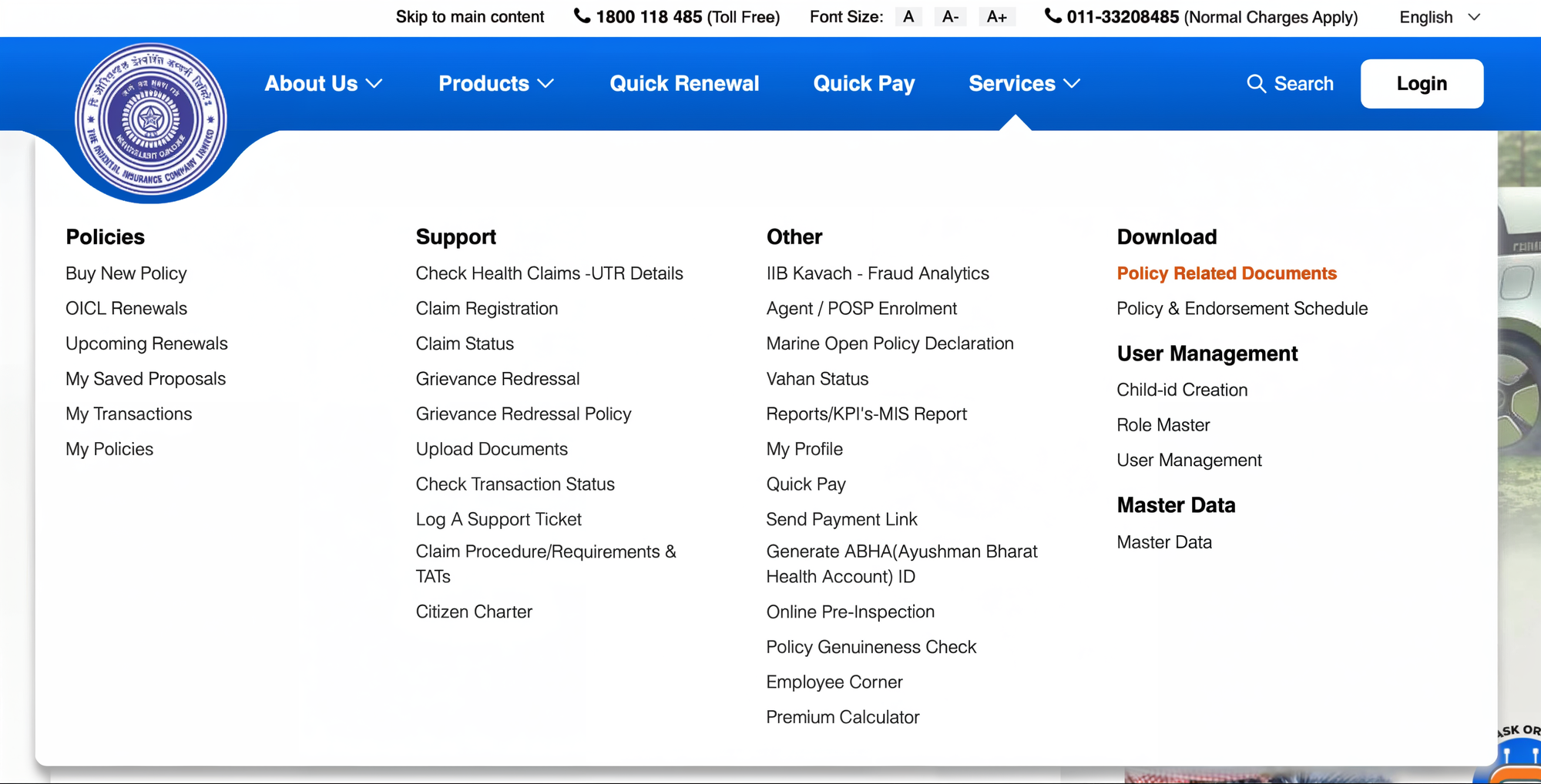
- Select Health, choose your plan, and access the premium chart PDF.

- Download the file labeled Premium chart (where premium tables are present). For reference, here’s what a typical Oriental Health Insurance premium chart PDF looks like:
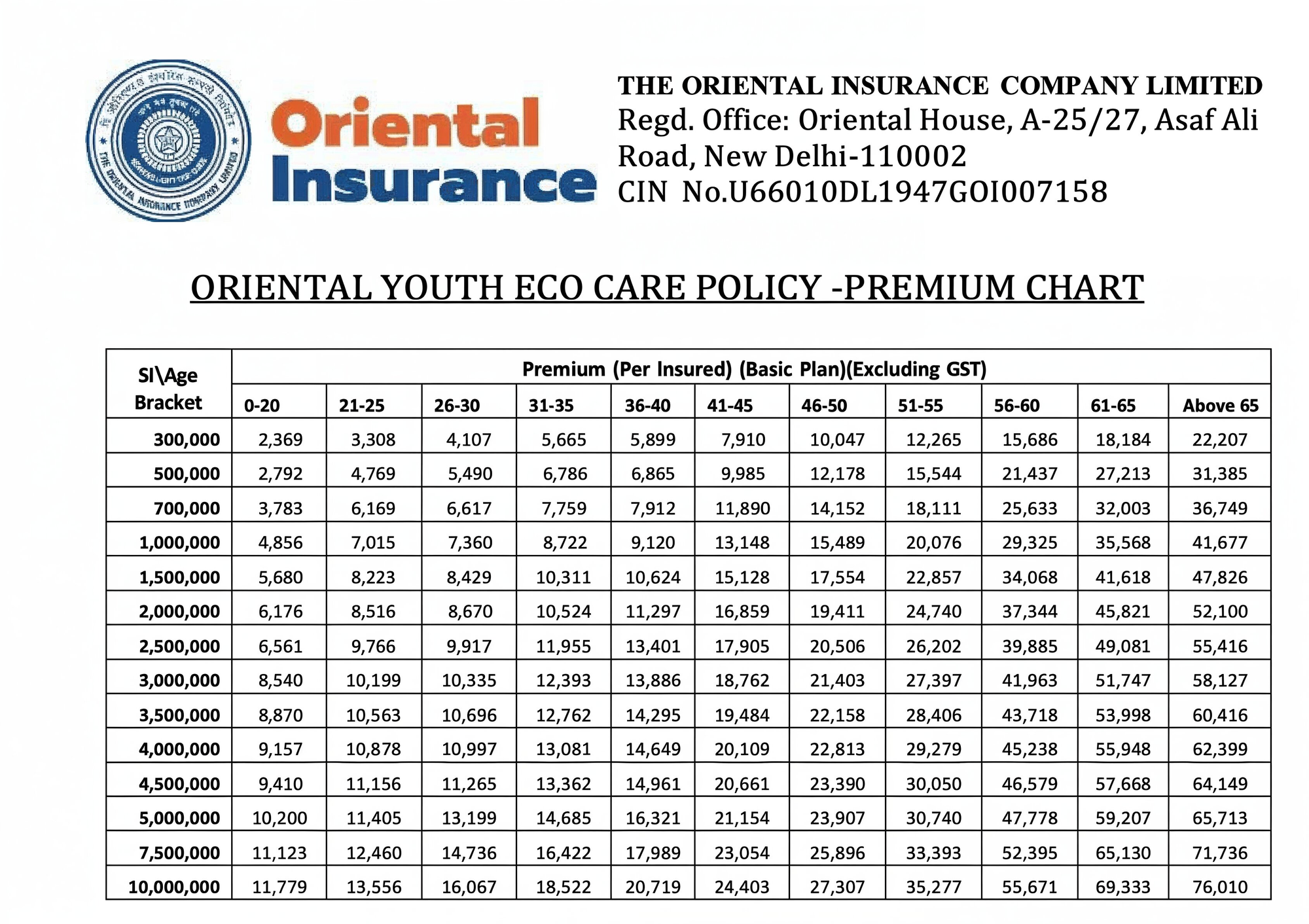
What Details are Covered in the PDF?
Age Brackets
Sum Insured and Plan Variants
Floater vs Individual Premiums
Zone-Based Pricing
Note: If you relocate to a different city, your premium may change depending on the applicable zone. Always update your address with the insurer to avoid issues during claims.
How to Calculate Oriental Health Insurance Premiums Online?
- Visit the official Oriental Insurance portal: https://orientalinsurance.org.in/dashboard.
- Navigate to the “Services tab” and select “Buy New Policy” under the Policies section.
- Choose the health policies category and select the plan you want to calculate the premiums for.
- Enter your mobile number and email ID to receive the OTP.
Provide the required details such as proposer information, family member details, pincode, sum insured, plan type, optional covers/riders available, and applicable discounts.
The system will then display the estimated premium based on the information provided.

Factors That Affect Oriental Health Insurance Premium
Age
For family policies, the premium is largely calculated based on the age of the eldest member in the family, who is treated as the primary policyholder. Since health risks increase with age, the premium tends to be higher when the primary member falls in a higher age band.
Policy Structure
In individual policies, premiums are calculated based on the insured person’s completed age. For family floater plans, premiums are generally based on the age of the eldest member. The eldest member is charged the full premium, the second member about 75%, and additional members, such as children, are typically charged around 50%. This structure helps make family coverage more affordable compared to purchasing separate individual policies.
Discounts
Oriental Insurance may offer certain discounts that can reduce the overall premium. These may include online purchase discounts, opting out of TPA services, or family discounts when multiple members are covered under a single policy. Such discounts can slightly lower the final premium payable.
Medical History and Underwriting
If any insured member has pre-existing diseases, lifestyle risks, or past medical conditions, the insurer may apply a loading or additional premium after medical underwriting. This helps insurers price policies based on individual health risk.
Popular Oriental Health Insurance Plans and Their Premium Structure
Key Insight: The Oriental Youth Eco Care Policy offers a “floater within floater” option, allowing different coverage amounts for parents and children within the same policy. For example, the policyholder and spouse can have a ₹10 lakh floater while children have a ₹5 lakh floater. Both groups must be under the same plan variant.
To help you understand the premiums better, here are sample Youth Eco Care Policy premiums (Premium Variant) for a few common customer profiles.
Youth Eco Care Policy premiums (Premium Variant)
Note: These premiums are based on a ₹15 lakh sum insured for Delhi pincode (110010) for healthy profiles. Values are indicative and may vary after underwriting.
Why Choose Ditto for Your Health Insurance?
At Ditto, we’ve assisted over 8,00,000 customers with choosing the right insurance policy. Here’s why customers like Abhinav love us:
- No-Spam & No Salesmen
- Rated 4.9/5 on Google Reviews by 15,000+ happy customers
- Backed by Zerodha
- 100% Free Consultation
You can book a FREE consultation with us. Slots are filling up quickly, so be sure to book a call now or chat with us on WhatsApp!
Conclusion
The Oriental health insurance premium chart offers a quick way to understand how premiums may vary based on age, sum insured, family size, and the type of plan you choose. Reviewing the chart beforehand can give you a clearer idea of the expected cost and help you compare coverage options more confidently. While premium charts are useful for estimating prices, the final premium may still vary depending on factors like medical history, add-ons, and policy structure. Hence, reviewing the premium chart is a useful first step, but comparing coverage benefits across plans is equally important before buying a policy.
Disclosure: Oriental Health Insurance is not a partner insurer of Ditto. Our assessment is independent and based only on publicly available information and the evaluation framework we apply to all insurers. For details on how we review insurers across claims performance, complaints, financial strength, and product suitability, please refer to our methodology. For the most recent updates, we recommend checking the insurer’s official website.
Frequently Asked Questions
Last updated on: