



Overview
After paying health insurance premiums for years, would you risk switching insurers only to face complications when making a claim for a slightly better plan? For senior citizens, this decision can be particularly difficult. Since age-related conditions, fresh medical assessments, and revised policy terms can make switching insurers risky.
Although the process of how to port senior citizen health insurance plans may seem straightforward, it involves more than filling out a few forms. Let's look at the portability rules, steps involved, benefits you can carry forward, and risks to consider before making the switch.
Can Senior Citizens Port Their Existing Health Insurance Policy?
Yes. Senior citizens can port eligible indemnity-based health insurance policies at renewal across individual, family floater, and group policies. However, members leaving a group policy should check their available and applicable portability options.
Acceptance isn't guaranteed. The new insurer assesses your age, medical history, existing conditions, and past claims. It may request medical tests, revise premiums or terms, or reject your application. If accepted, eligible waiting periods, NCB, and moratorium credits carry forward.
Before switching, compare your existing coverage and insurer's service, especially if you've held the policy for several years.
Steps to Port Health Insurance for Senior Citizens
1) Compare New Policies: Compare coverage, premiums, exclusions, hospital networks, and insurer metrics to identify meaningful improvements. Before you port health insurance policy coverage to a new insurer, ensure the new plan offers better benefits and terms.
2) Apply Within the Prescribed Window: Submit your portability request 30–60 days before renewal. If you miss this window, the insurer may still accept your request up to 15 days before renewal, provided your coverage remains uninterrupted. However, acceptance is not guaranteed.
3) Submit the Required Forms: Complete the new insurer's proposal and portability forms, disclosing all details accurately.
4) Complete Information Exchange: The new insurer requests your policy, underwriting, and claims details through the Insurance Information Bureau of India (IIB) portal. Your existing insurer must share them within 72 hours after receiving the request.
5) Wait for the Underwriting Decision: The new insurer reviews your profile, medical history, claims, and policy details. It must communicate its decision within 5 days after receiving the information from the existing insurer and may accept, reject, or offer revised terms.
6) Verify Your New Policy: Once accepted, check that the issued policy correctly reflects your details, sum insured, NCB, waiting period credits, and applicable moratorium benefits.
Note: If your portability request is rejected, check your renewal options with your existing insurer and try to renew without a break in coverage.
Talk to an expert
today and
find
the right
insurance for you.


Documents Required for Health Insurance Portability
- Completed proposal and portability forms from the new insurer.
- Current policy schedule, latest renewal notice, and previous policy records, preferably from the original policy inception date, to establish continuous coverage.
- Policy endorsement letters (if any) recording changes to your policy, including the disclosure of any new medical conditions, added members, sum insured modifications, or other formally accepted policy modifications.
- Previous claim records or a no claim declaration, if requested.
- Relevant reports, prescriptions, and details of existing conditions, surgeries, hospitalizations, and ongoing treatments, as requested.
- Valid KYC documents or CKYC details, including PAN and accepted address proof such as Aadhaar, passport, voter ID, or driving license.
The insurer may request additional documents or medical tests based on your age, medical history, claims record, and their underwriting.
Important: Do not cancel your existing policy until the new insurer accepts your request and issues the policy. This prevents a break in coverage.
What Are the IRDAI Rules for Senior Citizen Health Insurance Portability?
What Should Senior Citizens Check Before Porting Their Health Insurance Policy?
- Check Existing Policy Details: Review your policy's coverage, sum insured, accumulated benefits, and total continuous coverage history, including any previously ported or migrated policies. Before switching, assess whether your existing policy still meets your healthcare needs.
- Compare Health Insurance Plans: Compare coverage, exclusions, co-payment clauses, room rent limits, disease-specific limits, and waiting periods. Explore senior citizen health insurance plans to check whether they offer better coverage than your existing policy.
- Check Hospital Networks: Ensure your preferred hospitals and their specific branches are part of the new insurer's current cashless network.
- Check Existing Insurer's Migration Options: Before initiating portability, check whether your existing insurer offers a better plan that meets your healthcare needs.
- Apply for the New Plan: If migration isn't suitable and you decide to port, accurately disclose your medical history and compare the revised premium.
Ditto's Take
Pros and Cons of Porting Senior Citizen Health Insurance
Pros
- Access to Better Coverage: You may get a higher sum insured, fewer restrictions, or better coverage for treatments your existing policy limits.
- Access to Preferred Hospitals: Switching insurers may give you access to hospitals near your home or preferred specialists that are not part of your current insurer's network. Check the hospital's exact branch and confirm its cashless arrangement with the new insurer before switching.
- Access to a Better Insurer: You may switch to an insurer with better claim settlement metrics, customer service, and grievance resolution.
Cons
- Stricter Underwriting: Insurers may closely assess your age, medical conditions, and past claims. Some may reject the request or offer limited plan options.
- Higher Premiums: A new insurer may charge more based on your current age, medical history, health risks, and their underwriting.
- New Policy Restrictions: The new insurer may offer revised terms, such as co-payments, deductibles, premium loadings, or condition-specific restrictions. These can increase your out-of-pocket expenses.
- Errors in Transferred Records: Early claim rejections may occur due to discrepancies in records transferred during health insurance portability, including waiting period credits or medical history details.
Why Choose Ditto for Health Insurance?
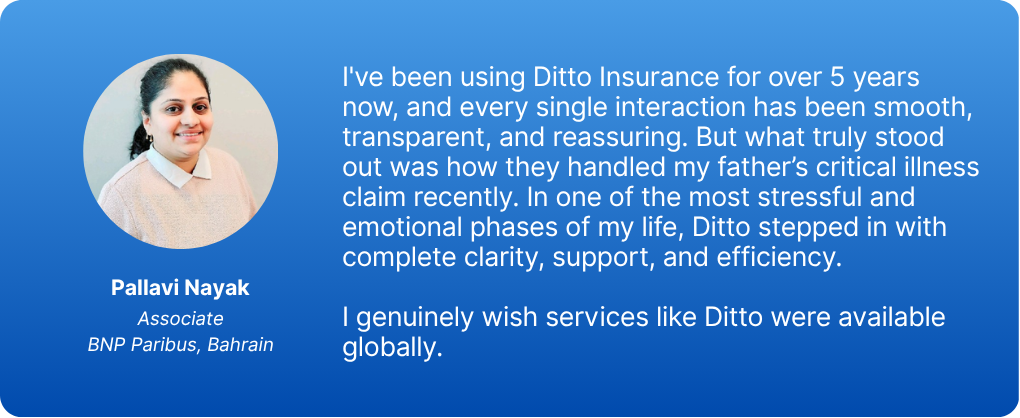
At Ditto, we’ve assisted over 12,00,000 customers with choosing the right insurance policy. Why customers like Pallavi love us:
- 100% Free Consultation
- No Spam. No Sales Pressure.
- Rated 4.9/5 on Google Reviews by 30,000+ Happy Customers
- Backed by Zerodha
- Dedicated Claim Support Team
- Compare Plans and Premiums with a Trusted Insurance Advisor
Confused about the right insurance? Speak to Ditto’s certified advisors for free, unbiased guidance. Book your call now or chat with us on WhatsApp. Slots fill up fast!
Frequently Asked Questions
Last updated on: