



Overview
About 11 in every 100 adults in India live with a mental health disorder, according to the National Institute of Mental Health and Neurosciences (NIMHANS), data cited by the Press Information Bureau. So, if someone is paying for consultations, therapy, or medication, they may be wondering: does a health insurance policy cover depression?
Here is the good news. Indian law requires insurers to cover mental illness the same way they cover physical illness. But there is a catch. Most policies cover only hospitalization, not regular therapy sessions.
This article covers exactly what is covered, what is not, and how waiting periods work, so you know what to check before you file a claim or buy a new plan.
Does Health Insurance Cover Depression in India?
Yes, and this is no longer optional for insurers. Section 21(4) of the Mental Healthcare Act, 2017, states that every insurer must provide medical insurance for mental illness on the same basis as physical illness. This marks a further step toward understanding the importance of mental health awareness.
IRDAI first directed insurers to comply through its circular dated August 16, 2018. It followed up by asking insurers to confirm compliance by October 31, 2022.
In practice, this means your standard health insurance policy cannot exclude depression from hospitalization cover. However, the depth of coverage, especially for therapy and Outpatient Department (OPD) visits, still depends on your specific plan.
Inpatient vs. OPD Coverage for Depression
What Mental Health Treatments Does Health Insurance Cover?
Your base health insurance policy focuses on hospitalization. Here is what falls under that coverage.
Inpatient Treatment for Depression
If you are admitted to a psychiatric hospital for at least 24 hours, your policy covers room rent, nursing charges, and doctor's fees and related expenses. This works the same way as hospitalization for any physical illness.
Psychiatric Consultation and Therapy
Consultations during your hospital stay are covered. But regular therapy or counseling outside the hospital, meaning OPD visits, is usually excluded unless you have added an OPD or wellness rider. These can be covered as part of pre-and post-hospitalization expenses after the hospitalization for a specific number of days as mentioned in your policy.
Hence, for ongoing mental health and wellness support, OPD benefits matter because regular consultations and therapy may not require hospitalization.
Medication and Other Treatment Costs
Medicines prescribed during hospitalization are covered under your sum insured. Medicines you buy after discharge for ongoing management are covered under post-hospitalization expenses. However, regular medications without hospitalization are not covered under your base policy.
Daycare Treatment for Mental Health Conditions
Some mental health procedures do not need a full 24-hour admission. If your insurer lists these as daycare procedures, your policy covers them the same way it covers inpatient treatment.
Talk to an expert
today and
find
the right
insurance for you.


When Does Health Insurance Cover Depression?
Timing matters a lot here. When you were diagnosed, relative to when you bought the policy, changes how your claim gets treated.
Depression Diagnosed After Buying the Policy
If you get diagnosed with depression after your policy starts, it is not a pre-existing condition. Inpatient treatment is covered like any other illness once your standard 30-day initial waiting period ends.
Depression Diagnosed Before Buying the Policy
If you already had a depression diagnosis before applying, insurers will ask you to disclose it. They can apply a waiting period of up to 3 years, add a loading charge, or offer a modified plan instead of a standard one.
Ditto's Insight
What Is Usually Not Covered: OPD Therapy, Substance Use, and Self-Harm Exclusions
- OPD Consultations and Therapy Sessions: Usually not covered, or covered only with sub-limits, unless you buy a specific OPD or mental wellness add-on.
- Pre-Existing Mental Health Conditions: Not covered until your waiting period ends.
- Treatments not Prescribed by a Registered Psychiatrist: Excluded, along with rehabilitation and long-term residential programs.
- Experimental, Alternative, or Unproven Therapies: Not covered under standard policies.
- Self-Inflicted Injury or Suicide Attempts: Excluded, as per your policy's exact wording.
- De-Addiction and Substance-use Related Admissions: Excluded unless your policy specifically covers them.
Please Note: This is not an exhaustive list of exclusions. Specific exclusions can vary by policy.
Waiting Periods That Apply to Depression and Other Mental Illnesses
Initial 30-Day Waiting Period: Every new health insurance policy comes with a standard 30-day initial waiting period for illnesses in general, and depression is no exception.
Pre-Existing Disease Waiting Period: If depression is disclosed as a pre-existing condition, a longer waiting period of 1-3 years applies, depending on the insurer. During this time, PED-related hospitalization claims will not be accepted or approved.
Ditto's Insight
Best Health Insurance Plans That Cover Mental Illness in India
Please Note: At Ditto, we follow a policy and insurer rating framework for every plan we recommend, rating features, insurer reliability, and premium affordability.
Since hospitalization for mental illness is covered by law across all health insurers, the plans above are our top picks with OPD coverage available too, for a more holistic view of your options.
Coverage and issuance always depend on the insurer's underwriting, so check the current policy wording before you buy.
How to Claim Health Insurance for Depression Treatment?
Filing a claim for depression follows the same process as any other hospitalization claim. You can either use cashless treatment at a network hospital or pay first and file for reimbursement.
Cashless Claims: For cashless claims, inform your insurer or Third-Party Administrator (TPA) before admission, if it is planned, or within 24 hours for emergencies. Submit the pre-authorization form along with the psychiatrist's diagnosis and treatment plan.
Reimbursement Claims: For reimbursement claims, keep every bill, discharge summary, and prescription. Submit these along with your claim form once you are discharged.
Claims Insight
Common Disclosure Mistakes to Avoid When You Have a Depression Diagnosis
Not declaring a clinical depression diagnosis on your application is one of the costliest mistakes you can make. It can lead to a rejected claim or even a canceled policy.

Using Vague Terms
Writing "stress" or "low mood" instead of the actual diagnosis can look like you hid a material fact, even if you did not mean to. This can lead to claim rejections and even policy termination.
Skipping Past Treatment History
If you previously consulted a doctor for depression symptoms, disclose the diagnosis, consultations, medications, or treatment wherever the proposal form asks for them. Leaving out old prescriptions, short-term counseling, or therapy just because you feel stable now still counts as non-disclosure.
Assuming it Will Not Come Up
Insurers can verify your medical and prescription history during a claim investigation, so non-disclosure rarely stays hidden.
Ignoring the Waiting Period
Expecting instant coverage for an ongoing pre-existing condition, without accounting for the mandatory waiting period, sets you up for a denied claim.
Not Sharing Proof of Stability
Skipping recent doctor's notes or certificates that show your condition is under control makes it harder for the underwriter to assess your case fairly. This can lead to application rejection and permanent exclusions if the policy is accepted.
Assuming a Diagnosis Means Automatic Rejection
The Mental Healthcare Act, 2017, requires insurers to offer standardized, non-denial covers for people with a mental illness diagnosis, so a rejection from one plan is not the end of the road.
Ditto’s Insight: If a comprehensive plan denies your application because of severity, look for standardized alternatives like Arogya Sanjeevani or rely on a corporate or group cover, since these exist specifically for this situation.
Why Choose Ditto for Health Insurance?
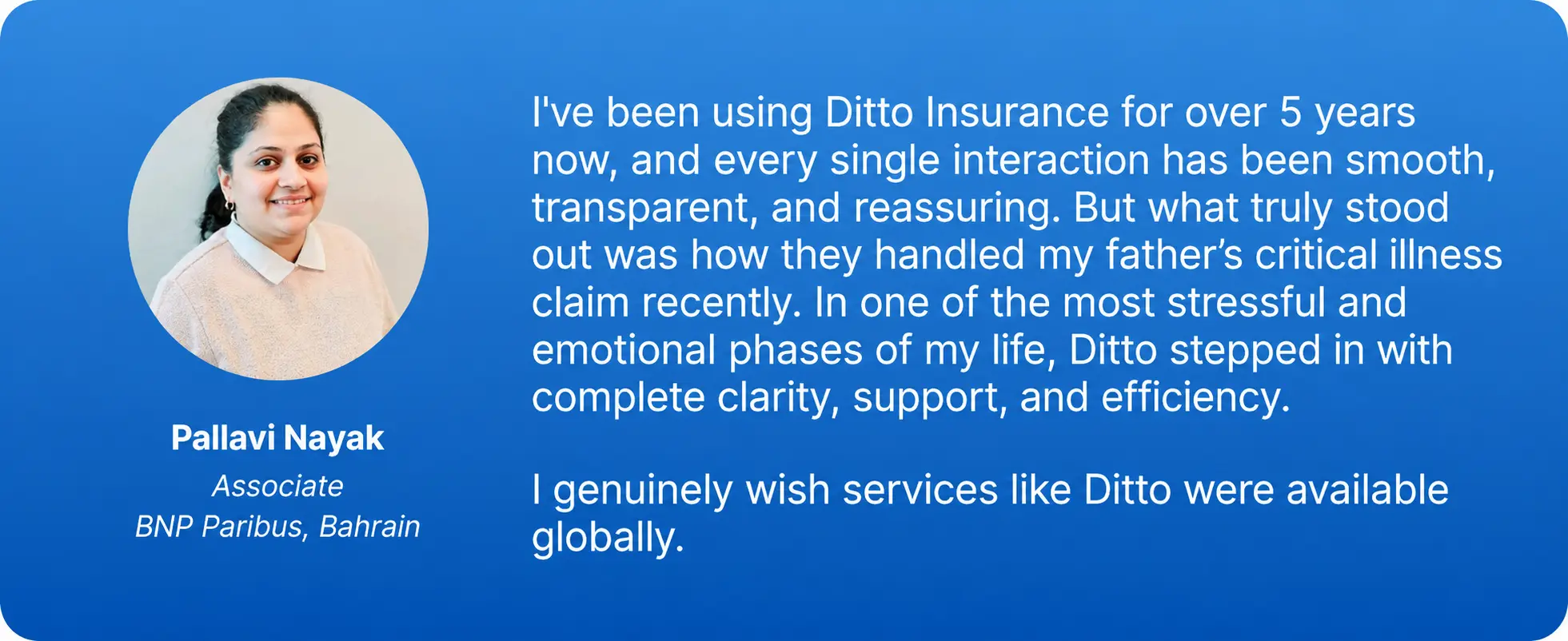
At Ditto, we’ve assisted over 12,00,000 customers choose the right insurance policy. Why customers like Pallavi love us:
- 100% Free Consultation
- No Spam. No Sales Pressure.
- Rated 4.9/5 on Google Reviews by 30,000+ Happy Customers
- Backed by Zerodha
- Dedicated Claim Support Team
- Compare Plans and Premiums with a Trusted Insurance Advisor
Confused about the right insurance? Speak to Ditto’s certified advisors for free, unbiased guidance. Book your call now or chat with us on WhatsApp. Slots fill up fast!
Conclusion
Depression coverage in Indian health insurance has come a long way, but it is not automatic in the way people assume. Before you rely on your policy, check three things. Confirm your plan covers psychiatric hospitalization, check if it offers an OPD or wellness rider for therapy, and always disclose your diagnosis honestly on your proposal form.
If you are managing depression or supporting someone who is, you can start by exploring the best health insurance plans in India. If things don’t work out, we can help you find alternatives so you’re not left uninsured.
Frequently Asked Questions
Last updated on: