




Introduction
The latest Sample Registration System (SRS) Causes of Death report, 2021-23, says cardiovascular disease is the leading cause of death among Indians aged 30 and above, accounting for 31% of all deaths in India.
So if you are searching for the best health insurance policy for heart patients in India, you are not alone.
But the problem is that most health insurance plans treat existing cardiac conditions as high-risk. This can mean longer waiting periods, higher premiums, stricter medical underwriting, exclusions, or even rejection in some cases. Although that does not mean heart patients have no options. This is where Ditto helps. Our advisors explain your options based on your age, heart condition, treatment history, and budget. We also help you read the fine print before you buy, so you know exactly what is covered and what is not.
This guide breaks down what health insurance for heart patients covers, what it can cost, and which plans are worth considering. We also discuss how Ditto helps you find the best health insurance for heart patients.
Common Questions Heart Patients Ask
What Is Health Insurance for Heart Patients?
Health insurance for heart patients is either a comprehensive plan, a rider that shortens waiting periods, or a plan designed specifically for pre-existing cardiac conditions. It covers the cost of diagnosing, treating, and managing heart disease. Think of it as your financial backup for anything from a routine angioplasty to a full bypass surgery.
However, finding health insurance in India with a heart condition can be difficult. Insurers see cardiovascular diseases as high-risk because they are chronic, expensive to treat, and often linked with other conditions like diabetes, hypertension, obesity, or kidney issues. These comorbidities can make underwriting stricter.
Depending on the severity of the condition, the insurer may accept the proposal with a waiting period, charge a higher premium, restrict the cover, permanently exclude certain conditions, or even reject the application outright.
Can a Person With a Heart Condition Get Health Insurance in India?
Yes, a person with a heart condition can get health insurance in India. But the process is rarely as straightforward as buying a regular policy with no medical history. That’s because insurers treat heart ailments as Pre-Existing Diseases (PEDs). So if you have hypertension, coronary artery disease, a history of heart attack, angioplasty, bypass surgery, valve-related issues, or any other diagnosed cardiac condition, the insurer will first assess how risky your profile is before deciding the final terms.
Terms and Conditions to Expect
- Underwriting: They may ask about your diagnosis, hospitalization history, current medication, latest ECG/ECHO/TMT reports, angiography reports, blood pressure readings, diabetes status, BMI, smoking status, and family history.
- Pre-Policy Medical or Telemedical Evaluation: For heart patients, insurers may require a pre-policy medical checkup, a telemedical consultation, or both. A telemedical call usually involves questions about your current health, symptoms, medicines, past procedures, and lifestyle. A physical medical test may include blood tests, an ECG, a urine test, and other cardiac-related investigations, depending on your age, sum insured, and medical history.
- Premiums and Loading Charges: If the insurer accepts your proposal but sees you as a higher-risk applicant, they may apply a loading charge. This means you pay an additional amount on top of the base premium. Loading is not always a bad outcome. In fact, in many cases, it is the insurer’s way of offering coverage instead of rejecting the proposal.
- Waiting Periods: Heart-related claims are covered only after the pre-existing disease waiting period is completed. Under current IRDAI rules, the maximum PED waiting period is 36 months of continuous coverage. Some plans may offer shorter waiting periods, and some may allow you to reduce the waiting period by paying extra for an add-on. However, this depends on the insurer, the plan, and your medical profile.
- Cover Restrictions: Even if the insurer accepts your proposal, they may restrict certain parts of the policy. For example, they may offer a lower sum insured than requested or decline specific riders. In some cardiac-specific plans, you may also see co-payments, disease-wise sub-limits, or limits on room rent.
- Permanent Exclusions: In some cases, the insurer may agree to issue the policy but permanently exclude a particular condition or related complication. For heart patients, this could mean cardiac-related treatment is not covered at all, even after the waiting period.
- Rejection: If the heart condition is recent, severe, unstable, poorly controlled, or linked with multiple complications, the insurer may reject the proposal altogether.
How to Apply and Improve Your Chances
The most important rule is simple: disclose everything. Do not hide your diagnosis, medicines, surgeries, stents, doctor consultations, or test reports. Non-disclosure may help you get the policy issued, but it can create serious problems at the time of a claim. If the insurer later finds that a known heart condition was not disclosed, the claim can be rejected or, worse, the policy canceled.
Instead, submit your latest reports, show that the condition is stable, mention your current medication, and be honest during the telemedical or pre-policy medical process. A slightly higher premium with meaningful cardiac coverage is usually better than a cheaper policy that excludes the very condition you’re most worried about.
What If You Develop a Heart Condition After Buying Health Insurance?
If you bought the policy before diagnosis and disclosed everything correctly at purchase, the new heart condition is not treated as a pre-existing disease from day one of the policy. Your policy will continue to renew, and future cardiac claims will be covered subject to the plan’s waiting periods, exclusions, room rent limits, sub-limits, and claim admissibility.
However, don’t hide the new diagnosis during renewal-related declarations, porting, sum insured enhancement, or rider addition. If you increase your cover later, the additional portion may undergo fresh underwriting.
Can an Insurer Outright Deny Health Insurance to a Heart Patient?
Yes. Insurers can reject a health insurance application if the heart condition is recent, severe, unstable, or paired with multiple comorbidities. And if the condition is recent, severe, unstable, or linked with multiple comorbidities, the insurer may reject the proposal altogether. But rejection is not the only possible outcome.
If the condition is stable, they may approve the policy with a premium loading charge, meaning you pay an extra amount over the standard premium. They may also impose a pre-existing disease waiting period, so heart-related claims are covered only after up to 36 months of continuous coverage.
In more severe cases, insurers may restrict the sum insured, deny certain riders, or permanently exclude specific cardiac treatments.
Key Factors Evaluated by Underwriters
Current Health Status
Time Since the Cardiac Event
Comorbidities
Requested Coverage
What If Retail Insurers Reject You?
Don’t keep applying to multiple insurers without guidance, because some insurers ask about previous rejections, and a rejected proposal can make future underwriting tougher.
If regular retail plans are not accepting your profile right now, you can explore fallback options such as Arogya Sanjeevani (an IRDAI-standardized health insurance plan) or your corporate or group health insurance, since the underwriting is more lenient.
What Is the Best Health Insurance Plan for Heart Patients?
There's no single best health insurance policy for heart patients in India, since so much depends on your specific diagnosis, how long ago it was made, and whether you've had any procedures.
If you already have a diagnosed complex heart condition, you may need to look at niche, cardiac-focused plans designed to accept applicants that comprehensive insurers might otherwise decline.
If you don't have a complicated heart condition yet, a comprehensive plan with a rider that waives or reduces the Pre-Existing Disease (PED) waiting period is your strongest move. Riders attached to plans like HDFC ERGO Optima Secure+, Care Supreme, and Aditya Birla Activ One MAX are designed to cover conditions such as hypertension, high cholesterol, or coronary artery disease (specifically, PTCA performed more than a year ago) from 0-30 days, rather than the standard 3-year waiting period.
Talk to an expert
today and
find
the right
insurance for you.


What Waiting Period Applies to a Pre-Existing Heart Condition?
For pre-existing heart conditions, health insurance policies apply a waiting period before cardiac claims become payable. Under IRDAI’s current rules, the waiting period for disclosed pre-existing diseases is capped at 36 months of continuous coverage. So, if your heart condition is treated as a PED, the insurer will not cover related claims until this period is completed. You also have to serve the standard 30-day initial waiting period for all illnesses except accidents, which are covered from day 1, and a separate waiting period of 1-2 years for specific listed illnesses such as cataracts and hernias.
As waiting periods vary by insurer, plan, rider, and your medical history, here’s what heart patients should check:
- Regulatory Limit: For disclosed pre-existing diseases, insurers cannot impose a PED waiting period beyond 36 months of continuous coverage. Some plans may offer shorter PED waits, especially cardiac-specific plans or those with PED-reduction add-ons.
- Premium Loading: If the insurer sees your heart condition as manageable but higher-risk, it may accept the proposal with a higher premium.
- Waiting Period Reduction Riders: This is the key feature to compare for heart patients. Plans like Care Supreme’s Instant Cover Plus can reduce the PED wait for conditions such as hypertension and CAD (Percutaneous Transluminal Coronary Angioplasty performed more than 1 year ago) from 3 years to 30 days, while Aditya Birla Activ One MAX’s Chronic Care add-on can reduce it to 0 days.
- Portability: If you have already served part of your waiting period with one insurer, portability can help you carry forward waiting period credits when moving to another insurer, subject to the new insurer’s underwriting.
For heart patients, this is often the most important comparison point. Don’t just check whether the plan covers cardiac conditions. Check when it starts covering them, whether a rider can reduce that waiting period, and whether the final underwriting offer includes loading, exclusions, sub-limits, or rider restrictions.
What Cardiac Treatments and Procedures Does Health Insurance Cover?
Comprehensive health insurance can cover major cardiac emergencies and planned procedures, including hospitalization, surgeries, diagnostic tests, and medicines. However, the actual coverage depends on the policy terms, whether the heart condition was pre-existing, the applicable waiting period, and any sub-limits or exclusions in the plan.
Common Covered Cardiac Procedures
- Angioplasty: A procedure used to open blocked or narrowed coronary arteries, often with balloon angioplasty and stent placement.
- Bypass Surgery (CABG): A major surgery that reroutes blood flow around blocked arteries in the heart.
- Heart Valve Surgery: Repair or replacement of damaged heart valves, subject to the policy’s terms and limits.
- Pacemaker or ICD Insertion: Implantation of devices used to regulate abnormal heart rhythms, if covered under the plan.
- Heart Transplants: Some cardiac-specific plans may cover heart transplants, though limits and conditions can apply.
- Arrhythmia Treatment or Ablation: Procedures used to treat irregular heartbeats, if they require hospitalization or qualify as daycare treatment.
What Else Is Typically Covered?
- Hospitalization: Room rent, ICU charges, nursing expenses, doctor fees, surgeon fees, operation theatre charges, and medicines used during admission.
- Daycare Procedures: Certain cardiac procedures that do not require an overnight stay can still be covered if they meet the policy’s definition of daycare.
- Pre- and Post-Hospitalization: Tests, scans, medicines, consultations, and follow-ups before and after admission are usually covered for a fixed number of days.
- Ambulance Costs: Emergency ambulance charges may be covered up to the limit mentioned in the policy.
- Consumables: Items such as gloves, syringes, PPE kits, and other non-medical supplies may be covered by default in some plans or through an add-on.
How Much Higher Is the Premium for Heart Patients? (What Is Premium Loading?)
Premium loading is an extra amount added to the standard base premium when the insurer considers you a higher-than-average risk. For heart patients, it usually ranges from 10% to 50% of the base premium and can go even higher in severe cases or when multiple comorbidities like diabetes, hypertension, obesity, or kidney issues are involved. Insurers add this extra charge because cardiac conditions increase the likelihood of future claims, and the loading allows them to offer coverage rather than reject the proposal outright.
However, most insurers cap loading at around 100% to 150% of the base premium, as specified in the policy prospectus or underwriting rules. If the calculated loading exceeds acceptable limits, especially beyond the 50% threshold, insurers may reject the application or issue a counter-offer with a different plan, a lower sum insured, exclusions, or stricter terms.
How Do Insurers Determine the Loading?
When you disclose your cardiac history, insurers usually look at:
- Type and Severity of the Condition: Controlled hypertension is treated very differently from a recent heart attack, bypass surgery, heart failure, or unstable coronary artery disease.
- Time Since the Cardiac Event: The more time that has passed since your last major cardiac event, the better your chances of getting a more reasonable offer.
- Current Health Reports: Insurers may review ECG, ECHO, TMT, angiography reports, blood pressure readings, cholesterol levels, blood sugar levels, kidney function, and current medications.
- Comorbidities: Diabetes, hypertension, obesity, kidney disease, smoking history, or multiple chronic conditions can push the risk higher.
- Requested Cover and Riders: A high sum insured, a critical illness rider, or optional benefits may be harder to approve for someone with a history of serious cardiac conditions.
Can You Get Health Insurance After a Heart Attack, Bypass Surgery, or Stent Placement?
Yes, you can get health insurance after a heart attack, bypass surgery, or stent placement. But it is harder than buying a policy before diagnosis. Once you have a cardiac history, insurers treat it as a pre-existing disease and classify you as a higher-risk applicant. So, approval depends on how recent the event was, how stable your condition is now, whether you have recovered fully, and whether there are other complications like diabetes, hypertension, kidney issues, or obesity.
Securing coverage usually means navigating specialized plans, stricter underwriting, waiting periods, higher premiums, and sometimes more restrictive policy terms.
What Happens if You Don't Disclose a Heart Condition While Buying Health Insurance?
Failing to disclose a heart condition while buying health insurance is treated as non-disclosure or misrepresentation. Since insurance operates on the utmost good faith, hiding a known cardiac issue, past procedure, medication, or related condition can put both your claim and your policy at risk.
The consequences of non-disclosure can be serious:
- Immediate Claim Rejection: If you are hospitalized later, insurers may review hospital records, prescriptions, pharmacy bills, and past consultations. If they find an undisclosed heart condition, the claim can be rejected.
- Policy Cancellation: If the insurer finds material non-disclosure or misrepresentation, it may cancel the policy, especially before the moratorium period is completed.
- Loss of Premiums: If the policy is canceled due to fraud or misrepresentation, you may also lose the premiums already paid, depending on the policy terms.
- The Moratorium Period: After 60 months of continuous coverage, a health insurance policy or claim generally cannot be contested on the grounds of non-disclosure or misrepresentation, except in cases of established fraud.
Is a Critical Illness Rider the Same as Health Insurance for Heart Patients?
No, a critical illness insurance rider is not the same as health insurance. Health insurance pays for actual hospitalization expenses, while a critical illness rider pays a fixed lump sum if you are diagnosed with a listed serious illness, such as a qualifying heart attack, stroke, or bypass surgery.
1. Basic Health Insurance
- How It Works: It is indemnity-based, so the insurer pays the hospital directly or reimburses your actual bills for room rent, ICU, surgery, medicines, and doctor fees.
- For Heart Patients: It can cover cardiac hospitalization and procedures, subject to waiting periods, sub-limits, exclusions, and underwriting terms.
- Claim Process: You need hospital bills, discharge summary, prescriptions, and other medical documents.
2. Critical Illness Rider or Policy
- How It Works: It is benefit-based. If your diagnosis matches the illness and severity definition in the policy, the insurer pays the fixed rider amount, regardless of the actual treatment cost.
- For Heart Patients: In most cases, CI policies or riders are not issued if you already have a diagnosed heart condition. They work best when bought while you are still healthy.
- Claim Process: You need specialist certification and medical reports proving that the diagnosis meets the policy’s severity threshold.
How Does Ditto Help Heart Patients Find the Right Health Insurance?
Underwriting for heart patients is genuinely restrictive in India, and getting it wrong can mean a claim being rejected months or years down the line, exactly when you need the money most.
This is where Ditto's advisors step in. Our IRDAI-certified team works directly with you to understand your specific diagnosis, treatment history, and medication record, and then matches you against insurers known to be more lenient for your exact profile.
We help you navigate underwriting practices that vary widely between insurers, ensure your medical disclosures are precise and complete (so a future claim doesn't get rejected over a technicality), and explain the riders that genuinely reduce your waiting period versus the ones that look good on paper but offer little real benefit.
If a comprehensive plan isn't realistic for your situation, we'll walk you through specialized cardiac and other fallback options instead of leaving you to figure it out on your own.
For policies purchased through Ditto, support does not end after purchase. Ditto also provides claims assistance and follows up with the insurer if your family needs help during the claim process, at no extra cost.
Ditto's Unique Insights on Health Insurance for Heart Patients
Here are a few things we've learned from helping heart patients through this process that aren't always obvious from a policy brochure.
- Start Smaller
If you're facing rejections, applying for a large sum insured upfront often increases your chances of decline. Starting with a smaller base cover and building up over time as your insurance history grows can be a more realistic path to getting approved.
- Be Open to Some Restrictions
Accepting a copayment clause or a deductible, where you bear a portion of each claim, can make an insurer more comfortable accepting your application, since it reduces their exposure.
- Basic Policy Is Better Than No Policy
Don't over-prioritize bonus and restoration. Heavy cumulative bonus or unlimited restoration features sound great, but a basic plan that actually gets approved is worth far more than a feature-rich plan you can't qualify for.
- Ask About Underwriting Practices
Different insurers weigh cardiac history differently. Asking your insurer or advisor about their specific underwriting approach before applying can save you from a rejection and unnecessary back-and-forth.
- Maintain Your Medical Records
Consistent follow-ups, stable readings, and clear progression in your health metrics genuinely help during future underwriting, whether that's adding a rider, porting to a new insurer, or increasing your cover down the line.
Why Choose Ditto for Health Insurance?
At Ditto, we’ve assisted over 8,00,000 customers with choosing the right insurance policy. Why customers like Pallavi below love us:
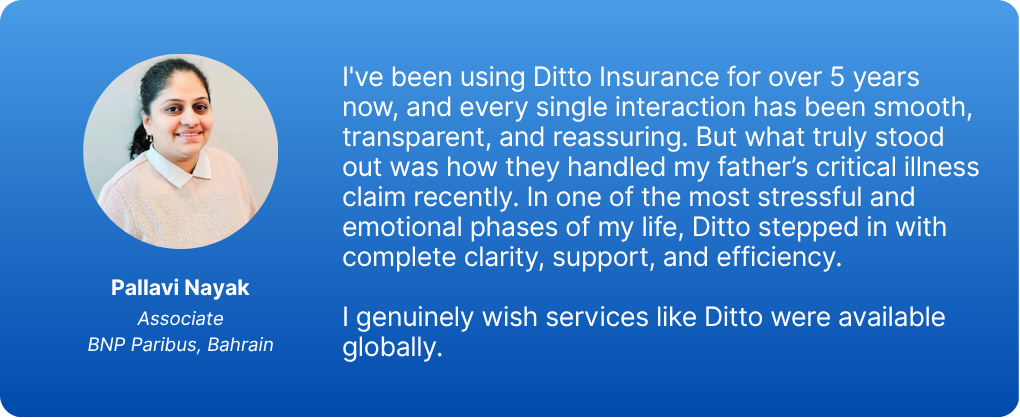
- No-Spam & No Salesmen
- Rated 4.9/5 on Google Reviews by 25,000+ happy customers
- Backed by Zerodha
- Dedicated Claim Support Team
- 100% Free Consultation
Confused about the right insurance? Speak to Ditto’s certified advisors for free, unbiased guidance. Book your call or chat on WhatsApp with us now!
Conclusion
Finding health insurance for heart patients in India takes more legwork than a standard policy search, but it’s not impossible. The right path depends on where you are in your health journey. If you’re healthy today, buy early and consider adding a PED waiting period reduction rider before you ever need it.
If you’ve already been diagnosed, consider specialized cardiac plans, disclose your complete medical history honestly, and be open to starting with a smaller, more accessible plan instead of waiting for a perfect plan that may never be approved.
Also, don’t lose hope if you’re not eligible for a strong plan right now. India’s health insurance market is constantly evolving, and as insurers improve their underwriting and risk management, better options may become available over time.
Last updated on: