

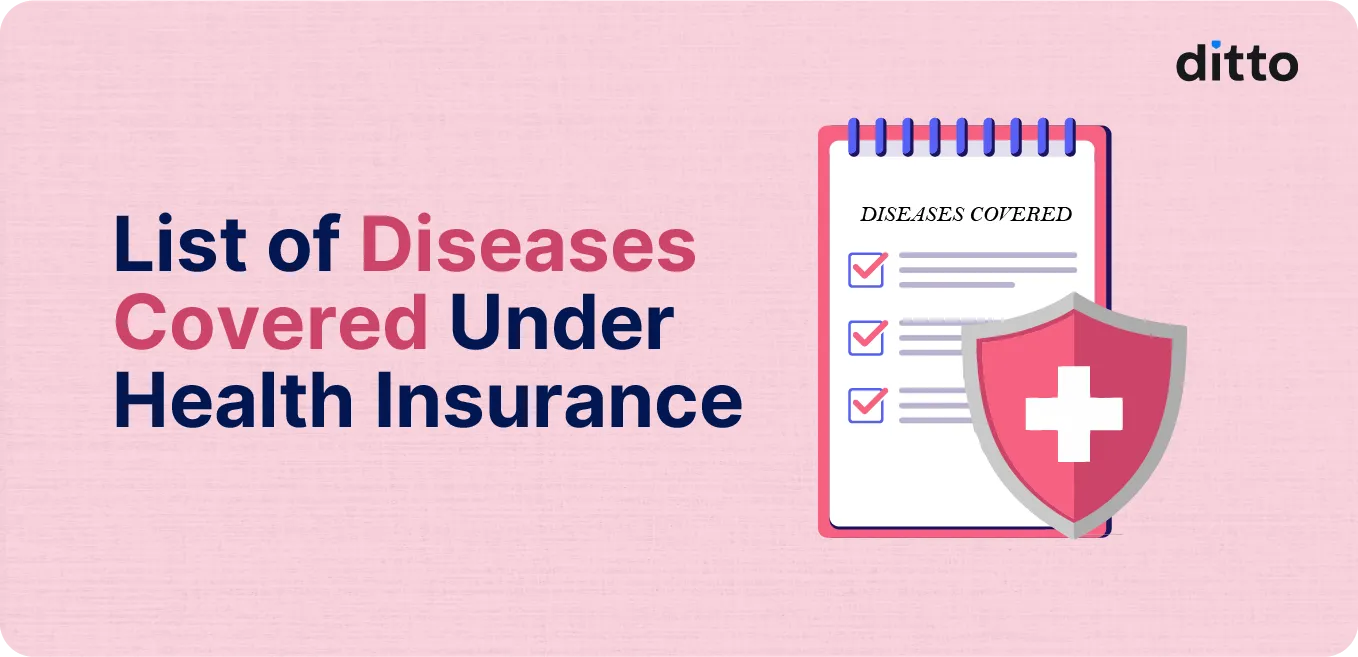
Health insurance helps cover medical costs for you and your family, but not all plans offer the same coverage. The illnesses and conditions included can vary widely, so it’s important to know what’s covered before choosing a plan. While no policy covers everything, most good insurers do include a common set of ailments.
This guide walks you through what’s typically covered so you can make a more informed decision.
Common Diseases Covered by Health Insurance Plans
Most health insurance policies in India provide coverage for common diseases like fever, infections, and minor ailments that require hospitalisation. These include treatments for illnesses such as:
- Respiratory infections like pneumonia
- Gastrointestinal diseases like GERD
- Urinary tract infections (UTIs)
- Common flu and viral infections, etc.
The coverage for these ailments usually begins after the initial waiting period of 30 days. Once this period is over, policyholders can claim expenses related to these diseases.
However, there is another class of treatments for which you do not have to undergo any waiting periods, and it is standard across all insurers. It has no waiting period and is common across all insurers. This is coverage for accidents.
Whether you are in a road accident or fall down the stairs and get hospitalised, health insurance policies cover this without any waiting period. This is because accidents are unplanned, and there is no way of knowing you will be hospitalised within 30 days of purchasing the policy.
Critical Illnesses Coverage in Health Insurance Policies
Critical illness health insurance is designed to cover life-threatening diseases that require significant medical care and expenses. Some critical illnesses include:
- Cancer
- Heart attacks and heart surgeries
- Stroke
- Kidney failure requiring dialysis
- Major organ transplants (e.g., liver, heart, lungs)
- Multiple sclerosis
- Paralysis
- Brain surgery
Insurers generally do not issue policies if you already had them diagnosed before purchasing the policy. However, if you have been diagnosed with this after purchasing the policy, even regular health insurance policies cover you by default.
Another type of policy also covers critical illnesses. These are conveniently named Critical Illness Insurance Policies. They provide a lump-sum payout upon diagnosis, which can help manage the high treatment costs associated with these life-threatening conditions. Here’s a more detailed article on the same.
Best Health Insurance Plans in India
To know more about how we rate plans, read our detailed rating framework.
Pre-Existing Disease Coverage in Health Insurance Plans
Pre-existing diseases (PEDs) are medical conditions that you have before purchasing the insurance policy. Pre-existing diseases like diabetes, hypertension, and asthma are covered by health insurance, depending on the severity, usually after a waiting period. This period can range from two to four years, depending on the insurer and the policy. After the waiting period is over, claims for treatments related to PEDs can be made. Some policies also have add-ons which allow us to reduce this waiting period by paying extra.
Maternity and Newborn Coverage in Health Insurance Policies
Some health insurance policies offer maternity coverage, which covers expenses related to childbirth prenatal, and postnatal care. However, in order to cover these maternity benefits, you often need to serve a waiting period that lasts anywhere from as low as 9 months to as high as 6 years! Newborn coverage is sometimes included, which covers your infant’s healthcare needs for the first few weeks after birth, including vaccinations and hospitalisation. If you’re interested, here’s a more comprehensive article on maternity coverage.
Talk to an expert
today and
find
the right
insurance for you.


Mental Health Coverage in Health Insurance Plans
In recent years, mental health has become a significant health concern, and many insurance companies are now offering coverage for mental health conditions. However, this includes coverage only for hospitalisation costs for severe psychiatric conditions like schizophrenia, bipolar disorder, severe depression, etc. The IRDAI made mental health coverage mandatory following the Mental Healthcare Act of 2017.
What are the Exclusions in Health Insurance Policies?
Knowing what a health insurance plan covers is only one-half of the story. The other half is knowing what the policy doesn’t cover. This is because despite covering a wide range of diseases, there are certain exclusions in health insurance policies, such as:
- Cosmetic procedures like plastic surgery (unless due to injury or illness and medically required)
- Dental treatments (unless resulting from an accident)
- Injuries caused by participation in hazardous sports
- Injuries or ailments due to self-harm or substance abuse
- Sexually transmitted diseases (STDs) like HIV/AIDS
Another type of exclusion to look out for is the specific illnesses list. Insurers have a list from which they do not cover illnesses for a set period of time, usually 2 years. These are slow-growing illnesses that do not pose an immediate threat to life, such as cataracts, hernia, ligament procedures, etc.
These exclusions and specific illnesses vary between insurers, so it’s important to read the policy document carefully. If you’re interested, here is a more comprehensive article discussing exclusions in health insurance plans.
How to Choose the Best Health Insurance Plan for Disease Coverage?
Let’s understand what we should look for in a good health insurance policy:
- No co-payment, room rent limits, and disease-wise sub-limits.
- A Low pre-existing disease waiting period (PED WP) and specific illness waiting period (SI WP).
- A good restoration bonus, pre- and post-hospitalisation cover, network hospital list, and bonus on renewal or no-claims are also added advantages.
In addition to these policy features, you should consider some metrics that assess the insurer’s performance. These include the Incurred Claim Ratio (ICR) and the Claim Settlement Ratio (CSR).
Why Choose Ditto for Health Insurance?
At Ditto, we’ve assisted over 8,00,000 customers with choosing the right insurance policy. Why customers like Pallavi below love us:
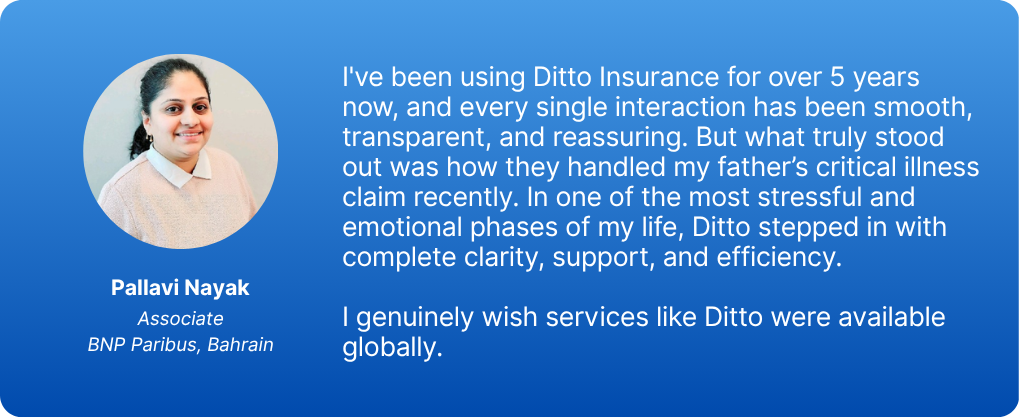
- No-Spam & No Salesmen
- Rated 4.9/5 on Google Reviews by 15,000+ happy customers
- Backed by Zerodha
- Dedicated Claim Support Team
- 100% Free Consultation
Confused about the right insurance? Speak to Ditto’s certified advisors for free, unbiased guidance. Book your call now or chat over WhatsApp, slots fill up fast!
Conclusion
Understanding the disease coverage offered by health insurance policies is paramount when selecting a plan. Whether it's chronic diseases or critical illnesses, comprehensive coverage from a good health insurance plan ensures that you and your family are financially protected. As always, review the policy document, especially regarding waiting periods and exclusions, to make the best possible decision.
If you need personalised, spam-free health or term insurance advice, you can always contact our IRDAI-certified advisors at Ditto. We don’t just sell insurance. We help you understand it.
Last updated on: