



Overview
Cataracts are one of the most common age-related eye conditions and can severely affect vision if left untreated. With rising life expectancy, diabetes, and lifestyle-related health issues, cataract cases in India have increased significantly.
While cataract surgery is generally safe and effective, treatment costs can vary widely depending on the hospital, procedure type, and lens used. With medical inflation rising steadily, having health insurance can help reduce this financial burden.
That said, not all policies cover cataract treatment the same way. Some plans come with waiting periods, cataract-specific sub-limits, or exclusions. Understanding these details beforehand can help you choose a policy that offers better coverage when you actually need treatment.
Is Cataract Surgery Covered By Insurance?
Yes, most health insurance policies in India do cover cataract surgery, but the coverage depends on several factors, such as the type of policy, the insurer’s terms, and, most importantly, sub-limits imposed on cataracts.
In most of the top health insurance plans, cataract surgery is included as part of daycare procedures without any sub-limit, meaning hospitalization beyond 24 hours is not required, and the insurer will cover the entire amount as long as it is reasonable & customary. However, the insurer will cover this only after a specific waiting period.
If your personal health insurance plan does not cover cataracts without a sub-limit, or you are still in the waiting stage, employee health insurance plans also often include coverage for cataract surgery. However, individual policies tend to offer more flexibility and higher cover amounts. The extent of coverage varies across insurers, so you should always check the policy details before relying on either insurance for the procedure.
Factors Affecting Cataract Surgery Coverage
While most health insurance policies cover cataract treatment, specific policy terms can impact the extent of coverage. Here are some factors you should consider:
- Waiting Period
Most insurers impose a waiting period for cataract surgery that usually ranges between 12 and 24 months. This means that if you purchase a new policy, you may have to wait for a year or two before the insurer pays for cataract-related expenses This is called the specific illness waiting period. - Cover Amount Limitations
Many insurers place a cap on the amount you can reimburse for cataract surgery. This cap can be either:- A fixed limit (e.g., ₹40,000 per eye), or
- A percentage of the cover amount (e.g., 10-25% of the total cover amount).
Policies without a sub-limit on cataract surgery provide better coverage, ensuring you have lower out-of-pocket expenses.
- Pre-Existing Disease Clause
If a cataract is diagnosed before purchasing the policy, insurers may treat it as a pre-existing condition, usually leading to longer waiting periods (up to 3 years) under the pre-existing disease waiting period. Some policies may completely exclude pre-existing cataracts from coverage.
Talk to an expert
today and
find
the right
insurance for you.


Types of Cataract Surgery Covered by Health Insurance
Cataract surgeries have evolved significantly since its inception, with advanced techniques providing better precision, faster recovery, and an improved success rate. Health insurance policies usually cover standard surgical methods but may have limitations on other types of cataract surgeries. Let’s take a look at them now.
- Traditional Cataract Surgery (Phacoemulsification)This is the most commonly covered procedure in health insurance plans. The surgeon removes the clouded lens and replaces it with an intraocular lens (IOL).
- Laser-Assisted Cataract Surgery (Femtosecond Laser)Laser cataract surgery is an advanced, bladeless procedure with higher precision. Some insurance policies cover it, while others may only reimburse the cost equivalent to traditional surgery, requiring you to pay the difference.
- Intraocular Lens (IOL) ImplantationStandard mono-focal lenses are generally covered by health insurance. However, more expensive lenses such as multifocal, toric, or trifocal lenses may not be covered entirely, and you may have to pay the additional cost. It’s always better to check with your insurer before the surgery.
How to Claim Insurance for Cataract Surgery?
You can claim insurance for cataract surgery in two ways:
- Cashless Treatment at Network Hospitals
- The insurer or TPA will pre-authorize the procedure upon your claim intimations 24-48 hours prior.
- The insurer directly settles the hospital bill, subject to your policy sub-limit and cover amount.
- You only pay for non-covered expenses, such as consumables or a more expensive type of lens, if the policy does not cover it.
- Reimbursement Process for Non-Network Hospitals
- You pay for the surgery upfront and collect all medical bills, reports, and invoices.
- These documents are submitted to the insurer for reimbursement after discharge.
- The insurer evaluates the claim and transfers the approved amount to your bank account.
Best Health Insurance Plans Covering Cataract Surgery in India
Several comprehensive health insurance plans cover cataract surgery with minimal restrictions. Let’s take a look at them now:
- HDFC ERGO Optima Secure
Offers coverage from ₹5 lakh to ₹2 crore with no room rent limits, disease-wise sub-limits, or mandatory copayment. Key features include 100% restoration once per year, 50% cumulative bonus up to 100%, and the Secure Benefit, which doubles your base cover from day one. It also covers consumables, daycare treatments, domiciliary care, and home healthcare. Add-ons include unlimited restoration, OPD cover, and critical illness coverage. - Care Supreme
Covers ₹5 lakh to ₹1 crore with no room rent caps or disease-wise sub-limits. It offers unlimited restoration, a 50% bonus up to 100%, wellness discounts, and unlimited e-consultations. Add-ons like Instant Cover reduce PED waiting periods for conditions like diabetes and hypertension to 30 days. - Aditya Birla Activ One Max
Offers coverage from ₹5 lakh to ₹6 crore with unlimited restoration, consumable coverage, and wellness rewards. It also includes day-one coverage options for chronic conditions and a bonus of up to 500% over time. - Niva Bupa Aspire Titanium+
A premium plan with coverage up to ₹3 crore, premium lock-in benefits, maternity cover, international hospitalization add-ons, and wellness discounts up to 30%. It also includes features like carry-forward unused coverage and inflation-adjusted claims. - ICICI Elevate
A highly customizable plan offering coverage up to ₹3 crore with multiple add-ons. Key highlights include wellness discounts, reduced waiting periods for select PEDs, inflation-linked sum insured increases, maternity cover, and lifetime coverage options for single claims.
Cost of Cataract Surgery Without Insurance in India
The cost of cataract surgery in India varies widely, depending on the hospital and type of lens used.
- Government hospitals: ₹8,000 - ₹15,000
- Private hospitals (standard lens): ₹25,000 - ₹50,000 per eye
- Premium hospitals & advanced lenses: ₹80,000 - ₹1,90,000 per eye
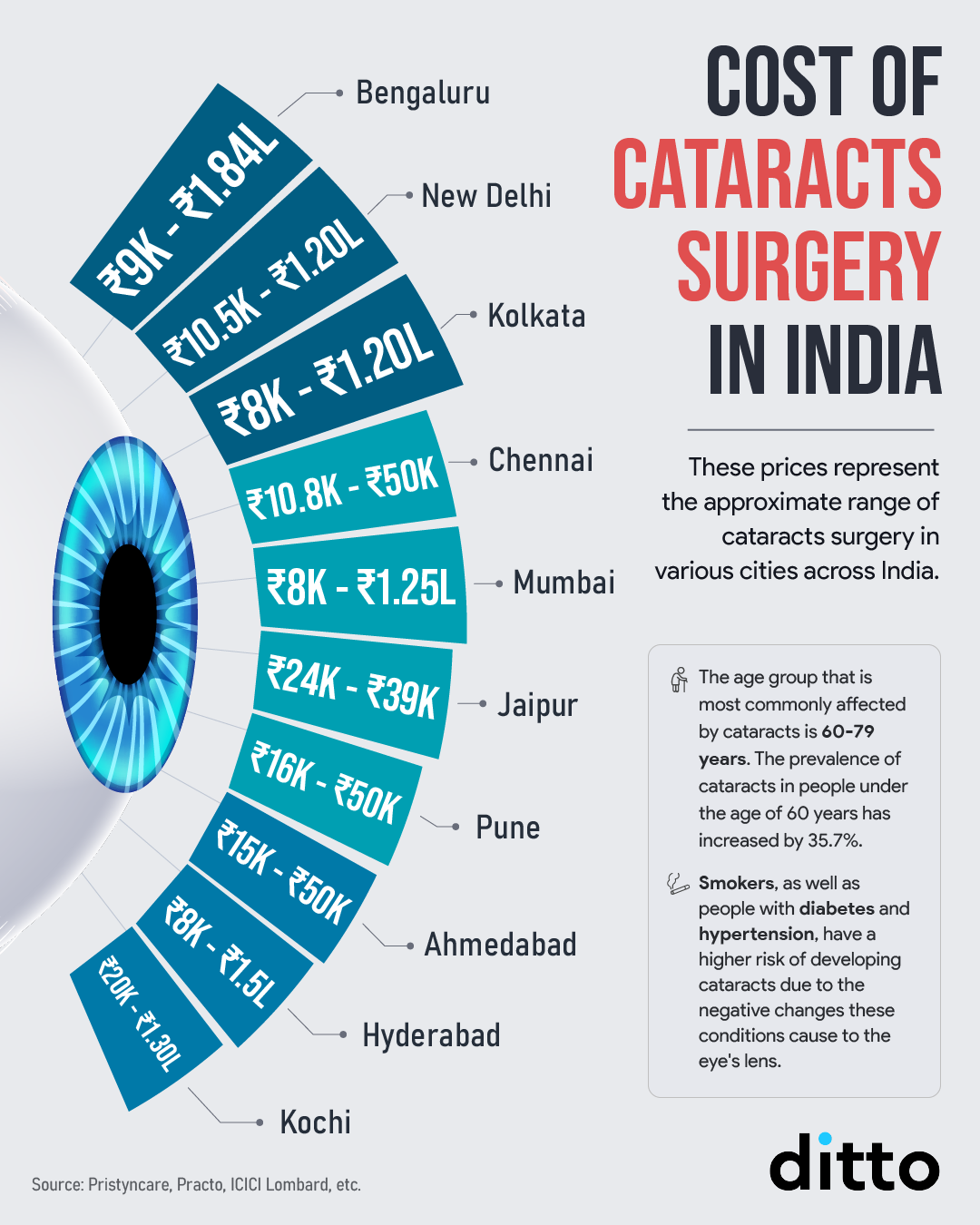
Without insurance, these costs can add up quickly, especially if you need surgery for both eyes.
Why Talk to Ditto for Your Health Insurance?
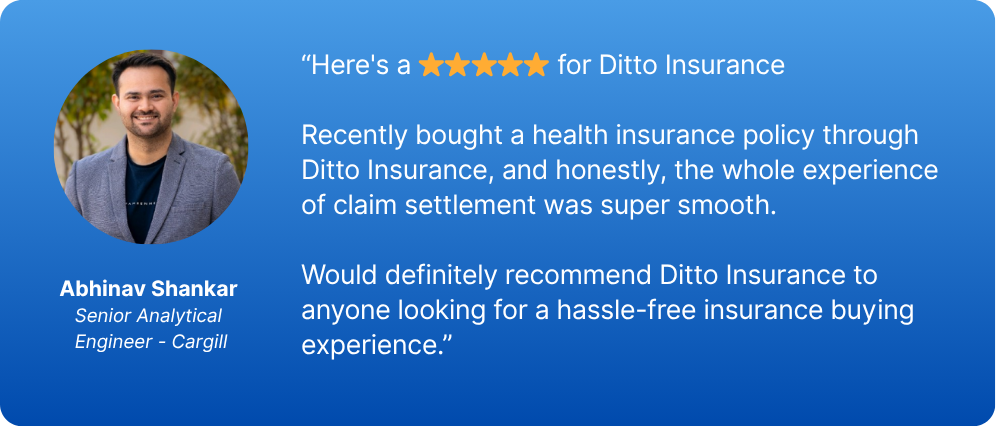
At Ditto, we’ve assisted over 8,00,000 customers with choosing the right insurance policy. Why customers like Abhinav below love us:
- No-Spam & No Salesmen
- Rated 4.9/5 on Google Reviews by 15,000+ happy customers
- Backed by Zerodha
- 100% Free Consultation
You can book a FREE call or chat over WhatsApp. Slots are running out, so make sure you book a call now!
Conclusion: Should You Get Health Insurance for Cataract Surgery?
With rising cataract cases and expensive treatments, having health insurance that covers cataract surgery is beneficial. It helps reduce out-of-pocket expenses, provides cashless treatment, and ensures you receive good quality healthcare without financial strain. Purchasing the right health insurance policy early can help secure timely treatment without worrying about expensive medical bills.
Frequently Asked Questions
Last updated on: