




Overview
Choosing between two health insurance plans from the same insurer can be surprisingly difficult. That is exactly the case with Care Supreme vs. Care Ultimate. Both offer comprehensive hospitalization coverage, no room rent restrictions, cumulative bonuses, recharge benefits, and optional add-ons.
The differences become clear when you compare their post-hospitalization coverage, discount structure, and bonuses.
In this Care Supreme vs. Ultimate Care detailed comparison, we compare coverage, benefits, optional features, and premium structure to help you decide which plan makes the most sense for you.
Care Supreme vs. Care Ultimate: Comparison
Care Supreme vs. Care Ultimate: Coverage Compared
Note: With Ultimate Care’s Unlimited SI option, SI-linked benefits such as Cumulative Bonus, Recharge, Loyalty Boost, Infinity Bonus, Unlimited Care, Tenure Multiplier, Plus Benefit, and Inflation Shield do not apply.
Ditto's Take
Care Supreme and Care Ultimate: Waiting Periods and Instant Cover Compared
Common to Both Plans

Initial Waiting Period
Both plans have a 30-day initial waiting period for illnesses. Both plans cover accident-related hospitalizations from day 1.
Specific Disease Waiting Period
Both plans have a 24-month waiting period for specified diseases and procedures like cataract and hernia.
Pre-Existing Disease (PED) Waiting Period
Both plans cover pre-existing diseases after a standard 36-month waiting period, subject to policy terms.
PED Waiting Period Reduction Add-On
Both plans offer an add-on that can reduce the PED waiting period from 3 years to 2 years or 1 year, subject to policy terms.
Care Supreme
- Instant Cover: Reduces the 36-month PED wait to 30 days for asthma, hypertension, hyperlipidemia, and diabetes.
- Instant Cover Plus: Reduces the PED wait to 30 days for the above conditions plus COPD, obesity, and coronary artery disease where PTCA was done over one year earlier.
Care Ultimate
- Instant Cover: This optional benefit reduces the PED waiting period from 36 months to 30 days for asthma, high blood pressure, cholesterol or hyperlipidemia, diabetes, obesity, hypothyroidism, and coronary artery disease where PTCA was performed more than one year earlier.
Overall, the standard waiting periods are the same. The main difference lies in the conditions covered under the PED waiting period reduction benefits. Care Supreme’s Instant Cover Plus includes COPD, while Care Ultimate’s Instant Cover includes hypothyroidism.
Note: The additional premium paid for the waiting period reduction riders in both Care Supreme and Care Ultimate is payable only for 3 years.
Talk to an expert
today and
find
the right
insurance for you.


Care Supreme vs. Care Ultimate Sample Premium Comparison by Age and Cover
₹15 Lakh Sum Insured
₹25 Lakh Sum Insured
Note: Here, A stands for adult and C for child(ren). These are indicative premiums for a Delhi resident (PIN code: 110010) and include recommended add-ons and discounts. Your premium can change based on age, city, medical history, plan variant, added discounts, and chosen add-ons.
Why Care Ultimate Looks Cheaper Initially
Care Ultimate can look particularly attractive on price, especially when you consider its lower entry premium alongside features such as Loyalty Boost, broader Instant Cover, and optional benefits like tenure multiplier. However, the first-year premium doesn't reflect what you'll pay at renewal.
This is because of Care Ultimate's Welcome Discount. New customers receive a 30% discount in the first policy year, but this reduces every year before disappearing completely from the fourth year:
- Year 1: 30% Welcome Discount
- Year 2: 20% Welcome Discount
- Year 3: 10% Welcome Discount
- Year 4 Onward: No Welcome Discount
This means the introductory discount decreases each year and disappears completely in the fourth policy year. So, you shouldn't treat the first-year premium as the long-term premium you will keep paying.
What About Future Premium Revisions?
Care Ultimate’s lower entry premium and richer feature set could lead to future repricing if claims experience turns out higher than expected. However, there isn't enough claims or pricing history yet to say it will face steeper premium hikes.
Both plans can also see age-based premium increases and product-level revisions due to factors such as medical inflation and changes in the insurer’s claims costs. The only certain increase in current pricing is the gradual removal of the Welcome Discount. So, buyers should focus more on the year 4 premium than the discounted first-year price.
Care Health Insurance: Performance Metrics
Source: This information is sourced from the IRDAI annual reports and Care Health public disclosures, and for more data on other insurers, explore Ditto Data Lab.
Care Health Insurance: Claim Process and Customer Service
Care Supreme and Care Ultimate follow the same claim process.
For a planned cashless hospitalization, intimate Care at least 48 hours before admission. For emergency hospitalization, inform Care within 24 hours of admission.
At a network hospital, the hospital's insurance desk submits the pre-authorization request to Care. Once approved, Care settles the admissible amount directly with the hospital.
For a reimbursement claim, pay the hospital and submit the claim form along with the required bills, receipts, medical records, and other documents. Care assesses the claim and communicates the decision.
Contact Details
Pros and Cons of Care Supreme
Pros and Cons of Care Ultimate
Which One to Choose: Care Supreme or Care Ultimate?
Choose Care Supreme If:
- You want a simple but comprehensive plan with strong core hospitalization coverage.
- You prefer longer post-hospitalization coverage, with related expenses covered for 180 days compared with 90 days under Care Ultimate.
- You prefer more stable premiums without paying for multiple additional features you may not need.
- You want a more established product with a longer track record.
Choose Care Ultimate If:
- You want an unlimited sum insured option for greater coverage flexibility.
- You are considering a multi-year policy and want features such as the Tenure Multiplier.
- Premium Payback is valuable to you, particularly if you expect to remain claim-free for extended periods.
- Newborn waiting period continuity matters, as eligible waiting periods already served by the primary insured can carry forward to a qualifying newborn.
- You specifically want Ultimate Care's additional long-term benefits and are comfortable paying for the relevant add-ons.
Neither plan covers maternity expenses or newborn complications. If maternity coverage is a priority, consider Care Ultimate Joy instead.
Ditto’s Take: Care Supreme is the better default pick for most buyers because of its stronger core coverage and cleaner recharge structure. Whereas Care Ultimate suits buyers who specifically value features like broader Instant Cover, newborn continuity, or Unlimited Sum Insured, but its lower entry premium rises as the Welcome Discount phases out.
Why Choose Ditto for Health Insurance?
At Ditto, we’ve assisted over 12,00,000 customers choose the right insurance policy. Why customers like Pallavi love us:
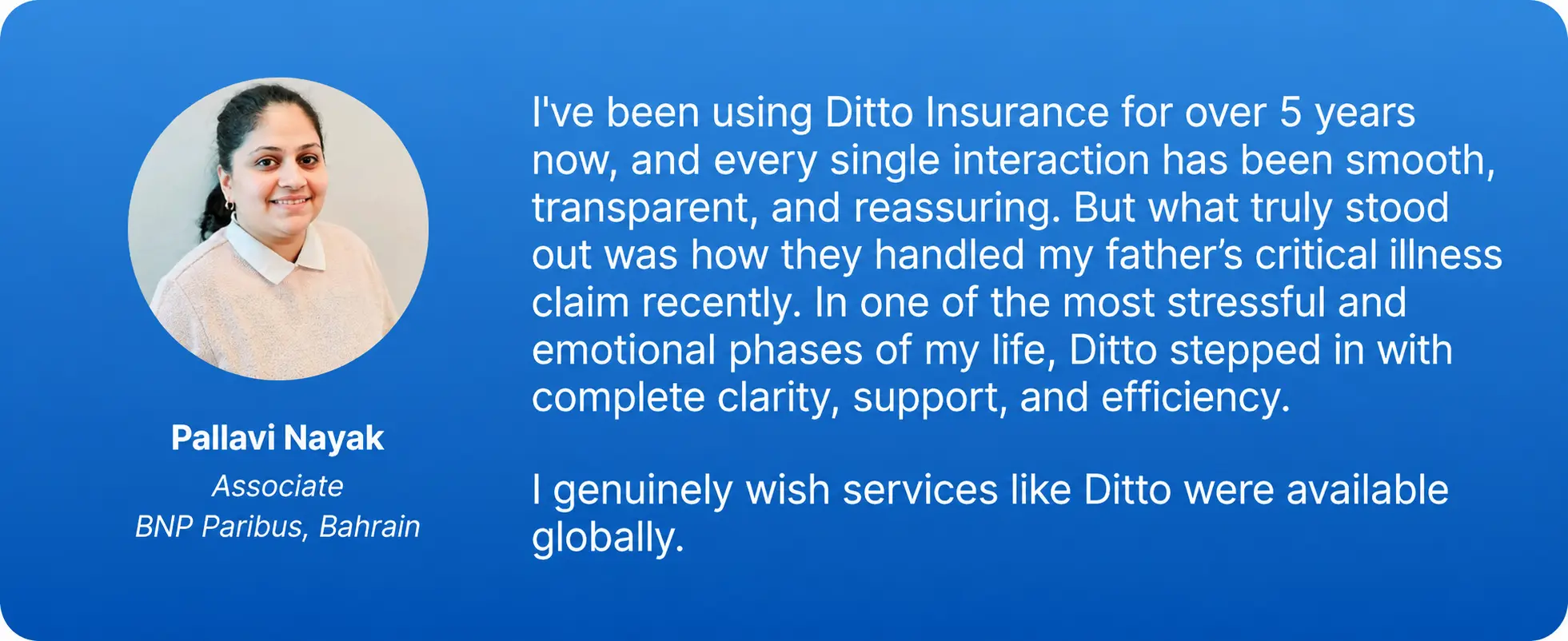
- 100% Free Consultation
- No Spam. No Sales Pressure.
- Rated 4.9/5 on Google Reviews by 30,000+ Happy Customers
- Backed by Zerodha
- Dedicated Claim Support Team
- Compare Plans and Premiums with a Trusted Insurance Advisor
Confused about the right insurance? Speak to Ditto’s certified advisors for free, unbiased guidance. Book your call now or chat with us on WhatsApp. Slots fill up fast!
Conclusion
Care Supreme and Care Ultimate are close on basic coverage, but the differences matter once you look at how you are likely to use the policy.
Care Supreme makes more sense for buyers who want a straightforward, comprehensive policy without paying for features they may not need. It also makes it to our list of the best health insurance plans in India. Care Ultimate suits buyers who have a specific use for its additional features, such as Unlimited Sum Insured, Premium Payback, or newborn waiting period continuity.
If you are comparing the two, look beyond the first-year premium and choose the plan whose features you are actually likely to use over the long term.
Frequently Asked Questions
Last updated on: