


Overview
A sudden hospitalization can put a significant financial strain on a family, especially when treatment costs run into lakhs of rupees. For eligible families in Dadra and Nagar Haveli, the Ayushman Bharat Pradhan Mantri Jan Arogya Yojana (AB-PMJAY) can help reduce this burden by providing cashless treatment at empaneled hospitals.
AB-PMJAY provides health coverage of up to ₹5 lakh per year on a family floater basis. However, eligibility, covered treatments, and hospital empanelment determine how beneficiaries can use these benefits.
This guide covers AB-PMJAY Dadra and Nagar Haveli eligibility, benefits, Ayushman card registration, empaneled hospitals, and whether you still need private health insurance.
What Is AB-PMJAY in Dadra and Nagar Haveli?
AB-PMJAY is a government-funded health assurance scheme that provides eligible families with up to ₹5 lakh in coverage per year on a family floater basis. The cover is intended for secondary and tertiary hospitalization at empaneled public and private hospitals.
Important Note
The scheme has a significant reach in the district. According to the AB-PMJAY dashboard, around 4.45 lakh Ayushman cards have been created in Dadra and Nagar Haveli and Daman and Diu as of June 30, 2025, indicating the scale of beneficiary coverage in the region.
Eligibility Criteria for AB-PMJAY in Dadra and Nagar Haveli
Living in Dadra and Nagar Haveli does not automatically make you eligible for AB-PMJAY. Eligibility depends on whether you belong to an identified beneficiary category under the scheme.
SECC 2011 Beneficiaries
The original PM-JAY beneficiary base was identified using the Socio-Economic Caste Census (SECC) 2011, which used specified deprivation criteria for rural households and occupational categories for urban households.
ASHA and Anganwadi Workers
Accredited Social Health Activists (ASHAs), Anganwadi Workers (AWWs), Anganwadi Helpers (AWHs), and their families were added to AB-PMJAY through a national expansion announced by the Government of India. Eligible beneficiaries in Dadra and Nagar Haveli can also receive coverage under this category.
Citizens Aged 70 Years and Above
Since the 2024 expansion, all Indian citizens aged 70 years and above are eligible for AB-PMJAY regardless of their income or socioeconomic status. Eligible senior citizens receive an Ayushman Vay Vandana card and can access up to ₹5 lakh in health coverage per year.
If a senior citizen aged 70 years or above already belongs to a family covered under AB-PMJAY, they receive an additional top-up cover of up to ₹5 lakh per year for themselves.
What About Other Residents of Dadra and Nagar Haveli?
If a resident does not fall under the regular AB-PMJAY beneficiary categories, they may still have access to the Sanjeevani Swasthya Bima Yojana, a separate health insurance scheme administered by the union territory for eligible residents outside the regular PM-JAY beneficiary population.
Benefits and Treatments Covered Under AB-PMJAY in Dadra and Nagar Haveli
What Is Not Covered Under AB-PMJAY?

Routine Outpatient Department (OPD) Treatment
Regular outpatient consultations and treatment are not covered under the PM-JAY hospitalization benefit.
Cosmetic Procedures
Cosmetic or aesthetic treatments that are not medically necessary are excluded.
Routine Dental Treatment
Dental procedures that do not require hospitalization are not covered.
Infertility Treatment
Fertility and assisted reproductive treatments are excluded.
Non-Medical Expenses
Expenses that are not part of the covered treatment package are not payable under PM-JAY.
Treatments Outside the Package
Some procedures may be covered under PM-JAY's unspecified surgical package, subject to pre-authorization. Excluded treatments remain ineligible.
How to Check AB-PMJAY Beneficiary Status?
You can check whether your name is included in the AB-PMJAY beneficiary database through the official beneficiary portal or the Ayushman App.
- Visit the Official Beneficiary Portal: Open the AB-PMJAY beneficiary portal.
- Log In: Enter your mobile number and complete the required verification.
- Select the Union Territory: Choose Dadra and Nagar Haveli and Daman and Diu from the list of states and union territories.
- Enter Your Details: Provide the requested beneficiary information to search the database.
- Check Your Status: Review the beneficiary details displayed on the portal to confirm whether your record is available under AB-PMJAY.
Talk to an expert
today and
find
the right
insurance for you.


How to Apply for an AB-PMJAY Card in Dadra and Nagar Haveli and Documents Required
Eligible beneficiaries can complete their AB-PMJAY registration and get their Ayushman card online or offline. The available options include:
- Online: Use the official AB-PMJAY beneficiary portal or the Ayushman App, available on the Google Play Store (Android) and the Apple App Store (iOS). Eligible beneficiaries can use these platforms for beneficiary verification and e-KYC.
- Empaneled Hospitals: Visit an AB-PMJAY empaneled hospital and ask the designated Ayushman Mitra or other authorized staff for assistance with verification and card generation.
- Common Service Centres (CSCs): Eligible beneficiaries can also visit a designated Common Service Centre for assistance with the Ayushman card generation process.
Steps to Apply Online and Download Your Card
- Visit the official AB-PMJAY beneficiary portal.
- Log in using your mobile number and complete the required verification.
- Search for your beneficiary record using the available identification details.
- Complete e-KYC if required.
- Follow the instructions to generate your Ayushman card.
- Once the card is generated, download the digital copy.
Documents Required for an AB-PMJAY Card
Keep the following documents available during the verification process:
- Aadhaar Card: For identity verification and e-KYC, where applicable.
- Ration Card or Family Identification Details: These may be used to verify the beneficiary or family record.
- Mobile Number: For OTP-based verification, where applicable.
- Other Supporting Documents: Additional documents may be required depending on the beneficiary category and verification process.
AB-PMJAY Empaneled Hospitals in Dadra and Nagar Haveli
AB-PMJAY beneficiaries can receive cashless treatment at empaneled public and private hospitals. Since the hospital network can change, check the latest list before seeking treatment.
You can find the current list of AB-PMJAY empaneled hospitals through the National Health Authority's Hospital Empanelment Module (HEM). Select “By District” from the top menu, choose DNH and DD under the State/Union Territory field to view the empaneled hospitals.
AB-PMJAY vs. Private Health Insurance in Dadra and Nagar Haveli: Do You Still Need Cover?
AB-PMJAY can cover eligible hospitalization costs, but private health insurance can provide additional financial protection and flexibility.
- Higher Financial Protection: AB-PMJAY provides up to ₹5 lakh per eligible family per year. This is insufficient for expensive surgeries, prolonged hospitalization, or multiple claims in a year. A personal health insurance policy can provide a higher sum insured and offer features such as automatic restoration or cumulative bonuses, depending on the policy.
- More Choice of Hospitals: AB-PMJAY is usable only at hospitals empaneled under the scheme. While its national portability allows beneficiaries to seek covered treatment outside Dadra and Nagar Haveli, private health insurance can give you access to a wider network of hospitals, depending on the insurer and policy.
- Coverage Beyond AB-PMJAY Packages: AB-PMJAY pays fixed package rates based on the applicable bed category, so beneficiaries do not choose the room or treatment based on the package rate. It is also cashless-only, with no reimbursement option if you pay the bill yourself. A private health insurance policy can offer greater flexibility in choosing hospitals, rooms, and covered treatments, subject to the policy terms.
- Protection Against Rising Healthcare Costs: Medical treatment costs can increase over time, particularly for specialized care and advanced procedures. A ₹5 lakh cover may provide less financial protection as treatment costs rise. A higher private sum insured can provide an additional financial cushion against medical inflation.
- A Complementary Layer of Protection: AB-PMJAY pays for covered treatment, but not related costs such as travel, accommodation, or lost wages when treatment requires referral outside Dadra and Nagar Haveli. A private policy with a higher sum insured can provide an additional financial cushion when the ₹5 lakh AB-PMJAY cover is exhausted.
Our Recommendation: If you are eligible for AB-PMJAY, use it for covered treatments since it provides health cover at no cost. You can then supplement it with a personal health insurance policy of at least ₹15 lakh, with restoration and a network that includes hospitals you may need for treatment.
Why Choose Ditto for Health Insurance?
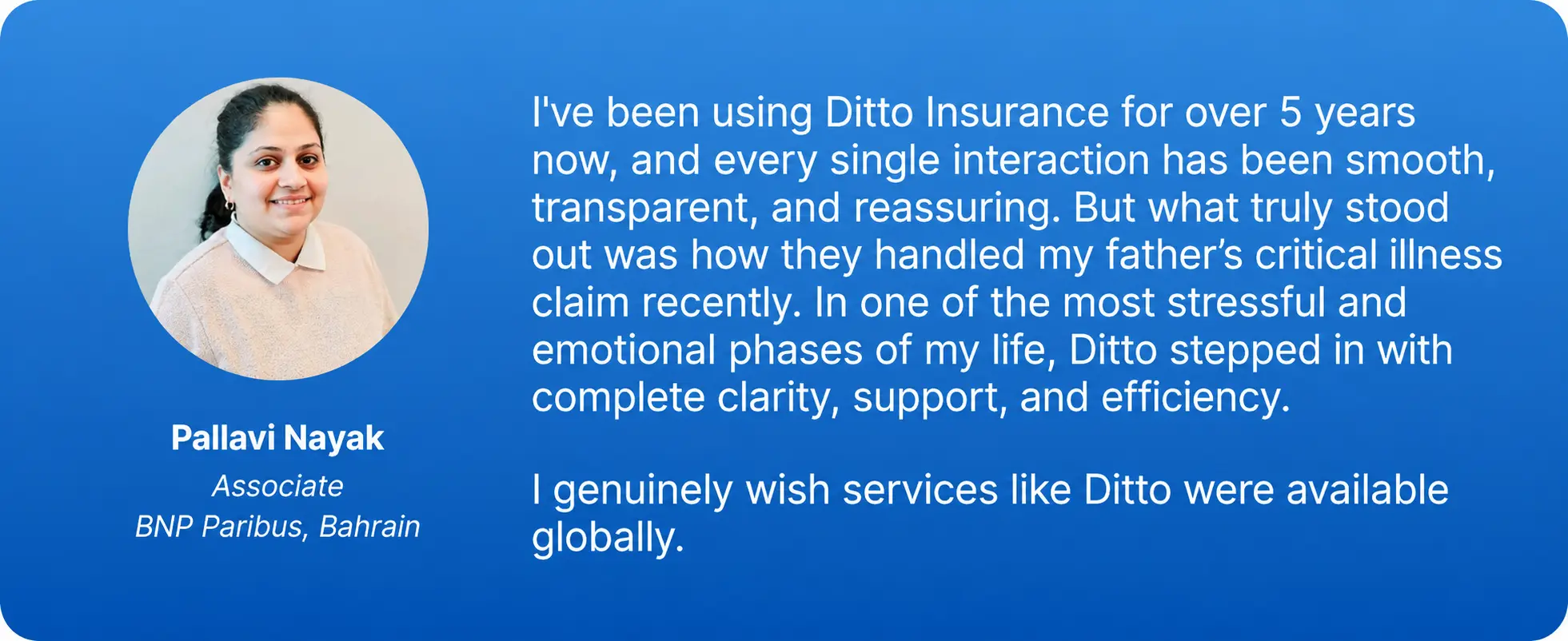
At Ditto, we’ve assisted over 12,00,000 customers choose the right insurance policy. Why customers like Pallavi love us:
- 100% Free Consultation
- No Spam. No Sales Pressure.
- Rated 4.9/5 on Google Reviews by 30,000+ Happy Customers
- Backed by Zerodha
- Dedicated Claim Support Team
- Compare Plans and Premiums with a Trusted Insurance Advisor
Confused about the right insurance? Speak to Ditto’s certified advisors for free, unbiased guidance. Book your call now or chat with us on WhatsApp. Slots fill up fast!
Conclusion
AB-PMJAY Dadra and Nagar Haveli provides eligible beneficiaries with cashless hospitalization cover of up to ₹5 lakh per family per year, including coverage for listed treatments and pre-existing diseases from day one. However, eligibility, treatment packages, and empaneled hospitals determine how effectively you can use the scheme when you need medical care.
If you want a higher sum insured, better room choices, reimbursement claim options, Out-Patient Department (OPD) or maternity coverage, bonus and restoration benefits, consumables cover, or protection beyond AB-PMJAY eligibility and package limits, you can compare some of the best health insurance plans in India for additional financial protection.
Frequently Asked Questions
Last updated on: