



Quick Overview
When it comes to buying term or health insurance, most people focus on premiums, coverage, or claim benefits, and that’s natural. But one critical factor often goes unnoticed: the solvency ratio in insurance.
In this guide, we explain what solvency ratio insurance means, why it matters for both term and health insurance, how it’s regulated, and which insurers consistently demonstrate strong financial health.
IRDAI Rules on Solvency Ratio
Insurance contracts are long-term in nature, which is why IRDAI enforces strict solvency regulations to prevent insurers from becoming financially unstable or insolvent. These rules make sure insurance companies keep enough money saved to handle tough times and pay all their claims.
- Mandatory Minimum: All insurers must maintain a solvency ratio insurance of at least 1.5x.
- Quarterly Reporting: Insurers must report their solvency position to IRDAI every quarter.
What Happens If an Insurer Falls Below the Required Solvency Level?
If a company’s solvency ratio insurance falls below the required control level, IRDAI steps in. The insurer must submit a recovery plan within six months to fix the shortfall. If the plan is not satisfactory, IRDAI can restrict the sale of new policies, limit business growth, or even appoint an administrator.
If the insurer fails to meet the basic solvency requirement (assets not covering liabilities), it can be treated as insolvent and face winding-up proceedings under Section 64VA of the Insurance Act.
Here’s how insurers are actually doing on solvency today:
- As of 31 March 2025, all life insurers met the minimum solvency ratio of 1.5.
- 28 private sector general insurers (including standalone health insurers) also met the required solvency ratio of 1.5.
- However, some public sector general insurers reported negative solvency ratios as of 31 March 2025:
- National Insurance Company: -0.67
- Oriental Insurance Company: -1.03
- United India Insurance Company: -0.65
How to Read This: Low or negative solvency numbers should be taken calmly but seriously. They don’t mean claims will fail immediately, since day-to-day claims are paid from regular cash flows. However, they are warning signs of deeper issues like weak profits, old liabilities, or pressure on reserves. Government ownership improves the chances of support, but it doesn’t fix the underlying financial challenges.
Top 5 Health Insurance Companies by Solvency Ratio
Top 5 Term Insurance Companies by Solvency Ratio
Note: The data in the above tables are sourced from the official IRDAI Annual Report (2024–25).
How to Calculate Solvency Ratio in Health and Term Insurance?
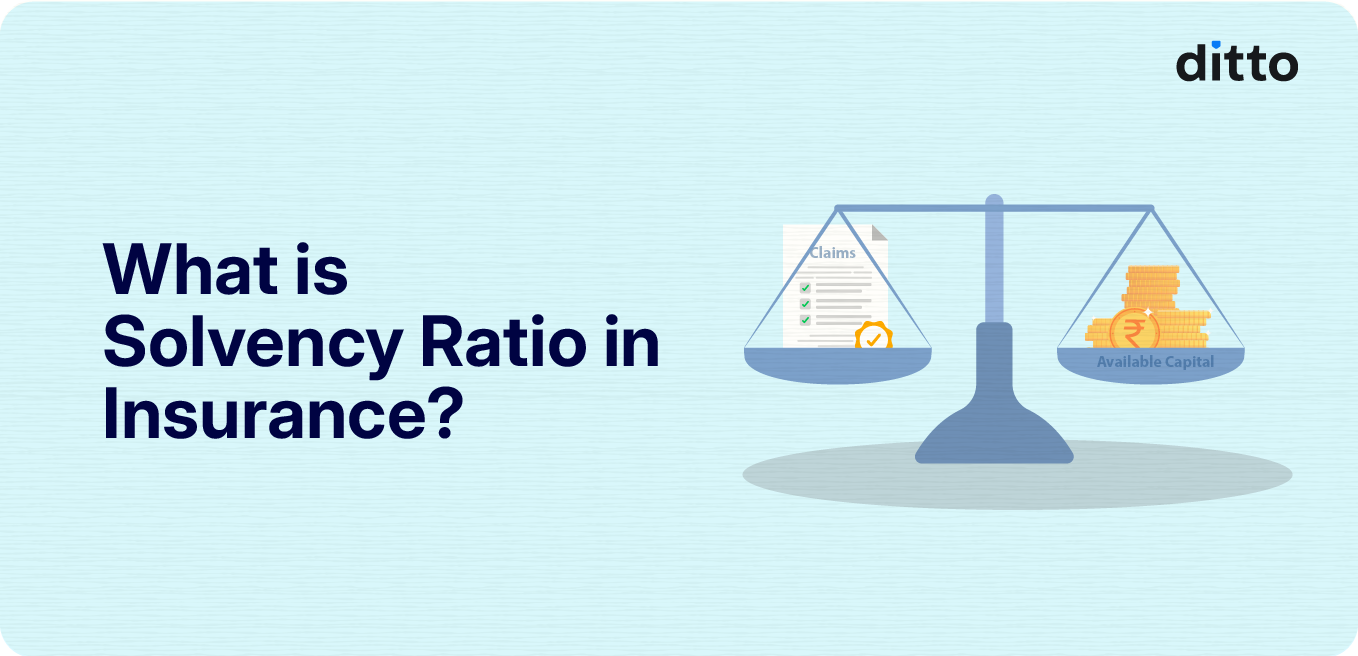
The solvency ratio insurance is the ratio of assets to liabilities. A higher ratio means the company is better prepared to handle financial shocks.
Formula: Solvency Ratio = Available Solvency Margin ÷ Required Solvency Margin
Here is what these terms mean in simple language:
- Available Solvency Margin (ASM): This is the extra money an insurance company has after paying all its liabilities. It acts as a financial cushion to cover unexpected claims.
- Required Solvency Margin (RSM): This is the minimum amount of capital IRDAI requires the company to hold based on the risk level of its policies. RSM must be at least 50% of the minimum capital set under Section 6 of the Insurance Act, 1938. RSM is calculated based on the risk profile of the company’s policies and is the minimum capital IRDAI requires to remain solvent.
Note: For life insurance, the solvency ratio insurance calculation focuses on long-term mortality; for health, it focuses on immediate premium volumes and annual claim fluctuations.
Importance of Solvency Ratio in Term and Health Insurance
Why is the Solvency Ratio Crucial in Term Insurance?
In term life insurance, where payouts are large and policies run for decades, the insurer’s financial strength is everything. A weak solvency ratio profile can lead to delayed claim settlements, disputes, or stress during periods of high claims, worst case, even insolvency.
On the flip side, a strong solvency ratio means claims are paid on time, long-term policies remain secure, nominees receive the promised sum assured without hassles, and the insurer can handle multiple big claims at once.
How Solvency Ratio Affects Health Insurance Policyholders?
In health insurance, a strong solvency ratio insurance status ensures faster cashless claim approvals, smoother hospital settlements, stability during mass claim events, and a lower risk of insurer shutdowns or forced mergers. This gives policyholders real peace of mind when they’re hospitalized and need financial support the most.
Even though solvency ratio insurance is important, it shouldn’t be considered on its own. It should be considered along with:
- CSR (Claim Settlement Ratio): Percentage of number of claims settled successfully out of total number of claims filed.
- ICR (Incurred Claim Ratio, for Health): Ratio of claims paid plus outstanding claims to premiums earned; indicates health insurance efficiency.
- ASR (Amount Settlement Ratio, for Life): Shows how much of the total claim amount is actually paid by the insurer compared to what was claimed. It also indicates whether the insurer treats high-value and low-value claims fairly.
- Average Complaint Volumes: Number of grievances per 10,000 claims registered by policyholders; reflects the insurer’s customer service quality.
- Annual Business Volumes: Total premiums collected in a year; indicates scale and growth of the insurer.
Why Choose Ditto for Insurance?
At Ditto, we’ve assisted over 8,00,000 customers with choosing the right insurance policy. Why customers like Pallavi below love us:

- No-Spam & No Salesmen
- Rated 4.9/5 on Google Reviews by 15,000+ happy customers
- Backed by Zerodha
- Dedicated Claim Support Team
- 100% Free Consultation
Confused about the right insurance? Speak to Ditto’s certified advisors for free, unbiased guidance. Book your call now, or chat with us on WhatsApp.
Conclusion
The solvency ratio in insurance shows the financial strength of an insurance company. But a very high number alone doesn’t tell the full story. Sometimes, it can mean the company is keeping extra money idle instead of using it efficiently to settle claims or grow its business. The ideal insurer stays comfortably above the 1.5x requirement, has a strong claim settlement record, low customer complaints, and performs well on other key metrics. While a ratio just above 1.5x meets the rule, it’s safer to choose insurers that maintain higher levels consistently over several years.
Disclaimer: The information shared here is for educational purposes only. Please consult a licensed advisor before making any insurance decisions.
Frequently Asked Questions
Last updated on: