

Quick Overview
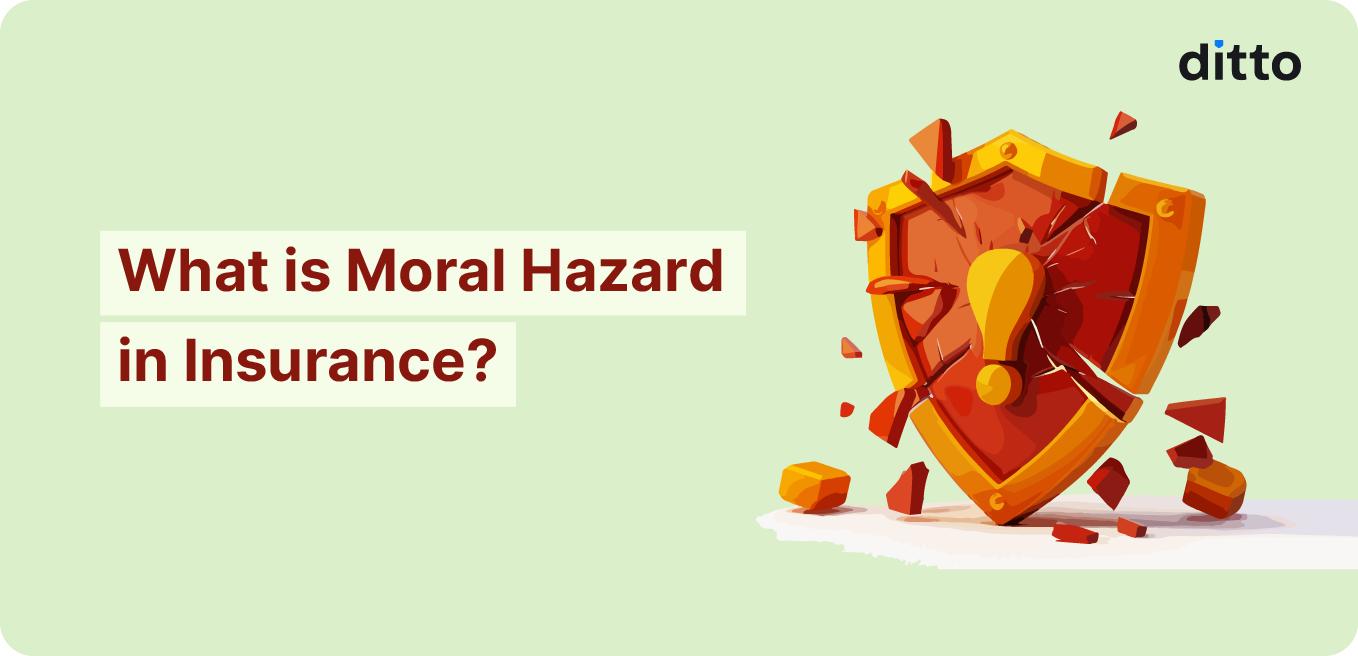
Imagine someone wants cataract surgery but chooses a luxury hospital for the procedure only because they have insurance. This behavior change is called a moral hazard.
It can look like:
- Deliberately creating or worsening a loss, like setting fire to a factory to claim money.
- Becoming careless, thinking "insurance will pay anyway".
- Picking fights over claims and demanding much more than the actual loss.
Let's discuss what moral hazard really means, the main types, how it shows up in insurance, how it differs from adverse selection, and how we can reduce it.
Types of Moral Hazard in Insurance
Moral hazard usually shows up in two ways:
- Ex Ante Moral Hazard
This happens when behavior becomes risky after buying insurance.
Example: You get a motor policy with zero deductible, and suddenly you’re okay with letting your friend speed on the highway because “even if we crash, insurance will pay”.
- Ex Post Moral Hazard
This is about behavior after the loss has already happened. The event has already happened, but the behavior around the claim is shady.
Example: Your phone is genuinely stolen, but when filing the claim, you inflate the value, add fake accessories, or tweak the story.
How Does Moral Hazard Show Up in Different Types of Insurance
1. Health insurance
- Getting admitted for very minor issues only because there is a cashless cover.
- Picking a hospital or room which is far more expensive than needed.
- Hospitals padding bills, adding unnecessary tests, or using "packages" when basic treatment would do.
- Taking a policy after a major ailment has already started, and not disclosing it.
2. Term Life Insurance and Nominees
In life insurance, moral hazard is more serious. Underwriters worry about people trying to profit from a death - their own or someone else’s. This can show up as very high coverage vs. declared income or as multiple policies taken in a short time.
Most insurers expect you to choose first-degree relatives as nominees, like spouse, parents, or children, because the financial link is clear. When you choose someone else, many insurers trigger a moral hazard questionnaire.
For example, HDFC Life’s policy servicing form explicitly says that if the nominee is not a first-degree relative, an MHQ (Moral Hazard Questionnaire) must be attached.
3. Motor Insurance
- Driving more rashly because your car is fully insured.
- Handing over the car to unlicensed or intoxicated drivers.
- Staging accidents or exaggerating repair estimates.
4. Property / Business Insurance
The classic textbook example is a factory owner who insures stock for a high value, moves some of it out, and then the factory "mysteriously" catches fire. Arson for insurance money is a globally known moral hazard pattern.
What Is Adverse Selection?
Difference Between Moral Hazard and Adverse Selection
How To Reduce Moral Hazard?
Imagine you had a policy with no restrictions and instant approval. It would feel amazing for customers, but it would also invite misuse and make pricing almost impossible. That is why insurers build certain guardrails into both the buying process and the policy itself.
1. Underwriting During Purchase
Insurers try to filter risky behaviour before they even issue a policy. They do this through:
- Detailed proposal, financial, and medical underwriting
- Medical tests and nominee checks for high covers
- CIBIL or other credit checks
Did You Know?
2. Policy Design Tools
To keep everyone honest and stay in line with IRDAI guidelines, insurers design policies with some built-in friction.
- Co-pays and Deductibles: This structure is meant to ensure you still pay something during the claim and do not treat insurance payouts as free money.
- Waiting Periods: These prevent people from buying a policy only after they already know something serious is about to happen.
- Permanent Exclusions or Specific Excluded Causes: These remove very high abuse or non-insurable events from the contract altogether, so the rest of the cover can be priced more fairly.
3. In-person Verification During Claims
If a claim looks unusual or very large, insurers may go beyond paperwork.
They can:
- Send investigators to hospitals or homes.
- Speak with doctors, neighbours, HR teams, and bank officials.
- Verify medical records, police reports, and income proofs.
- Confirm that the person who is hospitalised or deceased is the actual insured and that the circumstances match what has been reported.
The key point is that insurers are allowed to investigate moral hazard, but they need solid proof that links behavior to the loss, not just a gut feeling.
4. Incentives for Good Behavior
It is not all about penalties and investigations. There are positive nudges too.
Insurers and regulators use:
- No Claim Bonus (NCB): Many health plans increase your sum insured if you do not claim in a year. This rewards careful behaviour and sensible use of cover.
- Wellness and Safe Driving Programs: Some insurers give points or discounts for steps walked, preventive check-ups, gym participation, or safe driving scores on telematics devices. Over time, these can lower your renewal premium.
- Credit Score-based Discounts: Several products now offer lower premiums to people with good credit scores. The idea is that someone who pays loans and bills on time and manages money responsibly is also less likely to engage in deliberate misuse of insurance.
What Does Moral Hazard Mean for Policyholders?
Here’s the truth:
Most people are not scammers. They don’t realise how certain behavior affects pricing for everyone. But collective behaviour still matters. If too many people overuse or abuse, premiums go up across the board.
So, as a customer:
- Use your cover for genuine risks, not tiny, avoidable costs.
- Don’t hide information at the proposal stage - that’s adverse selection today and claim rejection tomorrow.
- Choose co-pays/deductibles only if you can afford them in an emergency.
- Be thoughtful about your nominee in life insurance policies, stick to true dependents where possible to avoid moral-hazard flags and extra scrutiny later.
A Real Life Moral Hazard Case
Why Choose Ditto for Insurance?
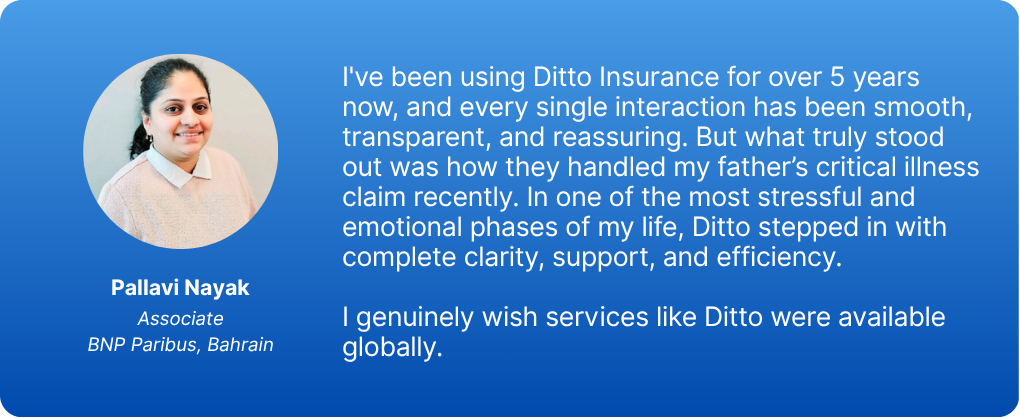
At Ditto, we’ve assisted over 8,00,000 customers with choosing the right insurance policy. Why customers like Pallavi below love us:
- No-Spam & No Salesmen
- Rated 4.9/5 on Google Reviews by 15,000+ happy customers
- Backed by Zerodha
- Dedicated Claim Support Team
- 100% Free Consultation
Confused about the right insurance? Speak to Ditto’s certified advisors for free, unbiased guidance. Book your call now, slots fill up fast!
Ditto’s Take on Moral Hazard in Insurance
At Ditto, we do not treat moral hazard as scary jargon. For us, it is a fairness problem: honest customers should not pay more because a few people hide facts, and insurers should not throw around “moral hazard” to deny genuine claims.
In practice, we help you fill forms honestly, explain co-pays, deductibles, waiting periods and exclusions in simple language, and flag odd cover amounts or nominee choices before they become a problem. If a genuine claim is rejected with vague lines like “non-disclosure” or “moral hazard”, we also help you escalate and ask the insurer to prove it.
Our job is to keep you on the right side of the moral hazard line from day one, and to stand with you if that label is used unfairly when you need the policy the most.
If you’re unsure whether your past health history, nominee choice, or plan structure could create a moral hazard problem later, you can always book a free call with a Ditto advisor, and we’ll walk you through it.
Frequently Asked Questions
Last updated on: