



Quick Overview
A single hospital bill or accident can wipe out years of savings, especially for low-income households with no financial backup. Yet, insurance coverage in India remains limited, with penetration at just 3.7% of GDP, highlighting how many people still lack financial protection.
While regular insurance plans offer broader coverage, they may not always be accessible for everyone. This is where micro insurance steps in, offering simpler options for those in the informal sector or rural areas to manage financial risks.
In this article, we’ll explain what micro insurance is, how it works, micro insurance schemes in India, and who should consider them.
What is Micro Insurance?
As per the IRDAI (Micro Insurance) Regulations, 2015, micro insurance refers to a specific category of insurance products designed for low-income segments, with predefined limits on premiums and coverage. These products must be explicitly labeled as “Micro-Insurance Product” in their name to ensure transparency.
The regulations also define how these products can be structured. For instance, individual health plans are capped at ₹1 lakh, family or group health plans at ₹2.5 lakh, and life cover up to ₹2 lakh. For asset-based covers like livestock, crops, or personal accident, limits are up to ₹1 lakh.
Micro insurance group policies require a minimum of five members. These plans also exclude market-linked products like Unit Linked Insurance Plans (ULIPs) to keep them simple.
Benefits of Micro Insurance Products
Affordability
Accessibility
Essential Protection
Targeted Support
Challenges in Micro Insurance
- Low Awareness: Despite availability, many people are still unaware of microinsurance, leading to limited penetration.
- Distribution: Reaching rural and informal sections remains a constant challenge due to a lack of acceptability.
- Supply-Driven Products: Plans are often designed by insurers, which may not always align with the actual needs of users.
Micro Insurance Schemes in India
Micro insurance is not limited to health coverage. It includes different types of protection based on the risks, such as health issues, loss of income, or damage to assets. These policies can be structured into three broad categories:
- Life Insurance: Offers basic life coverage and survivor benefits.
- Health/Accident Insurance: Covers medical conditions, hospitalization, and accidental injuries.
- General/Asset Insurance: Protects against property loss, damage to livestock, or failure of crops.
India has one of the most structured ecosystems for micro insurance schemes, supported by government initiatives and IRDAI regulations.
Government Schemes
Public and Private Insurer Products
Micro insurance covers multiple categories, but health coverage is often the most asked about. Here’s how micro health insurance compares with regular health plans.
Note: Micro insurance is mainly distributed through Non-Governmental Organizations (NGOs), Self-Help Groups (SHGs), and Microfinance Institutions (MFIs), helping reach rural and low-income communities. Common Services Centres (CSCs) and channels like Insurance Marketing Firms( IMFs), and Insurance Self-Network Programs (ISNPs) are also allowed but remain underutilized.
Who Should Consider Micro Insurance?
Micro insurance is suitable for people with limited or irregular income who need basic protection, especially if they don’t already have any health or life insurance. It can also work as a starting point for first-time buyers or for those relying on self-help groups (SHGs) or microfinance institutions (MFIs).
If you can afford higher premiums or need coverage for major medical expenses and long-term security, a comprehensive health insurance plan is a better fit.
Key Insight: Bima Trinity
Why Talk to Ditto for Health Insurance?
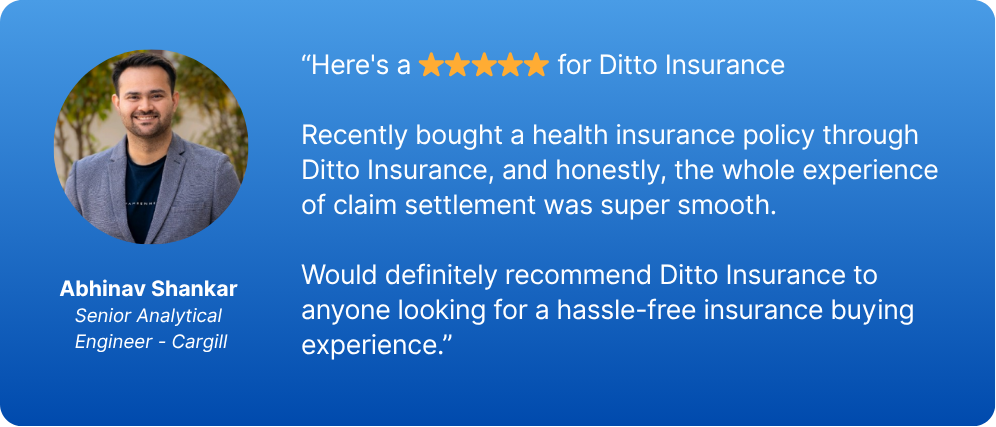
At Ditto, we’ve assisted over 8,00,000 customers with choosing the right insurance policy. Why customers like Abhinav below love us:
- 100% Free Consultation
- Dedicated Claim Support Team
- Backed by Zerodha
- Rated 4.9/5 on Google Reviews by 15,000+ happy customers
- No-Spam & No Salesmen
You can book a FREE consultation here. Slots are filling up quickly, so be sure to book a call or chat with us on WhatsApp now.
Conclusion
Micro insurance can be a useful starting point if you don’t have any coverage and need basic financial protection. It helps you manage risks like illness, accidents, or loss of income without putting pressure on your budget.
However, it’s important to understand where it fits. Micro insurance focuses on essential, low-cost protection, while regular insurance offers broader coverage and higher financial security.
As your needs and income evolve, take time to review your coverage and choose what works best for your situation.
Disclosure: The information provided in this article is for educational purposes only. We, at Ditto, do not help with micro insurance plans. Please refer to the IRDAI or plan-specific official website and contact its official channels for more details.
Frequently Asked Questions
Last updated on: