



Quick Overview
Medical inflation in India is growing at nearly three times the pace of general inflation, and most people only realize this when they face a hospital bill. If your health insurance coverage has remained unchanged since purchase, it may no longer match the rising cost of treatment in private hospitals. To help you understand and address this gap, this article explains what’s driving medical inflation in India, how it affects you, and what you can do to stay adequately covered.
Key Factors Behind Rising Medical Inflation in India
- Advanced Medical Technology: Hospitals are investing in robotic surgeries, AI-based scans, and advanced diagnostic tools. These improve treatment quality but come at a steep price. Most of this equipment is imported, making costs even higher due to currency fluctuations.
- Rising Chronic Diseases and Aging Population: The increasing prevalence of lifestyle-related illnesses like diabetes, cancer, and cardiovascular conditions is driving the need for long-term, expensive treatments. At the same time, an aging population requires more frequent and intensive care, further contributing to medical inflation in India.
- Medical Tourism: India’s medical tourism market is projected to exceed $13 billion by 2026. As hospitals cater to higher-paying international patients, treatment costs in private hospitals tend to rise for domestic patients as well.
- High Operational and Infrastructure Costs: Costs related to medical supplies, specialized staff salaries, equipment maintenance, and facility upgrades have all risen sharply. Private hospitals pass these expenses on to patients, directly contributing to higher treatment bills.
- Pharmaceutical Costs: Drug prices have been rising steadily for years. Many medicines depend on imported raw materials and energy-intensive manufacturing. Recent geopolitical tensions, including the Middle East conflicts, have increased material costs, such as polypropylene, directly inflating the costs of essential medicines.
How Medical Inflation in India Affects You
Most people don't think about medical inflation in India until they are faced with a hospital bill or a noticeably higher renewal premium. By then, the gap between what their policy covers and what treatment actually costs has already grown. The effects are gradual but significant, affecting daily finances, access to quality healthcare, and long-term financial planning.
Direct Financial Impact
If medical inflation in India stays at 14%, a treatment costing ₹1 lakh today will cost nearly ₹2 lakh in five years. Staying with the same health insurance coverage without reviewing it on a regular basis means that your policy's value decreases year after year, even if the sum insured on paper remains constant.
Your Premiums Will Keep Rising
As claim costs rise, insurers reprice policies regularly. Age-band shifts alone can make renewals noticeably more expensive, even if your health hasn't changed.
What We See at Ditto: Based on what we have observed, health insurance premiums in India tend to increase once every 2–3 years, typically in the range of 10–15%. However, the actual percentage can vary depending on your insurer and the medical inflation rate prevailing at the time of your renewal.
Healthcare Is Becoming Harder to Access
Rising costs are quietly changing how Indians use healthcare. Around 20% have skipped treatment due to financial constraints, and 36% of insured individuals have reduced doctor visits despite having coverage. For lower-income families, medical inflation in India often forces a difficult choice between healthcare and basic household expenses, leading to late-stage diagnoses and higher long-term costs.
Higher Out-of-Pocket Expenses
Even with a policy in place, you may still end up paying a significant portion of the bill yourself. Co-payments, deductibles, and sub-limits on room rent create gaps that are easy to overlook at the time of purchase but become very real at the time of a claim. As the medical inflation rate in India in 2025 continues to rise, these gaps become more visible.

How to Protect Yourself Against High Medical Inflation
Choose the Right Sum Insured
Choose a cover that can handle expensive surgeries, ICU stays, and long hospitalizations. For urban families, ₹15-25 lakh is ideal.
Buy Early
Most plans have 2-3 year waiting periods for pre-existing conditions like diabetes or hypertension, illnesses most Indians develop by their mid-40s. Since premiums increase with age, buying early helps you avoid loading charges, complete waiting periods while you’re healthy, and accumulate bonuses over time.
Review and Adjust Coverage
The medical inflation rate in India over the last 10 years has steadily increased, making older policies insufficient today. So, it's important to review and update your coverage based on your age, medical history, location, and financial situation to keep up with rising costs.
Stay Healthy
Some insurers reward healthy behavior. Maintaining a good Body Mass Index (BMI), hitting step targets, or completing annual check-ups can earn meaningful renewal discounts. This helps keep costs under control amid high medical inflation in India. For example, Aditya Birla Activ One Max offers up to 100% premium discounts through its HealthReturns feature, helping offset rising medical inflation.
Why Choose Ditto for Health Insurance?
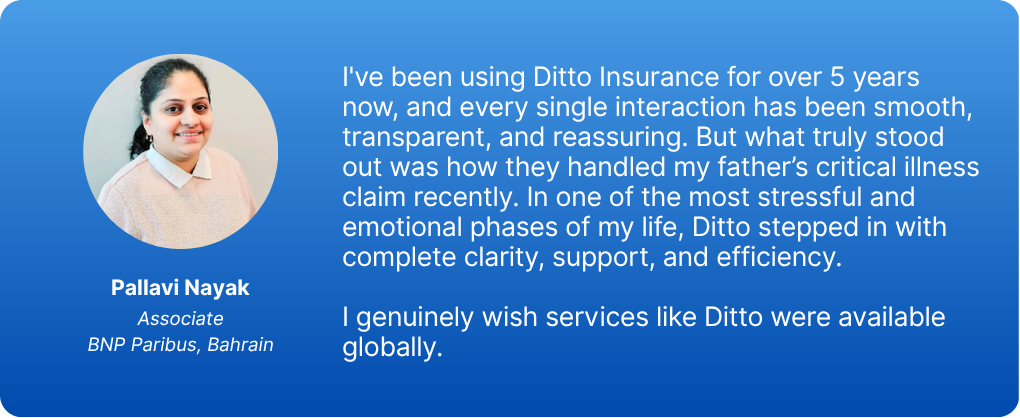
At Ditto, we’ve assisted over 8,00,000 customers with choosing the right insurance policy. Why customers like Pallavi below love us:
- No-Spam & No Salesmen
- Rated 4.9/5 on Google Reviews by 15,000+ happy customers
- Backed by Zerodha
- Dedicated Claim Support Team
- 100% Free Consultation
Confused about the right insurance? Speak to Ditto’s certified advisors for free, unbiased guidance. Book your call now, or chat with us on WhatsApp.
Conclusion
The main problem with medical inflation in India is that most people don't update their health insurance coverage as costs rise. A practical way to approach this is to align your cover with your life stage. Begin with a strong base cover early on, upgrade it as your responsibilities grow, and review your policy periodically to ensure it remains adequate.
Frequently Asked Questions
Last updated on: