

Insurance for All: Overview
Think of a family where only one person earns. The children are in school, the parents are aging, and everyone depends on that one salary.
If that earning member has a term plan, the family gets a lump sum to keep life going and pay for education and rent if something unfortunate happens. If there is no term cover, they might have to move house, pull their children out of good schools, or take on heavy debt.
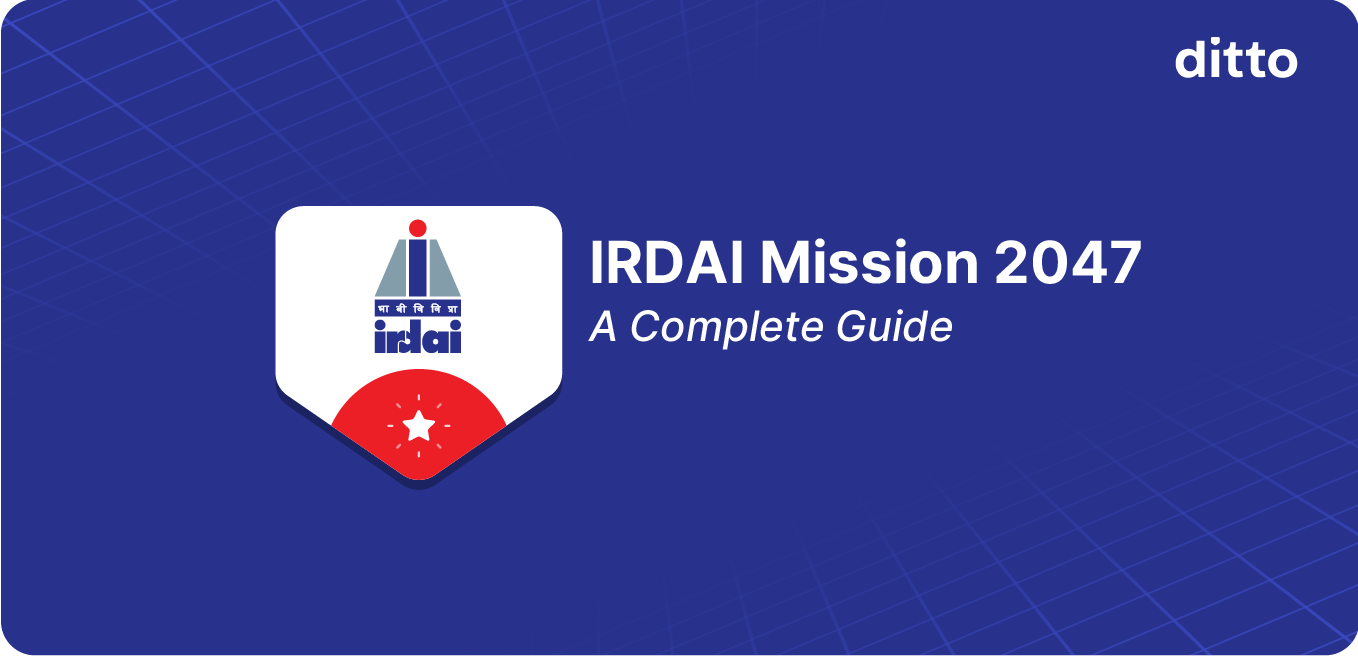
This is the kind of risk IRDAI wants to reduce with its “Insurance for All” by 2047 vision. By India’s 100th year of independence, the aim is that every citizen has suitable life, health, and property insurance, and every business has the right protection.
In this article, we will break down what this vision means, how IRDAI plans to get there, and how it could change your experience as a policyholder over the next few years.
Insurance for All by 2047 - IRDAI’s Vision
What is IRDAI Currently Working On?
(1) Clear Plan, Not Just A Slogan
IRDAI has involved institutes like IIM Kozhikode to turn “Insurance for All” into a strategy with milestones and scorecards, so progress can be tracked over time rather than just announced.
(2) More Relevant Products, Faster
With the “Use and File” system for most health and general products, insurers can launch covers quickly and then file details with IRDAI. This is meant to bring more varied products to market and to allow designs for specific age groups, incomes, jobs, and regions, rather than a single generic plan for everyone.
(3) Better Reach and Cleaner Selling
IRDAI is reworking rules for banks, brokers, and other sellers to help them reach more people and reduce mis-selling and forced selling. The idea is to make the buying journey more straightforward, more transparent, and less paperwork-heavy.
(4) Inclusive Health Cover
IRDAI has begun focusing on areas such as senior citizen premiums and “inclusive health insurance”. The aim is to keep health cover usable for people who struggle the most with high medical costs, especially older people and low-income families.
(5) Stronger Grievance and Claims Systems
Through Bima Bharosa (its online grievance portal) and a detailed policyholder protection circular, IRDAI is asking insurers to accept complaints online, track and resolve them faster, work towards “zero grievances,” and set up internal ombudsman schemes.
(6) More Capacity to Handle Big Risks
By easing some reinsurance rules and attracting more global reinsurers, IRDAI is trying to make sure there is enough backing in the system for large claims and long-term promises from insurers.
(7) Affordability Boost Through GST Cut
Removing the 18% GST on retail life and health insurance is a significant push toward IRDAI’s vision, as affordability has always been the main barrier. It makes basic coverage meaningfully cheaper, especially for first-time and low-income buyers. It signals that insurance is now being treated like a social essential rather than a taxed service.
Taken together, these changes are early building blocks of “Insurance for All” by 2047. Some are already in place; others will appear step by step.
Why This Vision Matters To You
Today, many people still pay hospital bills from savings or loans, or get stuck in slow, confusing claim processes.
If the vision works as planned, here is what it means in simple terms:
- You will see more product choices that fit your stage of life, helped by simpler entry norms, potential 100% FDI, and new composite licences that bring life and non-life insurance under one roof, all of which aim to increase competition, capacity, and innovation.
- Complaints and claims should become easier to file, track, and resolve.
- Advice and access should improve even outside big cities.
The 2047 date is a clear deadline. The idea is that, by then, having insurance should feel normal for most households and businesses, not like a luxury or a stroke of luck.

What are the Flagship Projects of IRDAI?
Bima Sugam
Bima Sugam is a digital marketplace for buying, servicing, and claiming insurance. IRDAI describes it as an “Insurance Electronic Marketplace” and part of the digital public infrastructure for insurance. Think of it as a single, trusted highway where insurers, intermediaries, and customers meet, instead of many disconnected roads.
Bima Vahak
Bima Vahak is a local, women-led sales and service force. The goal is to ensure that people who are not comfortable online still receive proper advice and support from someone in their own community.
Bima Vistaar
Bima Vistaar is a simple, composite policy that covers multiple significant risks in a single plan. It is designed as the first-ever composite product that offers basic protection for life, accident, property, and surgery, with risks shared across insurers under a co-insurance model. Instead of juggling many small coverage plans, families, especially in lower-income and rural areas, can use a bundled policy.
Together, these three flagship projects the Bima Trinity are meant to give India both a strong digital backbone and a strong local presence. In simple terms, to make insurance easy to access online and easy to understand offline.
IRDAI has described Bima Trinity as progressing steadily as a key part of the “Insurance for All” by 2047 roadmap.
Why Choose Ditto for Insurance?
At Ditto, we’ve assisted over 8,00,000 customers with choosing the right insurance policy. Why customers like Pallavi below love us:

- No-Spam & No Salesmen
- Rated 4.9/5 on Google Reviews by 15,000+ happy customers
- Backed by Zerodha
- Dedicated Claim Support Team
- 100% Free Consultation
Confused about the right insurance? Speak to Ditto’s certified advisors for free, unbiased guidance. Book your call now, slots fill up fast!
Ditto’s Take on IRDAI Vision 2047
- Buying and comparing should get simpler over time: With Bima Sugam and more principle-based rules for intermediaries, the long-term direction is fewer friction points, more transparency, and easier comparisons across insurers.
- Good advice should not be limited to big cities: IRDAI is pushing for last-mile presence through Bima Vahak and State Insurance Plans. If this works as planned, more people will get guidance from trained local partners rather than random agents who sell whatever pays the highest commission.
- Products should match real life better. From age and income-based plans to Bima Vistaar-style composite covers, the trend is toward protection that matches how people actually live and work, not generic templates.
Imagine you are buying your first health or term plan. As these changes roll out, the goal is that you spend less time decoding jargon and more time picking a plan that clearly fits your budget and your family’s needs.
Frequently Asked Questions
Last updated on: