




Quick Overview
Adventure sports participation in India has been growing by 10 to 15% each year, meaning more people are heading into high-risk terrain than ever before.
But standard health and travel policies almost always exclude injuries from adventure sports. A fractured leg after a trekking fall or a spinal injury from a rafting accident can cost lakhs in treatment. If the insurer decides the activity is not covered under your policy, that bill lands entirely on you. That is exactly where adventure sports insurance comes in. It is a layer of protection designed to cover you when you want to try something adventurous.
In this article, we will walk you through the activities typically covered, the plan types where this coverage exists, the key benefits, and what is included versus excluded.
Activities Covered Under Adventure Sports Insurance
Not every risky activity gets the same treatment from insurers. Coverage typically falls into two buckets:
Moderate-Risk Activities
This usually gets covered in your base plans or with special add-ons.
- Trekking and hiking (up to a certain altitude, usually under 6,000 meters)
- Snorkeling and recreational scuba diving
- White-water rafting (Grade 1–3)
- Rock climbing (with professional supervision)
- Skiing and snowboarding
- Zip-lining
- Surfing
High-Risk Activities
This usually needs explicit coverage or dedicated plans.
- Mountaineering and high-altitude expeditions
- Skydiving and paragliding
- Bungee jumping
- Deep-sea diving
- Motor racing and motorsports
- Base jumping
- Cave diving
Keep in mind that most insurers draw a clear line between occasional recreational participation and professional competition. If you're competing in an event or earning money from these activities, securing coverage becomes harder and more expensive.
Adventure Sports Insurance: Plan Types
There isn't one single "adventure sports insurance" product. Instead, this coverage is available across four types of insurance. Here's how each one works.
1) Travel Insurance
Adventure sports travel insurance is the most common way to get covered, especially when you're traveling internationally. Standard travel insurance covers medical emergencies, trip cancellations, and lost baggage. But adventure sports? That usually needs a separate travel insurance with an adventure sports cover add-on.
For example, ICICI Lombard's travel insurance plans offer an adventure sports add-on that covers activities like skiing, skydiving, and trekking. You pay a slightly higher premium, and in return, medical expenses from injuries during those activities are covered during your trip abroad. The best travel insurance for adventure sports would depend on your specific needs.
What to Check: Which activities are explicitly listed, the sub-limit for adventure sports claims (often capped separately from the overall medical limit), and whether the coverage applies only abroad or domestically, too.
Heads Up: Travel insurance adventure sports coverage is trip-specific. It covers you for the duration of that one trip, not year-round.
2) Personal Accident Insurance
A standalone personal accident (PA) policy pays you a lump sum in case of accidental death, permanent total disability, or permanent partial disability. The good news is that many PA policies offer multiple plan levels, and the higher-end plans often include adventure sports coverage for activities like paragliding, bungee jumping, and trekking.
Standard PA policies usually do not cover:
- Injuries from adventure sports, unless explicitly listed
- Professional competition in adventure sports
- Accidents under the influence of alcohol or drugs
For example, Bajaj General’s Global Personal Guard Policy covers up to ₹1 crore for death or permanent disability arising from high-risk adventure activities (non-professional, under supervision).Quick Note: We don't recommend personal accident policies. Our view is to lock in solid health insurance and term insurance first. PA insurance can then be a good addition if you regularly participate in high-risk activities or want specific coverage for temporary disability or EMI/loans.
3) Term Life Insurance
Term life insurance pays your family a lump sum (the sum assured) if you pass away during the policy term. But does it cover deaths from adventure sports? The short answer is yes, but only if you disclose your activities upfront and the insurer agrees.
Here's how the underwriting works in practice:
- Disclosure: The proposal form will ask about hazardous hobbies and activities. If you scuba dive, trek at high altitudes, or go skydiving, you must declare it. Check out HDFC Life’s Hazardous Hobby Questionnaire to understand more.
- Premium Loading: Insurers will charge a higher premium based on the type of sport, how often you participate, and whether you're a recreational or professional participant.
- Professional Athletes: If adventure sports are your livelihood, some insurers may decline your application outright, while others may issue a policy with higher loading or specific restrictions, such as a lower sum assured, no riders offered, or a lower policy term.
- Check Riders: The base death cover may not exclude adventure sports, but disability-related riders, such as waiver of premium or accidental benefit add-ons, often have their own exclusions. Always read the rider terms separately, not just the base policy.
Started an Adventure Sport After Buying the Policy?
Check out our guide on the best term insurance plans in India to see which plan suits you.
Golden Rule: Always disclose everything while filling out the application form. A slightly higher premium now is better than a rejected claim later.
4) Health Insurance
Standard health insurance in India covers hospitalization expenses arising from accidents, including adventure-related accidents, as long as you're participating recreationally. Your plan should typically cover hospital bills for a trekking injury, a fracture from a fall while skiing, or a diving-related decompression illness requiring hospitalization.
However, there's a critical exclusion that many people miss. If you participate in adventure sports professionally (i.e., as a career or occupation), all health insurers will exclude injuries from those activities. So a professional paragliding instructor or a competitive mountaineer would not have their injuries covered under a standard health plan.
There are currently no health insurance plans specifically designed for adventure sports in India. But if you are a recreational participant, then you can check out our guide on the best health insurance plans in India.
Ditto Claims Story: Adventure Sports Edition

Benefits of Adventure Sports Insurance
Financial Protection Against High Medical Costs
Air ambulances from high-altitude locations, or specialized treatment for diving injuries, can run into several lakhs. Insurance can take that off your plate.
Lump Sum Payout in Case of Disability or Death
Personal accident policies and term insurance, with proper disclosures, ensure your family is protected even if an injury leaves you unable to work or if you don't return from a trip.
Emergency Evacuation Coverage
Some travel insurance plans with adventure sports add-ons cover helicopter evacuation from remote locations. This is especially relevant for Himalayan treks where the nearest hospital can be hours away.
Peace of Mind
There's a real psychological benefit here. When you know you're covered, you can focus more on the experience and less on the what-ifs.
Worldwide Coverage
Most travel insurance and PA plans cover you globally, not just in India. So whether you're skiing in Switzerland or scuba diving in Bali, you're protected.
Inclusions and Exclusions of Adventure Sports Insurance
Note: Read the exact list of covered activities in your policy document. Don't assume an activity is covered just because a similar one is listed. If your insurer doesn't explicitly name it, ask before you buy the plan.
Why Choose Ditto for Insurance?
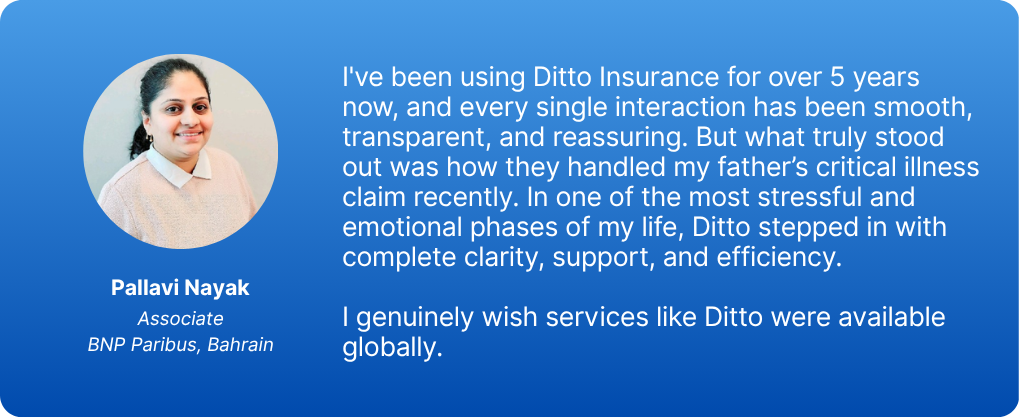
At Ditto, we’ve assisted over 8,00,000 customers with choosing the right insurance policy. Why customers like Pallavi below love us:
- No-Spam & No Salesmen
- Rated 4.9/5 on Google Reviews by 15,000+ happy customers
- Backed by Zerodha
- Dedicated Claim Support Team
- 100% Free Consultation
Confused about the right insurance? Speak to Ditto’s certified advisors for free, unbiased guidance. Book your call or chat on WhatsApp with us now!
Ditto's Take on Adventure Sports Insurance
Adventure sports insurance isn't a single product you can buy off the shelf. It's more about the right plans, the right disclosures, and the right add-ons, working together to cover you completely. Here is what you can actually do.
Step 1: Get Solid Health Insurance
This is your foundation. It covers hospitalization from accident-related injuries for recreational sports participants.
Step 2: Get Term Insurance with Full Disclosure
Disclose your adventure activities in the proposal form. Your premium may be higher due to loading, but your family will be fully protected.
Step 3: Add Travel Insurance with an Adventure Sports Add-on
Useful for international trips involving specific high-risk activities.
Step 4: Keep Documentation Ready for Claims
When filing a claim, keep proof of the activity (booking confirmation or guide certificate), medical records, a site accident report, and a digital copy of your policy handy. Missing documentation is one of the most common reasons claims get delayed, even when the activity is covered.
For professional adventure sports, coverage typically requires a custom group policy in which the insurer explicitly accepts the sport in writing. In practice, that usually means group cover via an employer, sports federation, event organizer, or broker with underwriting approval, or institution-backed athlete insurance.
Disclosure
Frequently Asked Questions
Last updated on: