



Quick Overview
Even if you have health insurance, the hospital can still ask for a big deposit at admission. So the real question is: what does “cashless” actually mean in real life?
Cashless health insurance is how the claim is processed when you’re in the right hospital setup, and the claim meets policy rules. The insurer settles the covered part with the hospital, while you pay the rest (non-payables, exclusions, deductibles, co-pay, and anything beyond limits).
What is a Cashless Claim in Health Insurance?
A cashless claim is simply a way to file a claim. It is not a special “type” of policy.
People often ask: “Is my insurance cashless?”
The better question is: “Can my claim be processed cashless at this hospital?”
All retail health insurance plans offer cashless claims, but only when the hospital is in the insurer’s network (or agrees to support cashless in that case), and the claim is admissible.
Even at a network hospital, cashless can fail due to missing documents, exclusions, waiting periods, room-category issues, or medical details that do not match disclosures.
Eligibility for Cashless Health Insurance
You are eligible for cashless when:
- Network Hospital: You are admitted to a network hospital.
- Active Policy: Your policy is active and in force.
- Covered Treatment: The treatment is covered and medically necessary.
- No Blocks: Waiting periods, exclusions, and limits do not block the claim.
- Pre-authorization Done: The hospital raises pre-authorization on time with the required documents.
Types of Cashless Health Insurance
There are no real “types” of cashless health insurance. Instead of looking for a “cashless policy”, think of cashless as a “feature” of the claim process that depends on the hospital setup and whether the expenses are admissible under your policy.
How Do Cashless Claims Work?
Planned Hospitalization (Scheduled Surgery or Admission)
Step 1: Confirm Cashless at the Hospital Desk
Share policy details and ask them to raise pre-authorization (cashless request) via the insurer/third party administrator (TPA).
Step 2: Raise Pre-auth Before Admission
Ask the hospital to send the pre-auth form + estimate + required medical documents at least 48-72 hours before admission.
Pro tip: Get the pre-auth reference number the same day it’s raised so you can track it.
Step 3: Respond Fast to Insurer Queries
Most delays happen because of missing doctor notes, investigation reports, or KYC. Ask the desk: “What’s pending right now?” and close it quickly.
Step 4: Approval Comes with Conditions
Cashless approval is subject to admissibility, and can be time-bound, for example: some insurers treat approvals as valid for a limited window.
Step 5: If the Bill Increases, Raise an Enhancement
If treatment costs go up, the hospital should send an enhancement request during treatment (not at discharge). If the insurer approves less than the revised estimate, you pay the gap.
Step 6: Discharge and Final Approval
As per IRDAI guidelines, insurers must decide cashless authorization within 1 hour of receiving the request. For discharge, insurers must give final discharge authorization within 3 hours of the hospital’s request. If it crosses 3 hours, the extra amount charged due to the delay is borne by the insurer.
Emergency Hospitalization (Unplanned Admission)
Step 1: Get Admitted First
Share policy details with the hospital insurance desk as soon as things stabilize.
Step 2: Pre-auth Request After Admission
The hospital sends the pre-auth form + required documents to the insurer/TPA, and cashless is approved if the claim is admissible. Raise pre-auth requests within 24 hours of emergency admission.
Step 3: Expect Queries and Paperwork
In emergencies, hospitals sometimes send incomplete estimates and documents. Keep pushing for what the insurer wants: admission notes, consult notes, investigations, past history, KYC.
Step 4: Enhancement if Costs Rise
Same rule: ask the hospital to raise enhancement during treatment so you do not get surprised at discharge.
Step 5: Discharge timelines still apply
IRDAI requires insurers to decide cashless authorization within 1 hour and provide final discharge authorization within 3 hours of the hospital’s request.
Benefits of Cashless Health Insurance
So why is cashless medical insurance important for most families? Let’s unpack it.

Deposit Relief
Reduces the upfront payment burden at admission by settling the eligible part directly with the hospital.
Emergency Support
Helpful when you need treatment quickly during emergencies and cannot arrange funds immediately.
Discharge Ease
Less last-minute stress when approvals and final settlement happen on time.
Simple Process
The hospital insurance desk handles most of the coordination with the insurer/TPA.
Planned Clarity
Pre-authorization improves predictability for planned hospitalizations and helps you plan deposits and non-payables.
What is Covered and Not Covered Under Cashless Health Insurance?
Anything not covered in cashless health insurance usually becomes your out-of-pocket payment. Even with cashless, you may have to pay for exclusions, non-payables, and any policy limits that apply.
How to Choose the Best Cashless Health Insurance Plan?
At Ditto, we shortlist cashless-friendly plans using a simple framework
Network Strength
Policy Terms
Insurer Metrics
Premium Value
Based on the same framework, let’s see which is the best cashless health insurance policy in India.
Best Cashless Health Insurance
Top 5 Cashless Health Insurance in India
Did You Know?
Common Cashless Claim Mistakes to Avoid
“Cashless Policy” Myth
Cashless is not a type of policy. It is a claim process that depends on the hospital setup and whether your claim is admissible.
Hospital Check
Always confirm cashless at the hospital insurance desk, because even network hospitals can temporarily pause cashless for an insurer.
Late Pre-Auth
If pre-authorization is raised late, approvals get delayed. Ask for the pre-auth reference number on the admission day.
Missing Papers
Small gaps, like missing notes or reports, can stall approvals. Ask what is pending and share it quickly.
Enhancement Request
If the estimate rises, ask the hospital to send an enhancement request during treatment, not at discharge.
No Backup Plan
Keep reimbursement as Plan B with a credit card or emergency buffer in case cashless does not go through.
What to Do if a Cashless Claim is Rejected?
Cashless Health Insurance Vs Reimbursement Claims
Why Choose Ditto for Health Insurance?
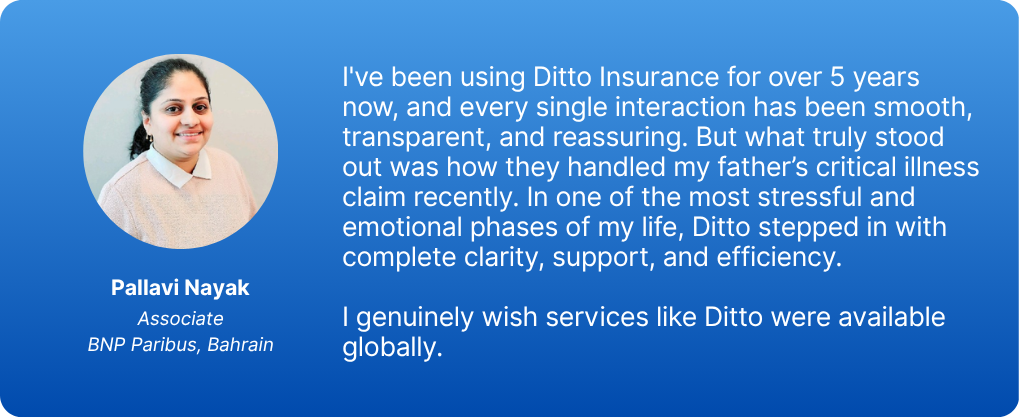
At Ditto, we’ve assisted over 8,00,000 customers with choosing the right insurance policy. Why customers like Pallavi below love us:
- No-Spam & No Salesmen
- Rated 4.9/5 on Google Reviews by 15,000+ happy customers
- Backed by Zerodha
- Dedicated Claim Support Team
- 100% Free Consultation
Confused about the right insurance? Speak to Ditto’s certified advisors for free, unbiased guidance. Book your call or chat on WhatsApp with us now!
Ditto’s Take on Cashless Health Insurance
Cashless health insurance is worth having, but it should not be the only reason you pick a plan. All insurers offer cashless health insurance because they have network tie-ups, but your experience will depend on how strong the network is in your area.
What we recommend:
- Prioritize strong hospital access in your city, plus where you travel.
- Avoid claim-time surprises: check room rent rules, non-payables/consumables, co-pay, deductibles, and waiting periods.
- Shortlist 5 nearby hospitals and recheck the network before planned admissions.
- Keep a reimbursement backup buffer for deposits and non-payables.
Our stand: Treat cashless as a convenience, not a guarantee. Choose a plan for strong coverage and clean terms, and keep reimbursement as your safety net.
Quick Note
Frequently Asked Questions
Last updated on: