



Quick Overview
In life insurance, assignment is a way to pass certain rights of your policy to another person or institution when needed. People usually do this to secure a loan or to gift the policy to a spouse, child, or business partner.
For the assignment to be valid, it must be:
- Documented through an endorsement or a separate deed
- Signed by the policyholder and a witness
- Registered with the insurer
Once registered, the insurer recognises the assignee, whether a bank or a family member, as the person entitled to policy benefits to the extent of the assignment.
Difference Between Assignment and Nomination

Benefits of Policy Assignment in Life Insurance
Assignment Overrides Nomination
Once a policy is assigned, the nominee cannot receive any benefit until the assignment is cancelled.
Premiums Remain Your Responsibility
Even after assignment, you must continue paying premiums to keep the policy active.
Re-assignment After Loan Closure is Essential
Many people forget to cancel the assignment after repaying a loan, which can delay claim settlements later.
Check the Lender’s Requirements
Some lenders request an absolute assignment, though a collateral assignment is usually enough for most loans.
Keep the Documentation Clear
A simple, correctly worded assignment deed or endorsement is typically sufficient under Section 38.
Types of Policy Assignments in Life Insurance
- Absolute Assignment
Absolute assignment means you transfer 100% of the policy rights to someone else. As a result, the assignee becomes the new owner, and you no longer have any financial rights over the policy.
For example, a parent assigns their life insurance policy to their adult child as a long-term gift. From that point on, the child controls the policy and will receive the full benefits. This type of assignment is permanent unless the assignee reassigns it back to you. - Collateral (Conditional) Assignment
Collateral assignment is a partial transfer of rights, typically used when taking a loan. You continue to be the policy owner, but the lender (usually a bank) gets the first right to claim the policy benefits only up to the outstanding loan amount.
For example, you take a ₹40 lakh home loan. Instead of buying the bank’s expensive group insurance, you assign your existing term plan to the authorities. If something happens to you, the bank takes only the remaining loan amount from the policy payout. Any leftover amount goes to your nominee.
Common uses include securing home, car, or business loans, or any situation where a lender requires financial security. This is the most common form of assignment at Ditto because it’s cost-effective and avoids unnecessary lender-linked insurance.
Note: Assignment forms are readily available with insurers, such as the Conditional Assignment Form from Axis Max Life and the assignment support page provided by ICICI Prudential Life.
Why Choose Ditto for Insurance?
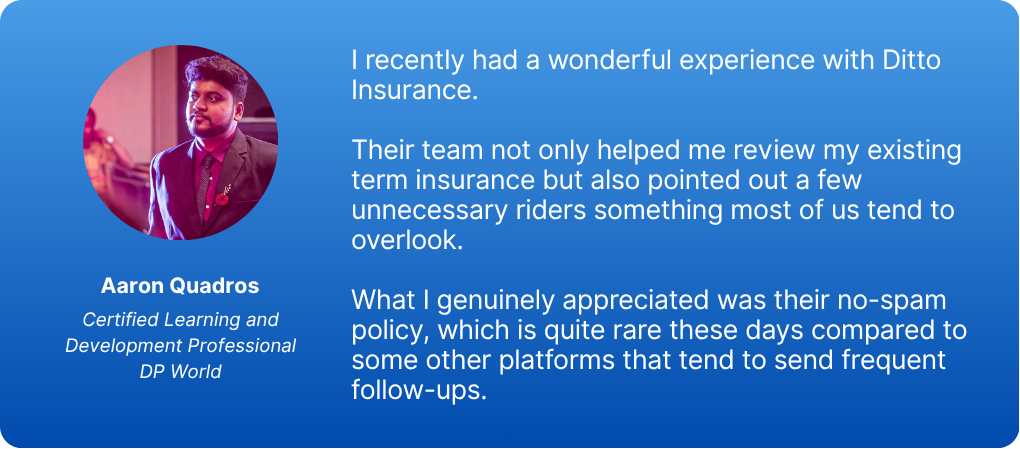
At Ditto, we’ve assisted over 8,00,000 customers with choosing the right insurance policy. Why customers like Aaron below love us:
- No-Spam & No Salesmen
- Rated 4.9/5 on Google Reviews by 15,000+ happy customers
- Backed by Zerodha
- 100% Free Consultation
You can book a FREE consultation. Slots are running out, so make sure you book a call now or chat over WhatsApp with our advisors.
How Does Ditto Help With Policy Assignment?
At Ditto, we frequently assist customers who are applying for home loans and are pressured by banks to purchase expensive lender-linked insurance. In most cases, this isn’t required, and assigning an existing term plan works perfectly well.
Here’s how we help:
- Assess whether assignment is actually needed and suggest the right type (usually collateral assignment).
- Provide the required forms and help prepare the documentation.
- Raise and track the assignment request with the insurer so the loan process isn’t delayed.
- Coordinate with both insurer and bank to ensure smooth approval.
- Assist with re-assignment once the loan is repaid, so full policy rights return to you.
This helps you keep your loan secured without paying for expensive bundled insurance.
If you’re unsure whether you should assign your policy, book a free call with our advisors for quick guidance.
Frequently Asked Questions
Last updated on: