



Quick Overview
Tata AIG is a well-known general insurer, established in 2001 as a joint venture between the Tata Group and the American International Group (AIG). It’s also a trusted brand backed by decades of business credibility, and it gives a sense of comfort. But trust alone won't pay your hospital bills.
What actually matters is whether your insurer will step up when you need them. That's where the claim settlement ratio comes in.
In this guide, we explain Tata AIG’s claim settlement ratio, how it is calculated, the other key metrics, and what they mean for you as a buyer.
What is a Claim Settlement Ratio?
Claim settlement ratio (CSR) is the percentage of claims settled by an insurance company against the total claims received during a financial year.
In the case of Tata AIG, 88.72% CSR means that out of every 100 claims received, the company is settling 88 claims. Anything above 90% is considered a healthy range and is a sign of reliability and the ability of the company to honor claims.
How to Interpret CSR?
How to Calculate the Claim Settlement Ratio of Tata AIG?
CSR is one of the most important metrics for assessing an insurer's performance, though it is not the only one that matters. Here's how it is calculated:
CSR = (Total number of claims settled / Total number of claims available to settle) × 100
Where:
- Total number of claims settled includes partly and fully settled claims
- Total number of claims available to settle = (claims carried forward from the previous year) + (new claims reported) − (claims closed without payment + claims still pending at year's end)
Please Note: IRDAI doesn't have any specific formula for calculating the CSR. These numbers can differ depending on the formula used by different platforms and insurers.
We, at Ditto:
- Use the formula mentioned above, as it helps capture long delays in claim settlement by insurers.
- Suggest reviewing other key metrics as well, such as average complaints received per 10,000 claims, the ICR, and gross written premium (GWP). This is important because CSR alone doesn't differentiate between partially and fully settled claims, and cannot give the full picture of an insurer's performance.
Did You Know?
Tata AIG: 3-Year Claim Settlement Ratio and Other Metrics
Note
- The complaint numbers shown above reflect all of Tata AIG’s products (health, motor, and others), as the insurer does not publish product-wise complaint data separately.
- All this data is sourced from IRDAI Annual reports and insurers’ public disclosures.
Key Insights
- CSR: The below-average CSR is concerning since it points to claim rejections and friction during settlements.
- Complaints: The consistently lower volume of complaints is a positive sign and suggests that most customers get through the claim processing easily and do not raise many grievances.
- ICR: The ICR sits comfortably within the healthy range of 50%-80%. This shows that the company is striking a balance between claim payouts and financial sustainability.
- Annual Business: The GWP of Tata AIG suggests the business has grown steadily and has a solid customer base. The performance still needs to be monitored since the company has been operating for more than two decades.
- Network Hospitals: The wide network of 11,000+ hospitals across India means broader availability of cashless hospitals even in smaller towns and cities.
Talk to an expert
today and
find
the right
insurance for you.


Where to Find Tata AIG Claim Settlement Ratio?
You can check the Tata AIG General Insurance claim settlement ratio from the following sources:
- IRDAI annual reports or handbook.
- Tata AIG’s annual report for 2024-25 is available on its official website.
- Trusted insurance advisory platforms like Ditto.
Top 10 Health Insurance Providers by Claim Settlement Ratio
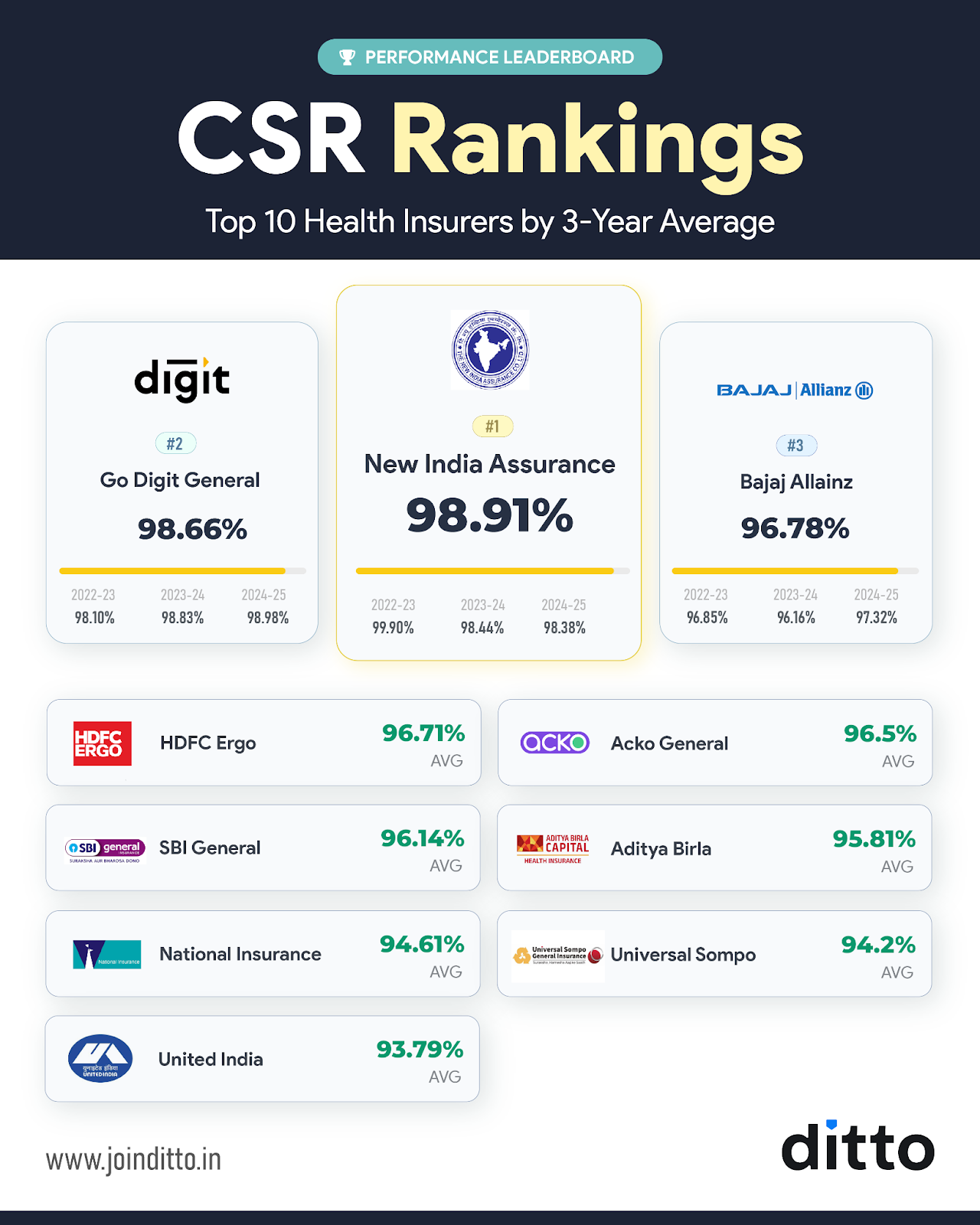
Key Insight: Tata AIG is not on the list of the top 10 health insurance companies by CSR. This is because the number falls short of the 90% benchmark we use as a baseline, and the insurers on that list have consistently crossed this mark. However, this alone shouldn’t decide which insurer or policy you pick. Our methodology weighs CSR, complaint volume, business size, and more to arrive at a well-rounded view.
Note: If you'd like to explore the detailed figures reported by insurers and the IRDAI in their annual disclosures and public reports, visit Ditto Data Labs, our proprietary repository of health insurance data, meticulously compiled, verified, and maintained by the Ditto team over the years.
Why Choose Ditto for Health Insurance?
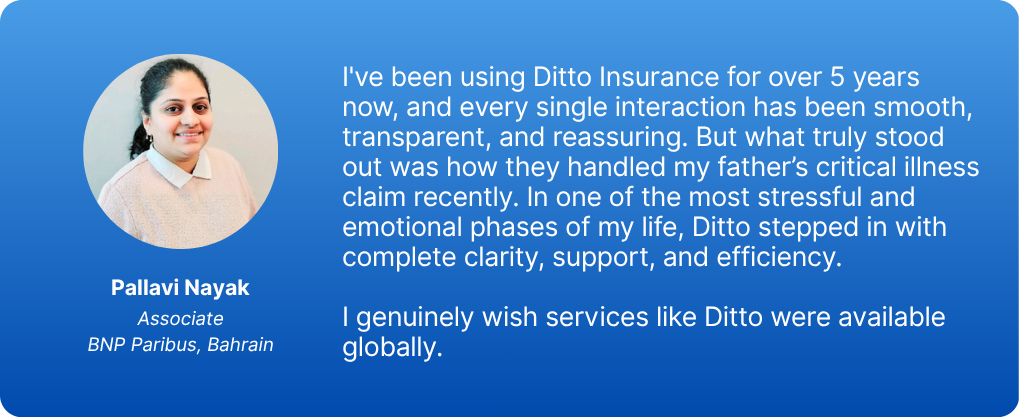
At Ditto, we’ve assisted over 8,00,000 customers with choosing the right insurance policy. Why customers like Pallavi below love us:
- No-Spam & No Salesmen
- Rated 4.9/5 on Google Reviews by 15,000+ happy customers
- Backed by Zerodha
- Dedicated Claim Support Team
- 100% Free Consultation
Confused about the right insurance? Speak to Ditto’s certified advisors for free, unbiased guidance. Book your call now or chat over WhatsApp with our advisors.
Ditto’s Take on Tata AIG
What Works in Their Favor:
- Complaint volumes are consistently below the industry average, which tells us that most customers aren't hitting major roadblocks during claims.
- The business has grown steadily, and the ICR sits in a healthy range, both signs of a financially stable insurer.
What Worries Us:
- A below-average CSR from an insurer that has been around since 2001 is harder to excuse than it would be from a newer player.
- Tata AIG relies on third-party administrators (TPAs) for claim processing, which can add hassles and delays compared to insurers with fully in-house claims teams.
Our recommendation?
Tata AIG is a decent insurer. It’s reliable, but not exceptional. If the brand reassures you and the plan features suit your needs, it’s a good option. However, if a strong CSR is essential, compare other choices by reading our guide on the best health insurance plans in India.
Frequently Asked Questions
Last updated on: