



Overview
According to the National Health Account Estimates 2022-23, 43.4% of all health spending in India still comes directly from patients' pockets. That means for every ₹100 spent on healthcare, ₹43 is paid by the patient.
One reason this number stays high is something most policyholders never see coming, and that is the non-medical expenses in health insurance. These include consumables like gloves, syringes, and PPE kits, as well as administrative charges, personal care items, and other hospital costs that standard health insurance plans do not cover under IRDAI guidelines. Individually, they may seem minor, but together they can add 5% to 15% to your final bill.
In this guide, we cover what these items are, why insurers exclude them, which plans cover them, and how to reduce what you pay out of pocket.
What Are Non-Medical Expenses in Health Insurance?
Non-payable items in health insurance are expenses incurred during hospitalization that insurers do not cover because they are considered non-medical or related to personal comfort. IRDAI excludes these items to prevent misuse, which means you bear these costs yourself at the time of discharge.
Let’s take a simple example to understand. You are hospitalized for a knee replacement surgery. Along with the surgeon's fees and room rent, your bill includes charges for gloves, syringes, bandages, and a registration fee. Your insurer covers the surgery-related costs but will not pay for any of these, as they are classified as non-payable items and are paid out of pocket.
List of Non-Payable Items
The IRDAI list containing non-payable items in health insurance covers expenses across four categories. Below are the key items from each:
Note: Exclusions for non-payable items in health insurance vary by policy. Download the PDF to view the complete IRDAI list of 146 non-payable items in health insurance.
Why Do Insurers Exclude These Items?
IRDAI excludes non-medical expenses for three main reasons:
- To Prevent Overbilling: Standard exclusions reduce inflated charges for consumables and administrative items.
- To Keep Premiums Affordable: Covering every non-medical item would increase claim costs, leading to higher premiums for everyone.
- To Focus Coverage on Treatment: Health insurance is meant to cover medical care such as hospitalization, surgery, medications, and diagnostic tests, not personal comfort items or administrative expenses.
How Do Plans Cover Non-Medical Expenses?
Insurers are gradually expanding the list of items covered under these features, making it worth reviewing your plan’s annexure. Here is how the best health insurance plans handle it:
Now, let’s see how these add-ons affect your premiums.
Annual Premium for Care Supreme
Note: Here, A stands for adult, and C refers to child. These are indicative premiums for a Delhi resident (PIN code: 110001) with a ₹15 lakh sum insured, including mandatory and recommended add-ons. Your premium can change based on age, city, medical history, plan variant, added discounts, and chosen add-ons.
Real Claim Scenario
What Is Never Covered Even With a Consumables Add-On?
- Outside Food & Beverages: Meals and drinks beyond the hospital-prescribed diet.
- Mineral Water: Bottled drinking water.
- Entertainment & Communication: TV, phone, and internet/Wi-Fi charges.
- Personal Grooming: Barber services, hair removal, and beauty treatments.
- Braces & Supports: Walking aids, belts, collars, slings, and braces used after discharge.
- Personal-Use Devices: Items taken home, such as thermometers, nebulizer kits, and BP monitors.
Note: The first four items fall under IRDAI's "Optional Items" list (List I). Most consumables add-ons treat them as personal expenses and exclude them, but some broader-scope plans may cover a few. There's no fixed rule here, it depends on your specific policy. Check your add-on's annexure to confirm which List I items, if any, are included.
Talk to an expert
today and
find
the right
insurance for you.


How to Check the Non-Payable List in Your Policy?
Your policy's non-payable items in the health insurance list are usually included in its annexure or schedule, so it is worth knowing exactly where to look. Here's how to find it:
Step 1: Download your policy wording or policy schedule from the insurer's website.
Step 2: Search for 'Annexure', 'Non-Payables', 'Exclusions', or 'Non-Medical Expenses'.
Step 3: Check if your plan includes a consumable benefit or requires an add-on.
Step 4: Review the annexure at every renewal, as the covered items may change.
How to Reduce Out-Of-Pocket Spend?
Why Choose Ditto for Health Insurance?
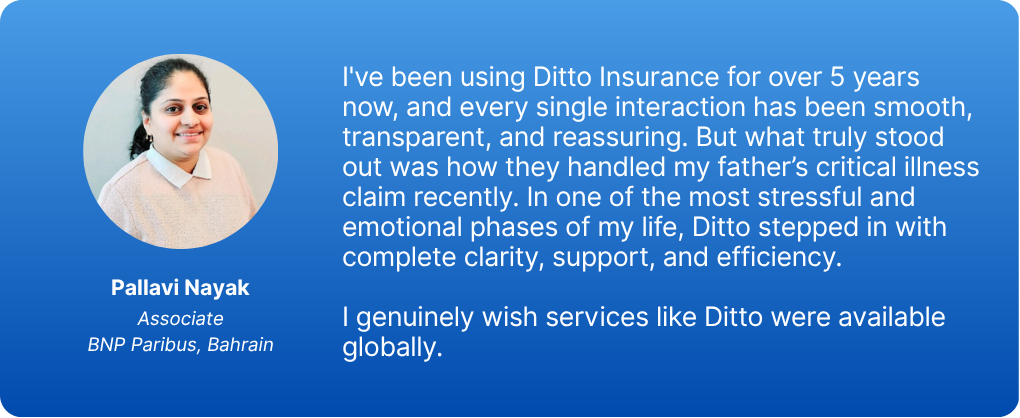
At Ditto, we’ve assisted over 8,00,000 customers with choosing the right insurance policy. Why customers like Pallavi below love us:
- No-Spam & No Salesmen
- Rated 4.9/5 on Google Reviews by 25,000+ happy customers
- Backed by Zerodha
- Dedicated Claim Support Team
- 100% Free Consultation
Confused about the right insurance? Speak to Ditto’s certified advisors for free, unbiased guidance. Book your call now or chat with our advisors on WhatsApp.
Conclusion
Consumable expenses are easy to overlook, but they can add a few thousand rupees to your hospital bill. Since these charges are often discovered only at discharge, they become unexpected out-of-pocket expenses. That's why it's worth checking whether your policy covers them.
If you're buying a new health insurance plan, consider one that includes consumables cover by default or offers it as an add-on.
If you already have a policy, review its coverage at renewal and opt for the rider if it's available.
While consumables coverage isn't the most important feature in a health insurance plan, it can make a noticeable difference to your final hospital bill, especially during surgeries or prolonged hospitalizations.
Frequently Asked Questions
Last updated on: