




Overview
Many people assume health insurance is limited to emergency hospitalization and unexpected medical situations. While this is partly true, modern health insurance has evolved significantly to match today’s rising healthcare needs and costs.
These plans go beyond inpatient hospitalization and cover consultations, diagnostics, and advanced treatments. Such policies are also called comprehensive health insurance plans because they provide broad medical protection for individuals and families.
What Does Comprehensive Health Insurance Cover?
Note: Coverage can differ slightly between policies, but the table above outlines the most common inclusions and exclusions found in comprehensive health insurance plans.
Key Benefits of Comprehensive Health Insurance
1. Medical Coverage Across All Treatment Stages
Comprehensive plans cover the entire spectrum of care, from OPD consultations, diagnostics, and preventive health check-ups to daycare procedures and advanced treatments. Some plans even cover maternity and newborn expenses. This reduces gaps across diagnosis, treatment, and recovery. You're protected not just during emergencies but across diagnosis, treatment, and recovery, with fewer gaps in modern healthcare needs. This wider scope gives you stronger financial protection and greater peace of mind.
2. Covers High Medical Costs
Comprehensive plans offer high sum insured options, often exceeding ₹1 crore, with some even providing unlimited coverage in health insurance. This matters especially when you require expensive or advanced treatments like robotic surgery or stem cell therapy. Major illnesses such as cancer or cardiac conditions can cost tens of lakhs today, and these costs will only increase over time. A high sum insured protects you from large, unexpected medical bills and ensures access to quality care without financial strain.
3. Cashless Hospitalization
With access to extensive hospital networks, these plans enable real-time approvals and direct settlement of bills. This is important because, in critical moments, you can avoid the stress of arranging funds or handling reimbursements and fully focus on recovery. Note that cashless hospitalization is a feature, not a guarantee. Out-of-pocket costs may still arise, so it is wise to keep an emergency fund ready for reimbursements or non-payable expenses.
4. Financial Protection and Long-Term Wealth Security
Serious medical treatments can quickly drain years of savings. Comprehensive health insurance helps cover these expenses, so your savings, investments, and long-term financial plans stay protected. It can also help you avoid cashing out investments, taking high-interest loans, or depending on crowdfunding campaigns or government support during medical emergencies.
5. Tax Benefits Under Section 80D of the Income Tax Act
Premiums qualify for deductions under Section 80D, with separate limits for self, family, and parents, improving overall tax efficiency. Under the old tax regime, you can claim up to ₹25,000 for self, spouse, and children, and up to ₹25,000 for parents. This increases to ₹50,000 if the insured members are senior citizens (60+), allowing a maximum deduction of ₹1,00,000 per year. Each deduction bracket includes a ₹5,000 sub-limit for preventive health check-ups.
Best Comprehensive Health Insurance Plans in India
Note: CSR stands for claim settlement ratio, ICR denotes incurred claims ratio, and SI denotes sum insured.
For a better comparison across more plans and insurers, refer to our guide on the best health insurance plans in India.
Talk to an expert
today and
find
the right
insurance for you.


Premium Comparison of Comprehensive Health Insurance Plans
Note: These are indicative premiums for a Delhi resident (pin code: 110001) with a ₹15 lakh sum insured and no pre-existing diseases. Actual premiums may vary based on factors such as age, city of residence, medical history, selected add-ons, and applicable discounts.
How to Choose the Right Comprehensive Policy
- Adequate Sum Insured: Choose a minimum cover of ₹15–25 lakh to ensure sufficient financial protection against major medical events and black swan health emergencies. India's medical inflation runs at roughly 14% annually, and because of this, a cover that feels adequate today may fall short in five years. Higher coverage becomes especially important for large families, individuals with pre-existing conditions, and residents of metropolitan cities, where the cost of quality healthcare is significantly higher.
- No Co-Payment Clause: Check if the plan has no co-payment requirement. A co-pay means you bear a fixed percentage of the claim amount. Plans with zero co-payment ensure the insurer covers the full eligible expenses and help reduce out-of-pocket costs, especially during large hospital bills or premium treatments.
- No Room Rent Restrictions: Look for plans without room rent caps. Limits on room category can trigger proportionate deductions across the entire bill. Choosing a plan with no cap gives you flexibility to select any room without reducing overall claim eligibility.
- No Disease-Specific Sub-Limits: Ensure the plan does not impose caps on treatments like cataract surgery or joint replacement. Plans without sub-limits allow you to claim the full treatment cost up to the sum insured.
- Restoration Benefit: A good comprehensive plan should restore your sum insured if it gets exhausted during the policy year. This feature ensures continued financial protection for future claims within the same year. Check whether the restoration benefit is triggered even on partial exhaustion, and if it applies multiple times for both related and unrelated illnesses.
- Cumulative or No Claim Bonus (NCB): Check how the plan rewards claim-free years. A good NCB feature increases your sum insured over time without increasing premiums. Ideally, you should choose plans that continue offering a high bonus even after claims, so your coverage keeps pace with rising medical costs.
Why Talk to Ditto for Your Health Insurance?
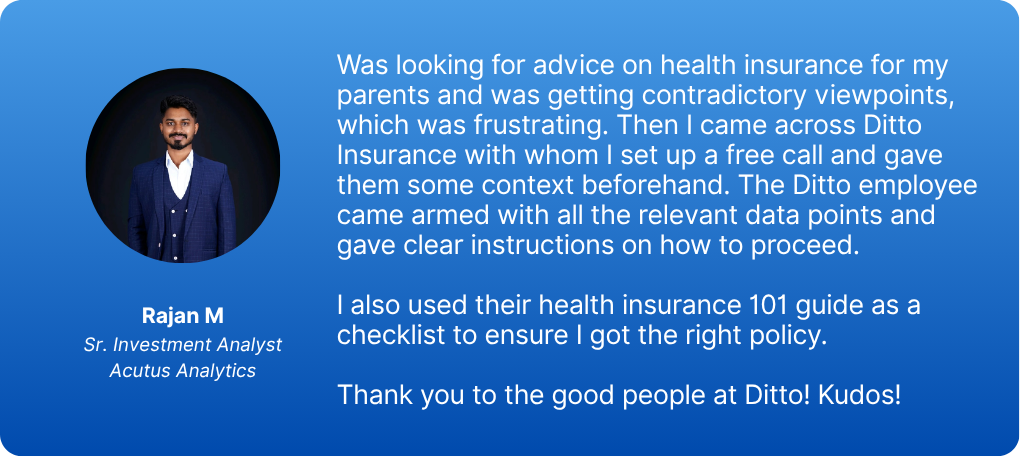
At Ditto, we’ve assisted over 8,00,000 customers with choosing the right insurance policy. Why customers like Rajan below love us:
- No-Spam & No Salesmen
- Rated 4.9/5 on Google Reviews by 15,000+ happy customers
- Backed by Zerodha
- Dedicated Claim Support Team
- 100% Free Consultation
You can book a FREE consultation. Slots are running out, so make sure you book a call or WhatsApp us now!
Conclusion
A strong comprehensive health insurance plan combines an adequate sum insured, broad modern coverage, and features that keep pace with rising medical costs. The best plans also avoid major restrictions such as co-payment clauses, room rent caps, and disease-wise sub-limits, while offering long-term value through restoration benefits and cumulative bonuses.
However, a health insurance plan’s value strongly depends on the insurer behind it. Factors such as claim settlement ratio, hospital network, complaint levels, and overall customer experience also play an equally important role in determining real-world reliability. If you are still unsure about the plan that best fits your needs, consider speaking with an IRDAI-certified advisor for personalized guidance.
Frequently Asked Questions
Last updated on: