


Overview
Picking between two good health insurance plans is one of the hardest things to do. Niva Bupa ReAssure 2.0 and Care Supreme are frequently shortlisted by buyers, and for good reason. They share several key features and come at competitive price points. But the differences between the two are real, and they matter a lot depending on your situation.
In this article, we provide an overview of Niva Bupa ReAssure 2.0 and Care Supreme, compare their coverage and benefits, break down premiums, and help you decide which plan is the right fit for your needs.
Overview of Niva Bupa ReAssure 2.0 and Care Supreme
Niva Bupa ReAssure 2.0 Review
- Niva Bupa (formerly Max Bupa) is a standalone health insurer founded in 2008.
- They are known for innovative, feature-packed plans at affordable premiums.
- ReAssure 2.0 is the upgraded version of their flagship ReAssure plan and is available in three variants: Bronze+, Platinum+, and Titanium+.
- The most distinctive feature of this plan is the Lock the Clock benefit, which allows you to lock in your premiums based on your entry age until a claim is made. Keep in mind that premiums would still increase due to medical inflation or overall repricing.
Care Supreme Health Insurance
- Care Health Insurance (formerly Religare Health Insurance) has been around since 2012 and is currently the second-largest standalone health insurer in India by premium.
- Care Supreme is one of their flagship retail plans.
- Two standout add-ons unique to Care Supreme are the Be Fit rider, which gives members unlimited access to partner fitness centers, and the Unlimited Care add-on, which removes the sum insured cap for a single claim in your policy lifetime.
Who is Each Plan Designed For?
- ReAssure 2.0 is ideal for younger, healthier individuals who buy early and want long-term premium savings.
- Care Supreme is a better fit for families with diverse health needs, older members, or those who want flexibility through add-ons.
Coverage and Benefits Comparison
In the table above, SI stands for Sum Insured, OPD for Outpatient Department, and PED stands for Pre-Existing Disease.
Care's Customer-Friendly Policy Conditions
Talk to an expert
today and
find
the right
insurance for you.


Waiting Period, Premium & Policy Conditions
Waiting Periods
Both Niva Bupa ReAssure 2.0 and Care Supreme have identical waiting periods:
- Initial Waiting Period (30 days): A mandatory wait before any claims can be made, except for accidents, as they are covered from day 1.
- Specific Illness Waiting Period (2 years): Certain slow-growing conditions, such as cataracts, hernias, or joint replacements, are covered only after 2 consecutive years of coverage.
- PED Waiting Periods (3 years): Any condition you had before buying the policy, like diabetes or hypertension, will only be covered after three years.
Premium Comparison: Niva Bupa ReAssure 2.0 vs. Care Supreme
Note: These are indicative premiums for a Delhi resident (pincode - 110001), with a ₹15 lakh sum insured, including mandatory and recommended add-ons. Your premiums can change based on age, city, medical history, plan variant, and chosen add-ons.
For more details on the policy conditions, check out the Niva Bupa ReAssure 2.0 brochure and the Care Supreme brochure.
Niva Bupa ReAssure 2.0 vs Care Supreme: Reviews & Claim Experience
Let’s take a look at how insurers perform operationally, because ultimately, the insurer’s performance determines how smooth your claims experience will be.
Source: This information is sourced from the IRDAI annual reports, Care Health public disclosures, and Niva Bupa public disclosures. For more data on other insurers, explore Ditto Data Lab.
Key Insights on Operational Metrics
- CSR: Care Health has a higher CSR at 95.45%, while Niva Bupa’s CSR of 92.92% is also slightly above the industry average of 92.02%, showing a strong claim settlement track record.
- ICR: Both insurers have ICR within the ideal range of 55% to 85%, with Niva Bupa at 58.09% and Care Health at 58.68%. Both are lower than the industry average of 81.88%.
- Complaints: Niva Bupa has fewer complaints at 37.13 per 10,000 claims compared to Care Health’s 42.67. However, both insurers are above the industry average of 29.35, indicating scope for improvement in service experience.
- Annual Business: Care Health has a larger health insurance business at ₹8,404.67 crore compared to Niva Bupa’s ₹6,985.24 crore. Both insurers operate above the industry average of ₹4,504 crore.
- Network Hospitals: Care Health has a wider network of 11,400+ hospitals compared to Niva Bupa’s 10,000+. While Niva Bupa’s network is around the industry benchmark, Care Health offers a wider cashless hospital reach.
Ditto’s Claim Experience Based on Real Customer Cases
Niva Bupa
- Operational experience is not always smooth, but in recent times, we have noticed consistent improvements.
- For example, earlier ReAssure 2.0 used to have a disease-wise sub-limit on modern treatments, which they have now removed as part of an ongoing effort to improve the customer experience.
Care Health Insurance
- The claim experience is more straightforward.
- You may notice some minor deductions in the approved claim amount, unlike insurers like HDFC ERGO, who are known for complete and clean approvals.
Which Health Insurance Plan Should You Choose?
Choose Niva Bupa ReAssure 2.0 if:
- You are buying health insurance young and plan to stay claim-free for many years.
- You value strong product features like ReAssure Forever restoration and extensive coverage benefits.
- You want a higher ceiling for cover growth with Booster+.
Choose Care Supreme if:
- You are buying coverage for parents or family members with existing conditions like diabetes or hypertension.
- You want the flexibility to reduce PED waiting periods through add-ons.
- You need a larger hospital network (especially in smaller cities).
- You prefer a smoother operational experience with fewer complaints.
Why Choose Ditto for Health Insurance?
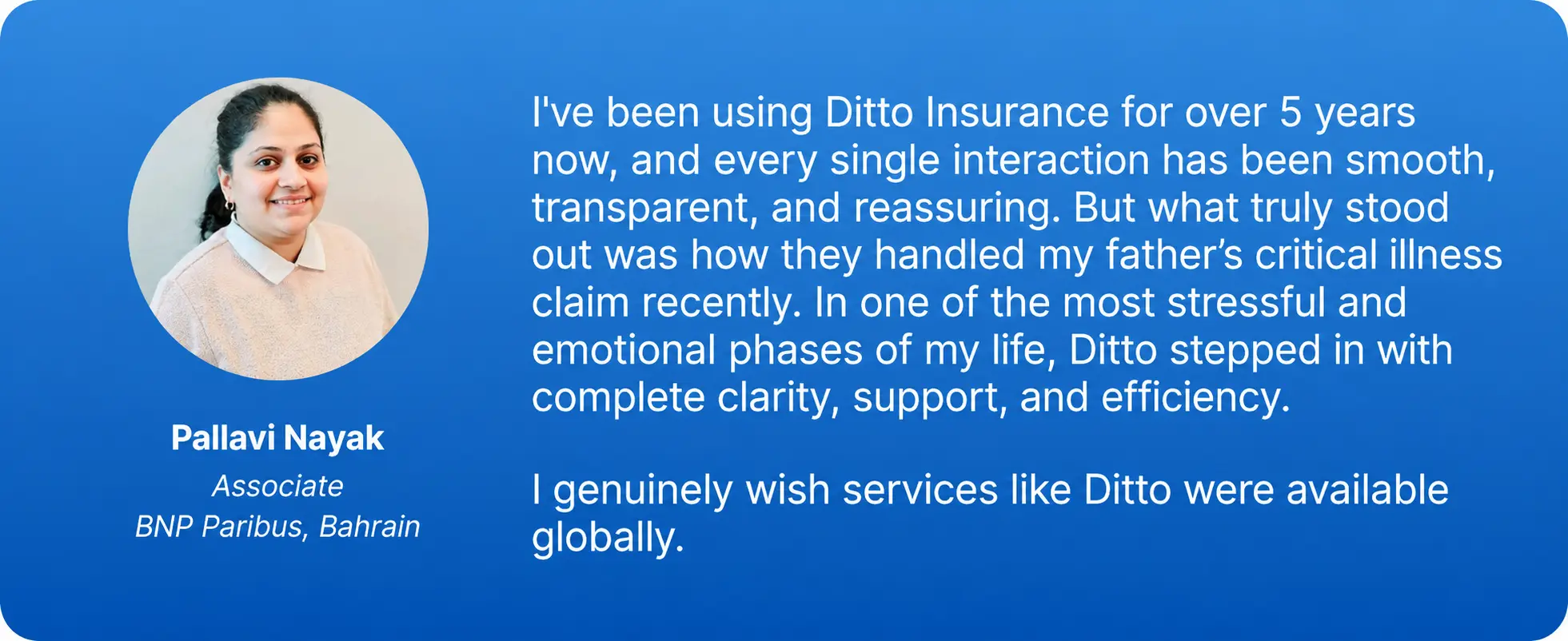
At Ditto, we’ve assisted over 12,00,000 customers choose the right insurance policy. Why customers like Pallavi love us:
- 100% Free Consultation
- No Spam. No Sales Pressure.
- Rated 4.9/5 on Google Reviews by 30,000+ Happy Customers
- Backed by Zerodha
- Dedicated Claim Support Team
- Compare Plans and Premiums with a Trusted Insurance Advisor
Confused about the right insurance? Speak to Ditto’s certified advisors for free, unbiased guidance. Book your call now or chat with us on WhatsApp. Slots fill up fast!
Ditto's Take
If we are being direct, Care Supreme is the safer, more well-rounded pick for many Indian families. The insurer's operational track record is stronger, the hospital network is larger, and the add-on flexibility is genuinely useful. For older parents, or even one member with a chronic condition, Care Supreme can be a strong option. Add-ons like Instant Cover Plus and Claim Shield Plus further enhance the coverage.
Niva Bupa ReAssure 2.0 is also a strong alternative. Its features like Booster+ and ReAssure Forever restoration make it attractive for buyers looking for higher coverage enhancement over time. However, the insurer’s operational metrics and customer experience should also be considered before choosing the plan. If you buy ReAssure 2.0, consider options like the Safeguard+ rider for consumables coverage and evaluate the plan based on your requirements.
Both Care Supreme and Niva Bupa ReAssure 2.0 are featured among Ditto’s recommended health insurance plans. You can explore our detailed guide on the best health insurance plans in India to compare these plans with other comprehensive health insurance options before making a decision.
Frequently Asked Questions
Last updated on: